Former Rockstar North technical director Obbe Vermeij crushed dreams of international Grand Theft Auto games in a recent interview with GamesHub, stating bluntly that fans should accept the franchise will keep cycling through the same five American cities forever. Despite nearly making GTA Tokyo and considering locations like Rio de Janeiro, Moscow, and Istanbul, Rockstar determined that with billions of dollars riding on each release and 12-year development cycles, sticking with familiar American settings is the only financially safe choice.

- The Five Cities We Can’t Escape
- GTA Tokyo Almost Actually Happened
- Why GTA Can’t Leave America
- Development Timelines Kill Experimentation
- The Problem Extends Beyond GTA
- What About Watch Dogs And Sleeping Dogs
- The Opportunity Cost Of Playing It Safe
- GTA 6 Returns To Vice City
- Community Reactions To The Revelation
- FAQs
- Conclusion
The Five Cities We Can’t Escape
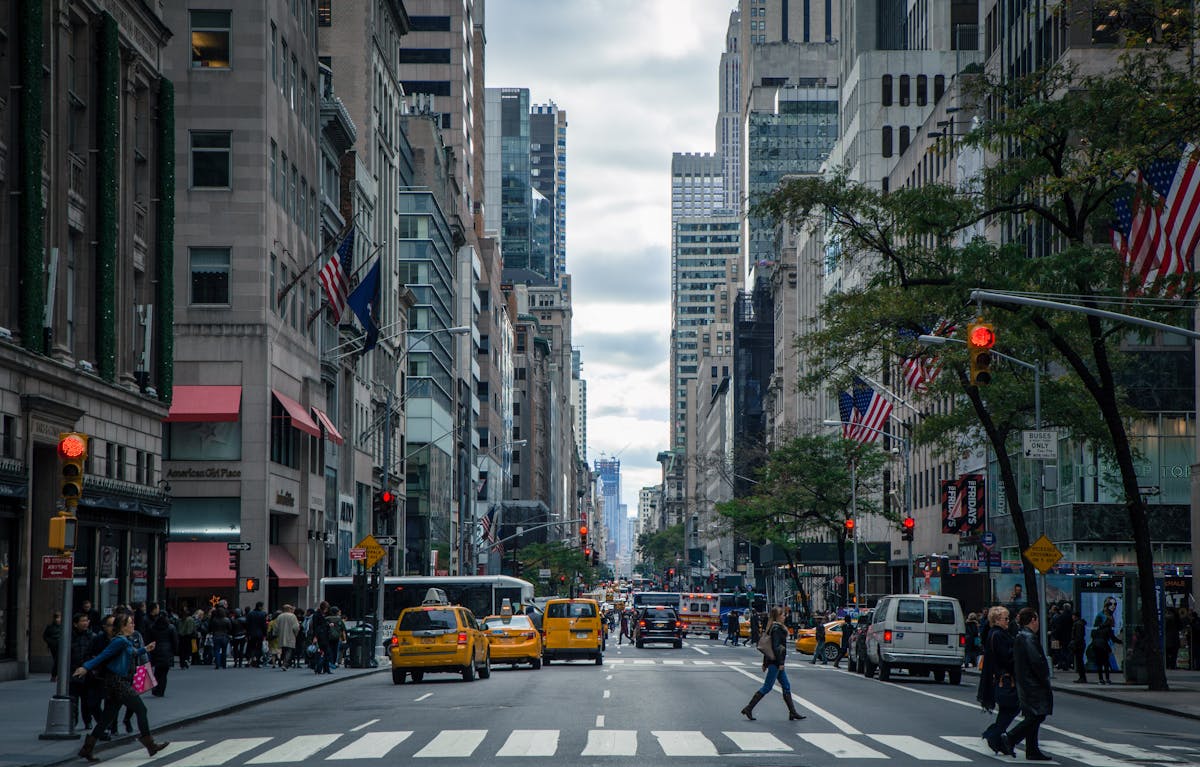
Vermeij, who worked at Rockstar from 1995 to 2009 and contributed to GTA 3, Vice City, San Andreas, and GTA 4, laid out the grim reality for fans hoping for variety. “They’ll revisit New York again. They’ll go back to LA or maybe Las Vegas,” he explained. “I’m afraid we’re stuck in this loop of about five American cities. Let’s just get used to it.” Those five cities are New York (Liberty City), Los Angeles (Los Santos), Miami (Vice City), San Francisco, and Las Vegas (Las Venturas).
The reasoning comes down to simple economics and cultural recognition. “People love having these wild ideas but then when you’ve got billions of dollars riding on it it’s too easy to go ‘Let’s do what we know again,'” Vermeij said. “And also America is basically the epicenter of Western culture, so everybody knows the cities, even people who haven’t been there. They have a mental image of the cities.” This familiarity reduces marketing risks since players worldwide instantly recognize New York or Los Angeles even without visiting.
The pattern holds across not just GTA but many major AAA franchises. Spider-Man swings through New York. Watch Dogs explored Chicago, San Francisco, and London before returning to familiar ground. The Division franchise set both games in American cities. Sleeping Dogs briefly took players to Hong Kong, but the franchise died afterward. Even Assassin’s Creed, which built its entire identity around globe-trotting historical tourism, has increasingly focused on familiar Western European locations in recent entries.
GTA Tokyo Almost Actually Happened
The most tantalizing revelation from Vermeij’s interview was how close GTA Tokyo came to reality. “We had ideas about GTA games in Rio de Janeiro, Moscow and Istanbul,” he revealed. “Tokyo almost actually happened. Another studio in Japan were going to do it, take our code and do GTA: Tokyo. But then that didn’t happen in the end.” The plan involved licensing Rockstar’s engine and GTA framework to a Japanese development studio that would create a localized version.
This outsourcing approach could have opened doors for multiple international GTA spin-offs without requiring Rockstar’s main teams to develop unfamiliar settings. A Japanese studio would understand Tokyo’s geography, culture, criminal underworld, and satirical targets better than Scottish or American developers. Similar partnerships could have enabled authentic recreations of Moscow, Rio, or Istanbul by developers native to those regions.
Why the Tokyo project died remains unclear. Possible reasons include licensing complications, quality concerns about external studios working with the GTA brand, or simply Rockstar deciding that fragmenting the franchise across multiple developers risked diluting quality and brand identity. Whatever the cause, the cancellation of GTA Tokyo apparently killed Rockstar’s appetite for international experimentation permanently.
Why GTA Can’t Leave America
Beyond financial risk aversion, Rockstar co-founder Dan Houser previously explained on the Lex Fridman podcast that GTA’s DNA is fundamentally American. “I think for a full GTA game, we always decided there was so much Americana inherent in the IP, it would be really hard to make it work in London or anywhere else,” Houser stated. The series satirizes American consumerism, celebrity culture, political corruption, and excessive violence in ways that wouldn’t translate cleanly to other countries.
Guns are central to GTA’s gameplay and America’s cultural identity. Houser noted, “You needed guns, you needed these larger-than-life characters. It just felt like the game was so much about America, possibly from an outsider’s perspective.” Many countries have strict firearm regulations making gun violence less culturally prominent. Setting GTA in Tokyo, where gun ownership is extraordinarily rare, would require fundamental gameplay changes or feel tonally dissonant.
The satire angle creates additional problems. Rockstar’s Scottish and American developers can mock American culture from positions of familiarity or cultural proximity. Applying the same caustic satirical eye to Japan, Russia, or Brazil risks appearing culturally insensitive or simply missing nuances that make satire work. What reads as sharp social commentary when aimed at your own culture can look like punching down when aimed at others, especially coming from Western developers.
Development Timelines Kill Experimentation
Vermeij emphasized how modern development cycles eliminate room for risky experimentation. “If games still took a year to make then yeah sure, you can have a little fun, but you’re not going to get that when there’s a GTA every 12 years,” he explained. “You’re not going to set it in a new location. You don’t really need to either because the technology changes so much. Nobody is going to say that they’re not going to play GTA 6 because they’ve already played Vice City.”
The math is stark. GTA 5 launched in 2013. GTA 6 arrives in November 2026, a 13-year gap. If GTA 7 follows a similar timeline, it might release around 2038-2040. With such infrequent releases, each entry carries enormous financial stakes. Take-Two Interactive’s entire business model revolves around GTA’s guaranteed billions. Experimentation with unfamiliar settings introduces variables that could reduce sales by even 10-15 percent, potentially costing hundreds of millions in revenue.
Technology advancement between releases also means revisiting the same cities feels fresh despite repetition. GTA Vice City on PS2 versus a hypothetical Vice City on PS6 hardware would offer such dramatically different visual fidelity, detail density, and gameplay possibilities that they’d feel like entirely different experiences despite sharing geography. Players accept revisits because technological leaps make familiar locations unrecognizable.
The Problem Extends Beyond GTA
GTA’s city repetition reflects broader industry conservatism about settings. The same handful of locations appear repeatedly across genres because they’re perceived as safe, recognizable, and marketable. New York appears in Spider-Man, Crysis 2 and 3, The Division, countless other titles. Los Angeles hosts LA Noire, Midnight Club, GTA 5, and more. San Francisco features in Watch Dogs 2, Driver: San Francisco, and various racing games.
European cities get some representation through Assassin’s Creed’s historical tourism, but modern European settings remain rare outside specific genres. Asian cities beyond Tokyo barely register. African, South American, and Middle Eastern cities are essentially absent except in military shooters depicting them as war zones. The gaming industry’s geographic imagination remains stubbornly limited despite the medium’s global audience.
Part of this stems from where games are made. American and Western European studios dominate AAA development, naturally gravitating toward cities they know or can easily research. Japanese developers create Tokyo-set games, but language barriers and cultural specificity often limit their global appeal. Breaking this cycle requires either major Western studios committing resources to researching unfamiliar locations or industry growth in underrepresented regions.
What About Watch Dogs And Sleeping Dogs
Some franchises attempted escaping America’s gravitational pull with mixed results. Watch Dogs launched in Chicago, expanded to San Francisco in Watch Dogs 2, then jumped to London for Watch Dogs: Legion. The London setting was praised for architectural variety and cultural freshness but couldn’t save Legion from disappointing sales and critical reception. Ubisoft hasn’t announced Watch Dogs 4, suggesting the franchise is dormant.
Sleeping Dogs offered a rare AAA open-world game set in Hong Kong with mechanics tailored to its setting. Players used martial arts more than guns, reflecting Hong Kong’s strict firearm laws. The city’s dense verticality, neon-soaked streets, and Triad culture created atmosphere distinct from American crime games. Despite critical acclaim and strong sales, Square Enix canceled Sleeping Dogs 2, eliminating one of the few major franchises exploring non-Western urban settings.
These commercial disappointments reinforce publisher conservatism. When experimental settings underperform regardless of quality, executives conclude that straying from proven formulas causes financial losses. Success stories like Ghost of Tsushima (feudal Japan) or Horizon Forbidden West (post-apocalyptic American West) exist, but publishers interpret those as exceptions rather than evidence that audiences crave variety.

The Opportunity Cost Of Playing It Safe
Vermeij noted that GTA competitors have essentially given up, leaving an opening for developers willing to take risks Rockstar won’t. “It really is just GTA and everybody else has given up,” he observed. “Maybe you could set it in the future or maybe it could be set in Moscow or whatever. I would say that’s an opportunity, but I think everybody’s kind of terrified of going against GTA.” Saints Row tried parodying GTA before rebooting into mediocrity. Watch Dogs couldn’t sustain momentum. Mafia remains niche.
This creates a chicken-and-egg problem. No one makes international urban crime games because GTA dominates the genre. But GTA won’t go international because no one’s proven that market exists. Meanwhile, massive untapped potential sits unexplored. A properly budgeted crime game set in Mumbai, São Paulo, Lagos, or Istanbul could offer experiences fundamentally different from anything currently available while appealing to massive populations who rarely see their cities in AAA games.
The financial calculations that keep GTA in America also prevent competitors from emerging. Building an open-world crime game requires hundreds of millions in development costs and marketing budgets. Smaller studios can’t afford that risk on unproven settings. Meanwhile, publishers with necessary resources won’t greenlight projects that might fail where established franchises succeed. The result is creative stagnation where the same locations appear repeatedly because breaking free requires risks no one will take.
GTA 6 Returns To Vice City
GTA 6 perfectly illustrates Vermeij’s prediction. Rather than exploring new territory, Rockstar returns to Vice City (Miami) last featured in 2002. The game expands to encompass the entire state of Leonida (Florida analog) but stays firmly within safe, familiar American geography. Leaked footage revealed swamps, highways, beaches, and urban sprawl instantly recognizable to anyone familiar with Florida’s landscape and culture.
The technological leap from PS2-era Vice City to PS5/Xbox Series X/S Vice City will be staggering. Twenty-four years of hardware advancement means Rockstar can render Miami-inspired environments with unprecedented detail, dynamic weather, realistic lighting, and massive scale impossible in 2002. For most players, this technological transformation makes the repeat setting feel justified even if the geography is conceptually familiar.
After GTA 6? Vermeij predicts Rockstar will cycle back to Liberty City (New York), Los Santos (Los Angeles), or potentially Las Venturas (Las Vegas). Each revisit will showcase new technology making familiar locations feel fresh. By the time GTA 7 or 8 arrives in the 2040s, the graphical difference from GTA 5’s Los Santos will be so dramatic that it might as well be a different city despite sharing the same geographic layout.

Community Reactions To The Revelation
Reddit discussions about Vermeij’s comments revealed mixed reactions. Some fans accepted the business logic, acknowledging that billion-dollar franchises can’t take unnecessary risks. Others expressed disappointment that GTA will never explore the international potential many had hoped for. A common sentiment was frustration that financial conservatism prevents creative experimentation that could produce the best games in the series.
Many pointed to successful games set in non-American locations as proof audiences want variety. Yakuza thrives with its Tokyo setting. Assassin’s Creed built an empire on historical tourism. Ghost of Tsushima proved Japanese settings appeal globally. However, defenders noted those games don’t attempt GTA’s specific brand of satire about guns, consumerism, and celebrity culture that’s distinctly American.
Some suggested indie developers might fill the void, creating smaller-scale urban crime games set in underrepresented cities. Games like Triad Wars (canceled) or Gangstar series (mobile) attempted this with limited success. The technical and financial barriers to matching GTA’s quality remain prohibitive for studios without major publisher backing, keeping the genre’s geographic diversity limited.
FAQs
Will GTA ever be set outside America?
According to former Rockstar North technical director Obbe Vermeij, no. He stated fans are “stuck in this loop of about five American cities” and should “just get used to it.” The financial risks of setting billion-dollar games in unfamiliar locations, combined with GTA’s DNA being fundamentally tied to American culture, make international settings extremely unlikely despite early ideas about Tokyo, Rio, Moscow, and Istanbul.
Why was GTA Tokyo canceled?
Vermeij revealed that “another studio in Japan were going to do it, take our code and do GTA: Tokyo,” but the project was ultimately canceled. He didn’t specify exact reasons, but likely factors include quality concerns about external studios handling the GTA brand, licensing complications, or Rockstar deciding that maintaining franchise consistency mattered more than geographic experimentation.
What are the five American cities GTA keeps using?
The five cities Vermeij referenced are New York (Liberty City), Los Angeles (Los Santos), Miami (Vice City), San Francisco, and Las Vegas (Las Venturas). These locations have appeared repeatedly across GTA entries because they’re globally recognizable, distinctly American, and perceived as financially safe settings that won’t reduce sales.
Why can’t GTA work in other countries?
Rockstar co-founder Dan Houser explained that GTA’s gameplay and satire are deeply rooted in American culture, particularly gun availability and larger-than-life characters. Many countries lack the firearm prevalence that GTA’s gameplay depends on, and satirizing foreign cultures from an outsider perspective risks cultural insensitivity. The series works best satirizing the American culture its developers understand intimately.
How long does it take Rockstar to make GTA games now?
GTA 5 released in 2013 and GTA 6 arrives November 2026, a 13-year gap. Vermeij noted “when there’s a GTA every 12 years” these extended timelines eliminate room for experimental settings. Each release carries enormous financial stakes because of infrequent launches, making Rockstar unwilling to risk unfamiliar locations that might reduce sales.
What other games are set in the same cities repeatedly?
New York appears in Spider-Man games, Crysis 2-3, The Division, and countless others. Los Angeles features in LA Noire, Midnight Club, and GTA 5. San Francisco appears in Watch Dogs 2, Driver: San Francisco, and racing games. Miami is featured in multiple racing franchises. The same handful of American cities dominate because they’re perceived as safe, recognizable settings.
Why did Sleeping Dogs never get a sequel despite being set in Hong Kong?
Despite critical acclaim and respectable sales, Square Enix canceled Sleeping Dogs 2. The commercial performance didn’t meet publisher expectations despite the game proving that non-American open-world crime games could work. This failure reinforced industry belief that straying from American settings reduces profitability, discouraging similar experimentation by other publishers.
Could indie developers make international crime games?
Vermeij suggested there’s an opportunity for developers not directly competing with GTA to explore international settings or futuristic scenarios. However, creating open-world crime games requires massive budgets that indie developers typically lack. The technical and financial barriers to matching AAA production values keep the genre’s geographic diversity limited despite theoretical opportunities.
Conclusion
Obbe Vermeij’s blunt assessment that Grand Theft Auto will never leave America reflects broader industry conservatism where financial stakes trump creative ambition. With billions of dollars riding on each release and development cycles stretching beyond a decade, Rockstar and other major publishers default to familiar American settings that reduce perceived market risks. The cancellation of GTA Tokyo and abandonment of Rio, Moscow, and Istanbul concepts demonstrates how thoroughly business calculations override creative possibilities. While technological advancement makes revisiting Vice City, Liberty City, and Los Santos feel fresh despite repetition, the opportunity cost is enormous. Massive global audiences rarely see their cities represented in AAA games while the same five American locations cycle endlessly. Other franchises that attempted breaking this pattern either failed commercially like Sleeping Dogs 2 or couldn’t sustain momentum like Watch Dogs, reinforcing publisher belief that experimentation causes losses. Vermeij’s suggestion that fans should “just get used to it” feels defeatist but reflects development realities where 12-year cycles and billion-dollar budgets eliminate room for risky creativity. The irony is that GTA’s satirical edge depends on bold creative choices, yet commercial pressures prevent the boldest choice of all exploring how crime, corruption, and culture manifest in the 90 percent of the world that isn’t Liberty City, Los Santos, or Vice City.