The deckbuilding roguelite genre exploded after Slay the Spire proved the formula works. Since then, dozens of games have tried putting their own spin on matching cards with procedurally generated runs. Most focus on dungeons, monsters, and power fantasy. Deck of Memories from indie studio Sentiment Games takes a completely different approach. Instead of crawling through dungeons, you’re exploring the memories of the last lighthouse keeper. Instead of battling monsters, you’re uncovering a poignant human story. And instead of just collecting cards, you’re physically crafting them with your own hands using workshop tools.
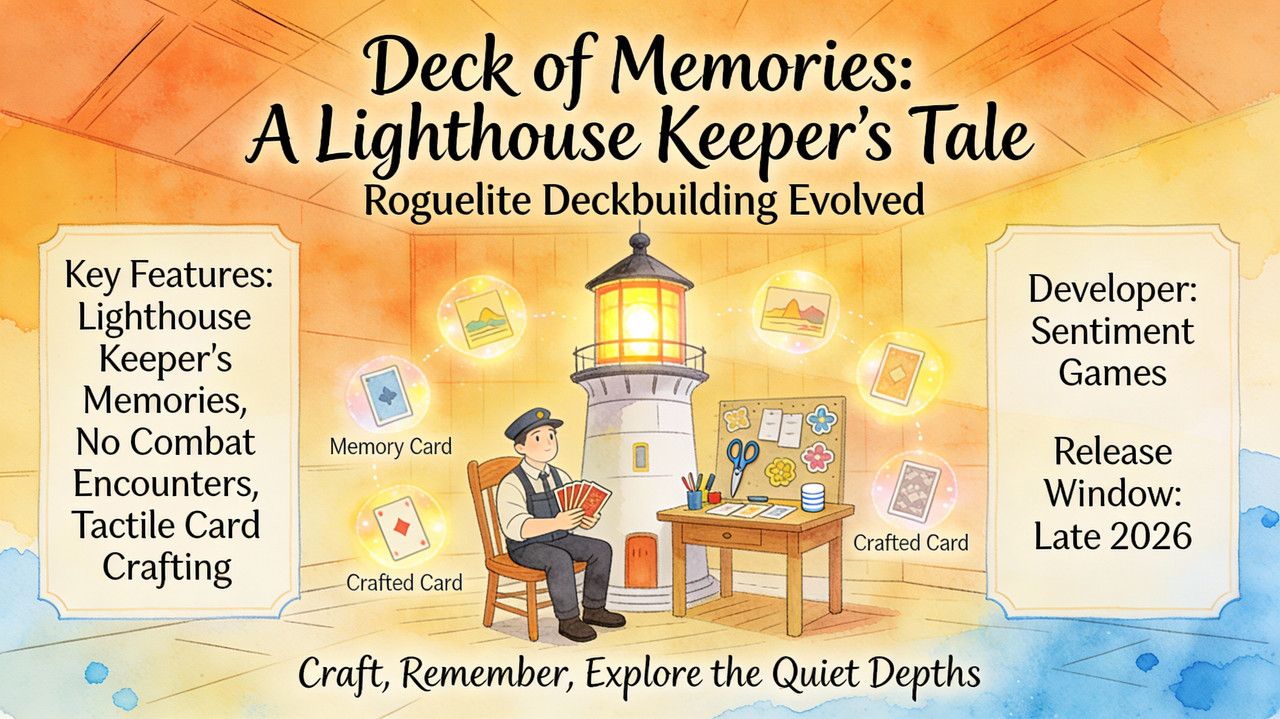
Memories as Card Dioramas
The central concept of Deck of Memories revolves around viewing the lighthouse keeper’s life through immersive card dioramas. Each memory unfolds on a beautifully crafted miniature board game scene, with cards representing moments, emotions, and experiences from the keeper’s past. This approach transforms the typical deckbuilding combat loop into something more contemplative and narratively driven.
Sentiment Games draws inspiration from Inscryption’s atmospheric meta-narrative and unsettling vibe, but aims for a cozier, more emotionally resonant tone. While Inscryption used horror and mystery to keep players engaged, Deck of Memories leans into nostalgia and heartfelt storytelling reminiscent of To The Moon. The developers want players to feel like they’re listening to their grandfather’s legendary sea stories, the kind that are definitely true and absolutely happened just the way he says.
The diorama presentation creates a tactile, intimate feeling. You’re not just watching memories play out on a generic game board. Each scene is lovingly detailed, capturing specific moments frozen in time. The lighthouse itself becomes a character, a silent witness to decades of solitude, duty, and the human experiences that happened within its walls. As you explore deeper, you uncover not just the keeper’s routine work, but the hopes, fears, and relationships that defined a life lived at the edge of the world.

Crafting Cards With Your Hands
What truly sets Deck of Memories apart is its card crafting system. Between diving into memories, you visit your workshop where actual crafting tools await. This isn’t abstract menu navigation. You use sealing tools to wax seal cards, engraving equipment to modify their appearance, stamps to add details, and socketing tools to enhance abilities. If you’re unhappy with a card, you can literally cut it up and start fresh.
The crafting system allows deep personalization of both card abilities and aesthetics. Want a powerful attack card with elegant calligraphy? Craft it. Prefer defensive cards with weathered, aged looks? You can create that too. The tools provide tactile feedback that makes deck construction feel like a hands-on craft project rather than spreadsheet optimization.
This approach mirrors real-world card customization hobbies. People who alter Magic: The Gathering cards or create custom board game components will immediately recognize the appeal. Sentiment Games is tapping into that same satisfaction of creating something unique with your own creativity and effort. The difference is that in Deck of Memories, your handcrafted cards then get used in gameplay, creating a personal connection to your deck that most roguelites don’t achieve.
The workshop itself evolves as you play. You discover new tools, unlock collectibles that decorate your space, and gradually transform your sanctuary into a cozy retreat filled with mementos from your journey. This progression creates a sense of permanence in a genre built around starting fresh with each run. Even when a particular memory sequence ends badly, your workshop improvements and unlocked crafting options persist.
Gameplay That Welcomes Everyone
Sentiment Games emphasizes accessibility alongside depth. During playtesting, many participants who claimed they didn’t like card games found themselves drawn in by the atmosphere and stayed longer than expected. The developers promise smooth onboarding for players of all skill levels, making Deck of Memories approachable for deckbuilding newcomers while still offering enough complexity to challenge veterans.

The narrative design supports this accessibility. Most of the story is woven directly into gameplay rather than presented through lengthy cutscenes or text dumps. You won’t encounter extensive dialogue that interrupts the card-playing experience. Instead, the memories themselves tell the story through environmental details, card descriptions, and the dioramas’ visual language. This approach lets players who want pure gameplay stay focused while giving narrative-hungry players enough context to piece together the lighthouse keeper’s full story.
The combat encounters on each diorama board involve tactical card battles where your choices each turn combine with deeper strategic deck-building decisions. The developers describe it as challenging enough for experienced players without alienating those who just want to experience the story and enjoy the crafting. Multiple difficulty options will presumably let players tailor the challenge to their preferences.
Exploring the Lighthouse
Beyond the memory dioramas and workshop, you navigate through the lighthouse itself, uncovering its hidden mysteries. The building serves as both hub world and exploration space, rewarding curiosity with secrets that expand your understanding of the keeper’s life and the lighthouse’s significance. Environmental storytelling plays a major role, with objects, photographs, and worn surfaces telling silent stories about decades of isolation and purpose.
The lighthouse setting creates natural narrative structure. As you climb higher or descend deeper, you’re literally moving through time and emotional layers. The lowest levels might hold early memories from the keeper’s youth, while the topmost room could contain the final, most poignant moments. The physical architecture mirrors psychological exploration, with locked doors representing blocked memories and hidden passages revealing forgotten truths.
Collectibles scattered throughout add texture to the world. Finding an old logbook, a faded photograph, or a broken compass provides context for the memory dioramas while decorating your workshop. These items create connections between different memories, helping you understand how isolated moments fit into the broader tapestry of a life lived.
Drawing From Diverse Influences
Sentiment Games openly acknowledges their inspirations. Inscryption provides the atmospheric blueprint and meta-narrative structure. To The Moon contributes emotional storytelling that explores memory, regret, and human connection. Board games inspire the tactile diorama presentation and the satisfaction of manipulating physical game pieces. ARPGs like Diablo inform the crafting system where you hunt for the perfect components to build ideal gear, translated here into seeking the perfect cards.
This blend of influences creates something that doesn’t fit neatly into existing genre boxes. It’s a deckbuilding roguelite, yes, but it’s also a narrative adventure, a crafting game, and a meditation on memory and solitude. The developers tired of typical dungeon crawls and monster battles, choosing instead to tell a beautiful story through card mechanics. That creative risk could pay off by attracting players who’ve bounced off more traditional deckbuilders.
Community Building Through Early Engagement
Sentiment Games has been actively building community through Reddit posts and social media engagement. They’ve shared development progress, gathered feedback, and even offered public playtesting opportunities through their Discord server. This transparency helps manage expectations while generating genuine excitement among potential players.
The team regularly addresses common concerns in their announcements. Worried you don’t like card games? They’ve seen playtesters get hooked despite initial skepticism. Concerned about excessive dialogue? The story lives in the gameplay, not cutscenes. These proactive responses show developers who understand their audience and want to create something that resonates rather than just checking genre boxes.
The late 2026 release window gives the team substantial development time while keeping the project grounded with a concrete target year. For an indie studio, that balance between ambition and realistic scheduling suggests thoughtful project management. The game appeared at festivals like Gamescom, generating positive impressions from attendees who got hands-on time with early builds.
Standing Out in a Crowded Genre
The deckbuilding roguelite space has become incredibly competitive. After Slay the Spire’s success, we’ve seen Monster Train, Griftlands, Inscryption, Cobalt Core, and countless others iterate on the formula. Most players feel saturated, having tried dozens of similar games. Deck of Memories differentiates itself through emotional storytelling, unique crafting mechanics, and the lighthouse keeper framing that provides narrative structure often missing in the genre.
The cozy gaming audience represents Deck of Memories’ most obvious target market. Players who loved Inscryption’s atmosphere but found it too dark, or who adored To The Moon’s emotional journey but wanted more gameplay, could find exactly what they’re looking for here. The crafting system also appeals to players who enjoy creative expression alongside strategic decision-making.
Whether Deck of Memories can break through the noise depends on execution. The concept is compelling, the influences are smart, and the early community response seems positive. However, indie games live or die on polish, pacing, and whether the unique hooks prove fun across dozens of hours. A beautiful concept that gets tedious after two runs won’t succeed regardless of how innovative it is.
Frequently Asked Questions
When does Deck of Memories release?
Deck of Memories is scheduled to launch on Steam in late 2026. A specific release date hasn’t been announced yet.
What platforms will Deck of Memories be available on?
The game is currently confirmed only for PC via Steam. There’s no information about console versions at this time.
Is Deck of Memories a horror game like Inscryption?
No. While Deck of Memories takes atmospheric inspiration from Inscryption, it aims for a cozy, emotionally resonant tone rather than horror. Think To The Moon’s heartfelt storytelling rather than Inscryption’s unsettling mystery.
How does the card crafting system work?
Between memory sequences, you visit a workshop where you use actual crafting tools like sealing equipment, engraving tools, stamps, and socketing devices to physically customize cards. You can modify both their abilities and appearance, and even cut up cards you don’t want.
Do I need to like card games to enjoy this?
According to the developers’ playtesting, many participants who initially said they didn’t like card games became engaged by the atmosphere and storytelling. The game is designed to be accessible for newcomers while offering depth for veterans.
Is there a lot of dialogue or cutscenes?
No. The developers state that most narrative is woven directly into gameplay rather than presented through lengthy cutscenes or text dumps. The story emerges through the memory dioramas themselves.
What is the game about?
You play as someone exploring the life and memories of the last lighthouse keeper through card-based dioramas. Each memory unfolds as a tactical card battle on a beautifully crafted miniature scene while you uncover the keeper’s story.
Who is developing Deck of Memories?
Sentiment Games is developing and publishing Deck of Memories. The team has been actively engaging with the community through Reddit, social media, and Discord.
Will there be a demo?
The developers have mentioned public playtesting opportunities through their Discord server. Check their social media or Steam page for announcements about demo availability.
What makes this different from other deckbuilding roguelites?
Deck of Memories combines physical card crafting mechanics, emotional narrative storytelling inspired by To The Moon, beautiful diorama presentation, and a lighthouse keeper setting rather than typical dungeon crawling. It emphasizes atmosphere and story alongside strategic gameplay.
Final Thoughts
Deck of Memories represents a thoughtful evolution of the deckbuilding roguelite formula. Rather than adding more complexity or cranking up difficulty, Sentiment Games is exploring how the genre can serve different kinds of stories and create different emotional experiences. The decision to focus on a lighthouse keeper’s memories instead of combat encounters shows creative confidence and a willingness to challenge genre expectations. The card crafting system provides tactile engagement that most digital card games can’t offer, tapping into the same satisfaction people get from customizing physical trading cards or building model kits. If the execution matches the concept, this could scratch an itch that card game fans didn’t even know they had. The late 2026 release window feels appropriate for the scope and ambition on display. Sentiment Games isn’t rushing to market with a half-baked idea. They’re taking time to build something that blends multiple influences into a cohesive whole while actively engaging with their growing community. That approach suggests developers who care about their vision and want to create something meaningful rather than just cashing in on genre popularity. For players tired of slaying spires and conquering dungeons, Deck of Memories offers something refreshingly different. It asks you to slow down, craft something beautiful with your hands, and explore the quiet depths of one person’s life at the edge of the world. Whether you’re a deckbuilding veteran looking for fresh experiences or someone who bounced off the genre but loves emotional storytelling, this lighthouse keeper’s tale might be exactly what you need. Just remember to pack warm clothes. Lighthouses get cold at night, and memories have a way of chilling you to the bone when you dig deep enough.