Three developers walk into a game jam. Years later, they’re building a hand-drawn metroidvania about a boy who falls into a dream, transforms into animals, and fights his way through a world that shifts between wonder and nightmare. That’s the origin story behind Ethereal Odyssey, a 2D action-adventure from KU3 Dev that’s currently playable through an open Steam playtest. With comparisons to Little Nemo: The Dream Master and transformation mechanics reminiscent of Kirby, this dreamworld exploration game deserves attention from anyone who loves metroidvanias with unique hooks.
Into the Dreamworld
Ethereal Odyssey opens with a young boy tumbling into a dream. What begins as childlike wonder and exploration gradually reveals darker threads as you uncover who or what is manipulating this realm from within. The premise immediately evokes classic dreamworld adventures like Little Nemo: The Dream Master and more recent psychological explorations like Omori, but KU3 Dev is building their own identity through hand-drawn art and instant transformation mechanics.
The dreamscape setting allows for creative environmental design that wouldn’t make sense in realistic worlds. Floating platforms exist because dreams don’t follow physics. Creatures blend animal features in impossible ways because that’s how dream logic works. The world itself shifts and changes as you progress, reflecting the psychological journey happening beneath the surface. KU3 describes it as exploring emotions and memories through gameplay, suggesting the dream acts as metaphor for internal struggles rather than just fantasy window dressing.
Non-linear exploration rewards curiosity and discovery. Secrets hide in every corner, encouraging players to poke at suspicious walls, experiment with transformation abilities in different contexts, and revisit areas with newly unlocked powers. This classic metroidvania structure works perfectly with the dreamworld theme, where hidden paths and impossible geometry feel natural rather than contrived.

Transformation as Core Mechanic
The standout feature of Ethereal Odyssey is instant transformation into different creatures. You’re not just collecting abilities, you’re physically becoming different animals, each with unique movement, combat, and interaction capabilities. The frog grants nimble jumping and access to high ledges. The bear provides raw strength to overcome obstacles and climb walls previously out of reach. Each form fundamentally changes how you navigate the world.
These transformations aren’t just movement tools. They affect combat encounters, puzzle solutions, and environmental interactions. A barrier that blocks your human form might be passable as the frog. An enemy resistant to your yo-yo attacks might be vulnerable to the bear’s strength. The game encourages experimentation, rewarding players who think creatively about which form solves specific challenges most effectively.
The yo-yo serves as the primary weapon in human form, adding a unique combat flavor beyond standard sword-swinging. Yo-yos allow for ranged attacks with rhythmic timing, creating a different combat flow than typical metroidvanias. Combined with transformation abilities, the combat system offers tactical variety where choosing the right form for specific enemy types becomes crucial to success.
KU3 mentions discovering hidden powers within each transformation that will be revealed as development continues. This suggests deeper progression systems where forms evolve beyond their initial capabilities, potentially adding skill trees or upgrade paths that let players customize their preferred playstyles. If executed well, this could add significant replayability through different build strategies.

Hand-Drawn Art That Breathes
One look at Ethereal Odyssey’s trailer immediately communicates the team’s artistic vision. Every frame is hand-drawn, giving the game a storybook quality that stands out in an indie scene dominated by pixel art and low-poly 3D. The animation flows smoothly, with character movements feeling weighty and intentional rather than floaty or disconnected. Environments blend fantastical architecture with natural elements, creating spaces that feel simultaneously alien and inviting.
The hand-drawn approach requires significantly more work than pixel art or asset-flipping, especially for a three-person team. Every animation frame, every environment tile, every creature design demands individual attention. That KU3 committed to this labor-intensive style speaks to their artistic priorities. They’re not just making a game, they’re creating a visual experience that justifies the dreamworld setting through art direction.
Color palettes shift between areas, reflecting different emotional tones. Early sections feature warm, inviting colors that communicate safety and wonder. As the dream reveals darker aspects, the palette shifts toward cooler tones and harsher contrasts. This visual storytelling through color helps communicate narrative progression without relying solely on dialogue or cutscenes.
The Three-Person Team Behind It
KU3 Dev consists of just three developers tackling every aspect of Ethereal Odyssey. Small teams like this face unique challenges compared to larger studios. Every decision requires weighing scope against ambition, feature complexity against development time, artistic vision against practical limitations. The fact that Ethereal Odyssey looks this polished in early playtest form suggests smart project management and clear creative direction.
The team actively engages with community feedback through their playtest program. They’re transparent about seeking input on controls, readability, and overall difficulty, showing willingness to iterate based on player experiences rather than stubbornly sticking to initial designs. This community-first approach builds goodwill while improving the final product through diverse perspectives on gameplay feel and balance.
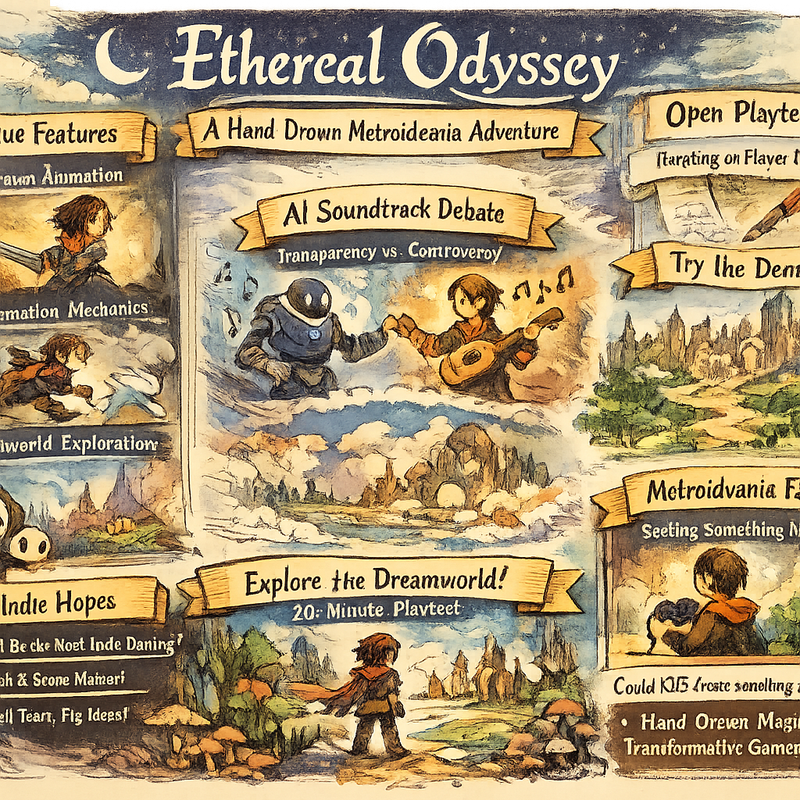
One controversial aspect mentioned in Reddit discussions is the use of AI-generated elements in the soundtrack. Developer ku3_alex responded to criticism by asking whether players would care if AI involvement wasn’t documented, raising interesting questions about disclosure versus perception. For some players, the transparency is appreciated. For others, any AI involvement remains a dealbreaker. This conversation reflects broader industry debates about AI’s role in game development that won’t resolve quickly.
Playtest Access Available Now
The open playtest on Steam offers approximately 20 minutes of gameplay, providing a substantial taste of Ethereal Odyssey’s core mechanics and aesthetic. Players can request access through the Steam page, with KU3 actively gathering feedback to refine controls, difficulty curves, and gameplay clarity before the eventual full release.
Early playtesters have drawn comparisons to Magical Quest 3, the Capcom platformer that similarly featured transformation mechanics and dreamlike aesthetics. While the comparison shows Ethereal Odyssey isn’t inventing transformation-based platforming from scratch, it also suggests KU3 is tapping into a subgenre that hasn’t been thoroughly explored in the modern indie metroidvania boom. There’s room for games that blend Magical Quest’s accessibility with Hollow Knight’s exploration depth.
Some feedback indicates the game might not target the hardcore Hollow Knight crowd seeking punishing difficulty and sprawling interconnected worlds. Instead, Ethereal Odyssey seems aimed at players who value atmospheric exploration and creative mechanics over brutal challenge. This positioning could help it stand out in a metroidvania market where many titles compete directly for the Hollow Knight audience while leaving other playstyles underserved.
Comparisons to Little Nemo
The Little Nemo: The Dream Master comparison feels inevitable given both games feature pajama-clad kids exploring dreamscapes while transforming into animals. That NES classic remains beloved for its imaginative world design and transformation-based puzzle solving, though it’s also remembered for brutal difficulty and lack of save systems. If Ethereal Odyssey captures Little Nemo’s wonder while modernizing the difficulty curve and quality-of-life features, it could introduce a new generation to that style of dreamworld adventure.
Little Nemo required feeding candy to animals to befriend them, then riding or wearing them to access their abilities. Ethereal Odyssey’s instant transformation feels more fluid, removing the resource management aspect in favor of immediate form-switching. This design decision prioritizes gameplay flow over inventory puzzles, suggesting KU3 wants transformations to feel empowering rather than restrictive.
Both games use dreams as narrative frameworks that excuse impossible architecture and fantastical creatures. However, where Little Nemo stayed relatively lighthearted, Ethereal Odyssey promises darker revelations as you uncover what’s manipulating the dreamworld. This tonal shift toward psychological exploration aligns more with modern indie sensibilities than classic all-ages platformers.
Standing Out in a Crowded Genre
The metroidvania genre exploded over the past decade, with countless indie developers releasing their takes on interconnected exploration and ability-gated progression. Ethereal Odyssey enters this saturated market with transformation mechanics and hand-drawn art as its primary differentiators. Whether that’s enough depends on execution quality and how much depth exists beyond the 20-minute playtest demo.
Successful modern metroidvanias either nail a specific aesthetic, introduce genuinely novel mechanics, or achieve near-perfect execution of established formulas. Hollow Knight succeeded through all three. Ori games dominated through audiovisual presentation. Blasphemous carved its niche with grimdark religious imagery. Ethereal Odyssey’s dreamworld aesthetic and transformation focus could work if the final product delivers on the promise shown in early footage.
The three-person team size might actually help rather than hinder. Smaller teams often maintain clearer artistic visions compared to larger studios where design-by-committee can dilute unique ideas. If KU3 can scope appropriately and deliver a focused 8-12 hour experience that fully explores transformation mechanics across well-designed dreamscapes, Ethereal Odyssey could become another indie success story proving that vision and execution matter more than team size or budget.
Frequently Asked Questions
When does Ethereal Odyssey release?
No official release date has been announced. The game is currently in development with an open playtest available on Steam.
What platforms will Ethereal Odyssey be available on?
The game is confirmed for PC via Steam. No console versions have been announced yet.
Who is developing Ethereal Odyssey?
KU3 Dev, a small indie team composed of three developers, is creating Ethereal Odyssey. They handle all aspects of development including programming, art, and design.
How can I play the Ethereal Odyssey playtest?
Request access through the Steam store page. The playtest offers approximately 20 minutes of gameplay showcasing the transformation mechanics and dreamworld exploration.
What games inspired Ethereal Odyssey?
The game draws comparisons to Little Nemo: The Dream Master for its dreamworld setting and transformation mechanics, with metroidvania influences from titles like Hollow Knight and Ori.
What transformations are in the game?
Confirmed transformations include a frog for nimble jumping and a bear for strength-based challenges and wall climbing. The developers hint at additional forms and hidden powers to be revealed.
Is Ethereal Odyssey difficult like Hollow Knight?
Based on early feedback, the game appears to target a broader audience than hardcore metroidvanias, focusing more on exploration and creative mechanics than punishing difficulty.
Does the game use AI generation?
The developers have disclosed that some soundtrack elements utilize AI generation. This has generated mixed reactions within the community.
How long is the full game expected to be?
No official length has been announced. The playtest offers 20 minutes of content, but the full game’s scope is still being determined during development.
What makes Ethereal Odyssey different from other metroidvanias?
The hand-drawn art style, instant transformation mechanics, dreamworld setting with psychological themes, and yo-yo-based combat distinguish it from typical sword-swinging metroidvanias.
Final Thoughts
Ethereal Odyssey represents the kind of ambitious indie project that makes following game development exciting. Three developers committing to hand-drawn animation, building transformation systems that affect both combat and exploration, and crafting a dreamworld that promises emotional depth alongside mechanical complexity shows genuine passion beyond just capitalizing on genre trends. The metroidvania market might be crowded, but there’s always room for games with clear artistic visions executed with care. Ethereal Odyssey’s hand-drawn aesthetic immediately distinguishes it visually, while transformation mechanics offer gameplay hooks that could provide tactical depth if fully realized across the full game’s runtime.
The open playtest demonstrates KU3’s willingness to iterate based on community feedback rather than developing in isolation until launch. This collaborative approach should result in better controls, clearer communication of mechanics, and difficulty curves that challenge without frustrating. For players who loved Little Nemo’s transformations but wanted deeper metroidvania exploration, or who adore hand-drawn games like Hollow Knight and Ori but want something mechanically different, Ethereal Odyssey offers exactly the kind of fusion that justifies its existence beyond just being another metroidvania.
The AI soundtrack controversy highlights ongoing tensions in indie development about what tools are acceptable. KU3’s transparency about AI use deserves credit even if some players remain uncomfortable with the practice. These conversations will continue industry-wide, and individual players must decide their own boundaries. What can’t be disputed is the hand-drawn art, the transformation mechanics, and the dreamworld exploration all show human creativity and labor.
Whether Ethereal Odyssey becomes the next indie darling or remains a hidden gem depends on scope management, final polish, and whether the full game delivers enough content to justify its eventual asking price. The foundations look promising. The aesthetic stands out. The transformation mechanics offer unique gameplay opportunities. If KU3 can maintain their vision while incorporating constructive feedback from playtesters, they might create something special. Download the playtest, explore the dreamworld for 20 minutes, and see if this hand-drawn adventure resonates. Sometimes the best games come from small teams with big ideas and the technical skills to execute them. Ethereal Odyssey could be one of those games, assuming the three developers at KU3 can sustain momentum through to launch without burning out or running out of resources. For now, the playtest shows enough promise to warrant attention from metroidvania fans seeking something visually distinctive with creative mechanics beyond standard genre conventions. That’s worth celebrating in an indie scene that needs fresh ideas as much as polished execution.