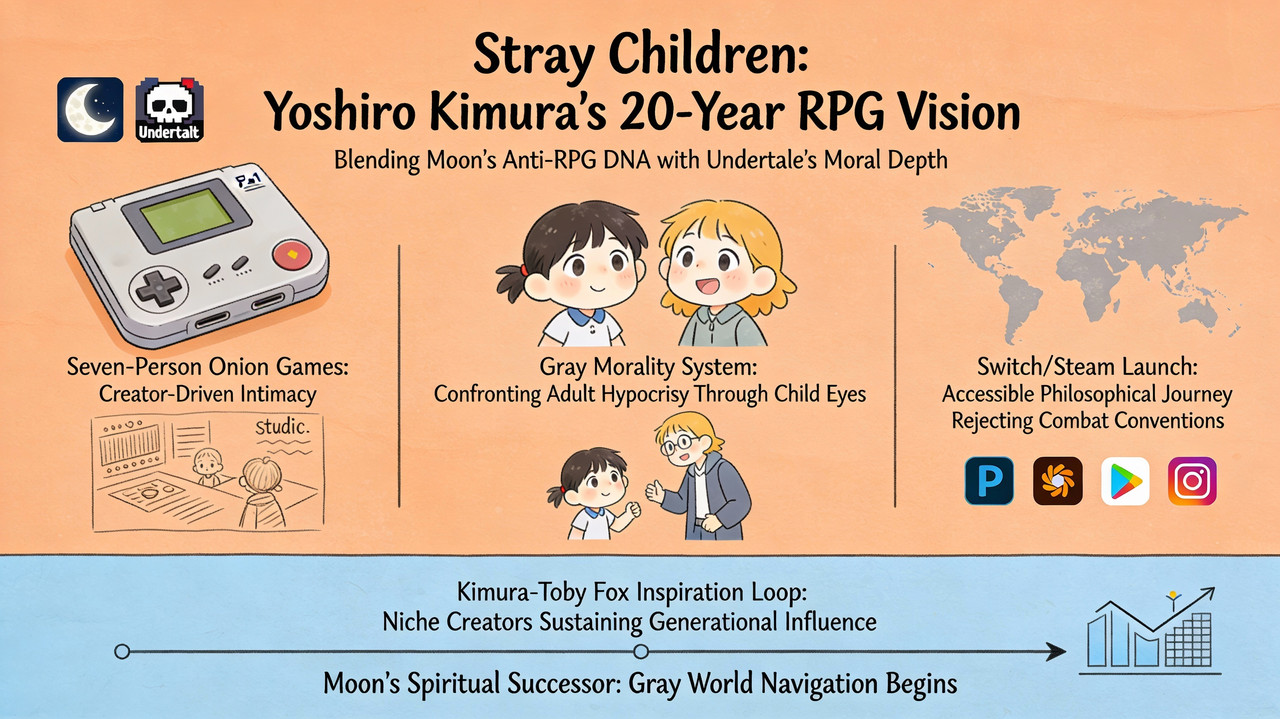
Stray Children launched October 30 on Steam and Switch channeling Yoshiro Kimura’s Moon: Remix RPG Adventure influence into Undertale-inspired moral exploration RPG. The seven-person Onion Games team delivers PS1 aesthetic top-down adventure where child protagonist navigates adult world’s fractured morality through dialogue choices lacking clear heroes/villains.
Moon Meets Undertale Perfectly
Kimura cites Toby Fox inspiration reigniting RPG passion after 20+ years since Square days. Stray Children evolves Moon’s experience-rejecting mechanics into Undertale-style consequence system where dialogue permanently alters world state, NPC relationships, quest outcomes. No levels, combat absent – narrative choices define progression through gray morality.
Seven core developers span Kimura’s 30-year career – Chulip programmer, Marvelous producers, Square alumni. Small team enables creator control avoiding corporate interference plaguing larger projects. PS1 limitations embraced deliberately creating intimate atmosphere modern AAA cannot replicate.
Gray Morality Revolution
| System | Moon (2001) | Stray Children |
|---|---|---|
| Progression | Reject EXP | Dialogue consequences |
| Combat | Optional helping | Nonexistent |
| Morality | Anti-hero systems | Gray adult world |
| Perspective | Reverse RPG | Child vs adults |
Kimura’s Creative Philosophy
“When we live our lives, there’s oftentimes when we want to clarify what is right and what is wrong… maybe that’s not a good idea,” Kimura explains embracing moral ambiguity reflecting modern complexities. Stray Children rejects black/white solutions forcing players confront adult hypocrisy through child perspective without providing easy answers.
Onion Games’ small size enables Kimura’s singular vision – self-producing eliminates external pressure compromising integrity. Three-year development poured “life’s energy” into crafting intimate experience reaching niche audience valuing substance over mass appeal. English localization preserves nuanced dialogue capturing philosophical depth.

PS1 Aesthetic Masterclass
Top-down exploration evokes PS1 JRPG golden era while modern writing confronts contemporary issues. Pixel art captures Moon’s intimate atmosphere through detailed environmental storytelling. Sound design blends chiptune nostalgia with experimental effects mirroring narrative dissonance between child innocence, adult corruption.
Permanent choice consequences create replay incentive without New Game+ artificiality. Multiple endings emerge organically through relationship cultivation rather than checklist completion. Accessibility options include text scaling, dialogue history ensuring narrative accessibility without compromising challenge.
Industry Context Perfect
Stray Children arrives amid Undertale/Deltarune renaissance validating Kimura’s influence loop – creator who inspired Toby Fox receives inspiration return. Onion Games proves small teams sustain creator-driven development avoiding corporate dilution plaguing AAA RPGs. Switch portability enhances intimate storytelling experience.
Kimura’s Square/Marvelous pedigree delivers production values rivaling twenty-person studios. Chulip programmer ensures technical stability across decade-spanning hardware. English release timing captures growing PS1 revival audience hungry for creator-driven narratives beyond nostalgia cash-grabs.

FAQs
Combat exists anywhere?
Zero combat – pure narrative RPG focused dialogue consequences, relationship building like Moon evolved.
Undertale inspiration legitimate?
Kimura openly credits Toby Fox reigniting RPG passion after 20 years. Mutual creator admiration confirmed publicly.
PS1 aesthetic authentic?
Deliberate embrace of era limitations by veterans creating intimacy modern AAA cannot replicate.
Seven-person team scope realistic?
Kimura’s Square/Marvelous experience enables efficiency. Chulip programmer ensures technical excellence.
Gray morality works?
Rejects black/white solutions mirroring adult complexities through child perspective brilliantly.
English localization quality?
Preserves philosophical nuance capturing Kimura’s voice across cultural boundaries.
Replay incentive strong?
Permanent dialogue consequences create organic multiple endings through relationship cultivation.
Conclusion
Stray Children fulfills Yoshiro Kimura’s 20-year RPG vision blending Moon’s anti-RPG DNA with Undertale’s moral depth into PS1 masterpiece. Seven-person Onion Games delivers creator-driven intimacy corporate studios cannot match, gray morality system confronts adult hypocrisy through child perspective powerfully.
Switch/Steam launch perfects accessibility for philosophical journey rejecting combat conventions. Kimura-Toby Fox inspiration loop validates niche creators sustaining influence across generations. Moon’s spiritual successor arrives – gray world navigation begins.