Fortnite’s metaverse dreams hit ugly reality. Epic Games enabled in-island purchases January 9, letting creators sell items directly to players. Within 24 hours, top island Steal the Brainrot launched 4,900 V-Buck ($37) ‘Present Rot’ bundles and 100 V-Buck gambling wheels – drawing immediate fire for targeting children.
Steal the Brainrot, Fortnite’s #1 third-party experience with 1M+ concurrent peaks, originated on Roblox where such mechanics thrive. Epic’s 37% revenue share (74% first year) incentivized rapid implementation, but execution shocked even cynical observers with fake ‘discounts’ from impossible 5,400 V-Buck prices violating Epic’s 5K cap.
Monetization Mechanics
Steal the Brainrot offers:
- Present Rot Bundle: 4,900 VBucks ($37) for 2 random items
- Gambling Wheel: 100 VBucks/spin (~$0.75) chance-based rewards
- Fake Discount: Claims 10% off 5,400VB price (violates rules)
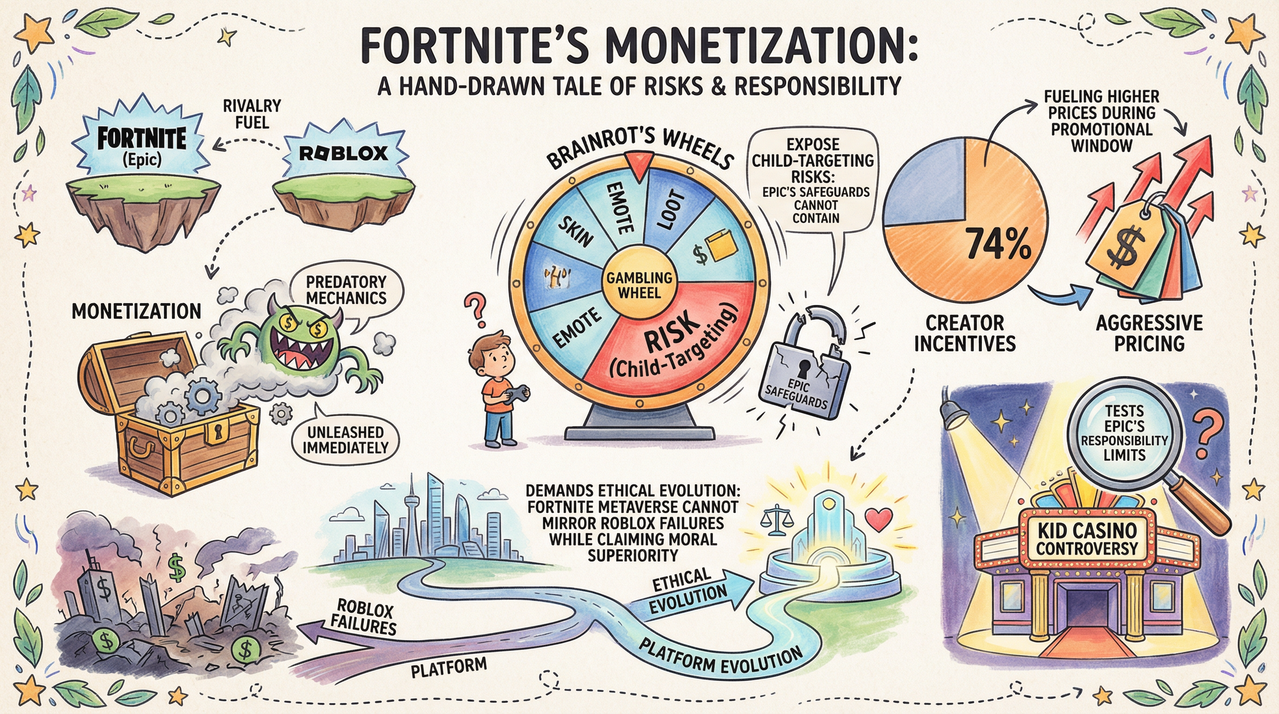
Creator Richytoons called it ‘ethically questionable,’ noting developers ‘make us all look bad.’ Epic confirmed compliance but face criticism for enabling gambling mechanics in child-targeted content.
Epic’s Revenue Model
| Party | First Year Share | After Year 1 |
|---|---|---|
| Creators | 74% | 37% |
| Epic Games | 26% | 63% |
Platform fees excluded from split. Creators retain full control within Epic’s 50-5,000 V-Buck pricing and transparent odds requirements.
Backlash Highlights
Community reaction swift:
- ‘Gambling for kids’
- ‘Robloxification complete’
- ‘Predatory from launch’
- Calls for parental controls

Epic’s parental controls block ‘paid random items’ but require pre-configuration. Console purchases bypass PC safeguards entirely.
Creator Economy Context
Implementation varies widely:
- Murder Mystery: Cosmetic-only purchases
- Tilted Zone Wars: 50VB map effects (non-competitive)
- Steal Brainrot: High-price gambling mechanics
74% creator share incentivizes aggressive monetization during promotional window.
Legal Regulatory Risks
Child gambling mechanics face:
- EU lootbox regulations
- Belgium/Netherlands bans
- UK gambling commission scrutiny
- US state-level legislation

Epic requires transparent odds but chance-based mechanics remain gambling-adjacent in child environments.
Platform Evolution
Fortnite Creative monetization completes:
- 2018: UEFN launch
- 2023: Engagement payouts
- 2026: Direct item sales
Roblox rivalry intensifies as Epic captures creator economy revenue previously exclusive to competitors.
FAQs
When did microtransactions launch?
January 9, 2026 after December delay. Creators publish islands with in-game purchases immediately.
Steal Brainrot pulled temporarily?
Disappeared hours after launch sparking speculation, returned unchanged. Epic confirmed compliant.
Can parents block gambling?
Epic parental controls disable ‘paid random items’ on PC. Console purchases bypass entirely.
Creator revenue guaranteed?
74% first year, 37% after. Epic takes remainder after platform fees.
Pay-to-win allowed?
Epic rules unspecified. Murder Mystery cosmetics-only, others experiment boundaries.
Legal trouble coming?
Child gambling mechanics risk EU regulation, UK scrutiny immediately post-launch.
Conclusion
Fortnite creator monetization delivered Roblox rivalry but unleashed predatory mechanics immediately. Steal Brainrot’s gambling wheels expose child-targeting risks Epic’s safeguards cannot contain. 74% creator incentives fuel aggressive pricing during promotional window. Platform evolution demands ethical evolution – Fortnite metaverse cannot mirror Roblox failures while claiming moral superiority. Kid casino controversy tests Epic’s responsibility limits.