Disco Elysium’s writing process gets NoClip documentary treatment. Part three details ZA/UM’s collaborative madness – multiple writers layering dialogue, Robert Kurvitz’s lore dumps, brutal editing sessions preserving character voices amid million-word sprawl. The Estonian punk collective reveals how tabletop origins became video game miracle.
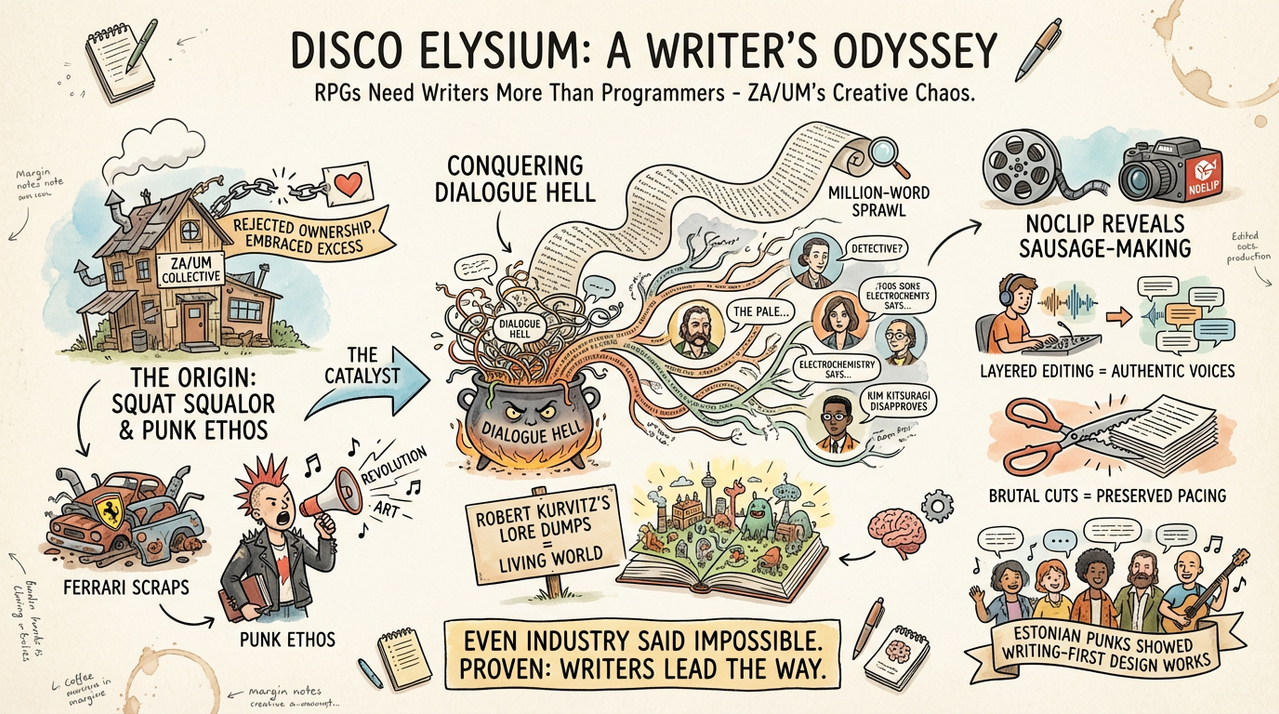
Development began 2005 drunken DJ Tiësto night. Robert Kurvitz rallied artist collective from Tallinn squat squalor. Kender sold pathetic Dolph Lundgren Ferrari for seed funding. ZA/UM formed rejecting traditional studio hierarchies – writers outnumbered programmers 10:1 by launch.
ZA/UM’s Writing Revolution
| Technique | Purpose |
|---|---|
| Layered Writing | Multiple writers refine single scene |
| Character Ownership | Individual voices through collaboration |
| Lore Lectures | Kurvitz’s Elysium worldbuilding dumps |
| Brutal Editing | Cut ‘perfect’ lines for pacing |
| No Ownership | Collective rejects individual credit |

Dialogue System Hell
Kurvitz called Disco “hardest writing job on planet.” Talking skills demanded Twitter-speed quips, total logical consistency, detective genre airtightness. Initial drafts hit lore-dump traps – Lena’s exposition rewritten endlessly balancing worldbuilding against gameplay flow.
- Million words across 1000+ dialogue trees
- Skills interrupt constantly as characters
- Every failure advances story uniquely
- No “correct” dialogue paths exist
- Characters rewritten 20+ times each
From Squat to Masterpiece
First year: pigeon-shit attic interviews, lore lectures replacing onboarding. Writers learned Unity while scripting. British Sea Power soundtrack secured through Birmingham squat visits. Team relocated UK chasing talent pool beyond Tallinn’s mobile-only scene.
“We were writing too much. Everything was so good we couldn’t cut.”
Solution: accept excess, find time. Result: deepest RPG dialogue ever made.

Key Challenges Conquered
- Cuno: Foul-mouthed kid rewritten 20 times
- Lena: Exposition dumps became natural flow
- Skills: 24 internal voices as characters
- Pacing: Cut perfect lines killing momentum
- Elysium: Post-Soviet world from lived experience
Industry Impact
Disco proved writing-first RPG viability:
- Writers outnumbered coders 10:1
- Collective rejected individual ownership
- Tabletop RPG roots informed systems
- Ferrari-funded against all odds
- Squat-to-Berlin studio evolution
FAQs
Million words realistic?
Yes – 1M+ across dialogue trees. Final Cut voice acting confirmed scope. Dense branching dwarfs traditional RPGs.
Writers outnumbered programmers?
35-person team had 10+ writers. Narrative-first design demanded it. Unity learned alongside scripting.
Cuts hurt most?
Writers mourned ‘perfect’ lines killing pacing. Collective editing overcame individual attachment.
Tabletop origins?
Kurvitz ran Elysium campaigns 2005. Ultramelanhool squat nights birthed world. D&D informed skill systems.
Ferrari funding real?
Kender sold Lundgren’s pathetic Ferrari. Drunken Tiësto night seed money. No VCs until year four.
British Sea Power story?
Kurvitz visited Brighton squat, fell in love with UK. Soundtrack secured pre-funding. Relocation chased talent.
Future ZA/UM games?
C4 successor confirmed. Legal battles, studio splits cloud prospects. Writing-first philosophy endures.
Writing-First Revolution
Disco Elysium proved RPGs need writers more than programmers. ZA/UM’s collective rejected ownership, embraced excess, conquered dialogue hell. Million-word sprawl emerged from squat squalor, Ferrari scraps, punk ethos.
NoClip reveals sausage-making behind masterpiece. Layered editing birthed authentic voices. Brutal cuts preserved pacing. Robert Kurvitz’s lore dumps became living world. Estonian punks showed writing-first design works – even industry said impossible.