AMD CEO Lisa Su dropped the most concrete confirmation yet about Microsoft’s next-generation Xbox during the company’s Q4 2025 earnings call on February 3, 2026. In prepared remarks, Su stated that development of Microsoft’s next-gen Xbox featuring an AMD semi-custom System on Chip ‘is progressing well to support a launch in 2027.’ This isn’t just vague speculation – it’s the chip manufacturer signaling they’re ready to deliver custom silicon for Microsoft’s ambitious hardware plans.
From Rumors to Reality: The 2027 Timeline
Lisa Su’s comments represent the clearest timeline we’ve received for next-gen Xbox hardware since Microsoft confirmed their renewed partnership with AMD last June. The executive’s carefully worded statement – ‘progressing well to support a launch in 2027’ – indicates AMD has hit key engineering milestones and can deliver production-ready chips if Microsoft stays on schedule. This aligns perfectly with months of consistent insider reporting pointing to 2027 as the target window.
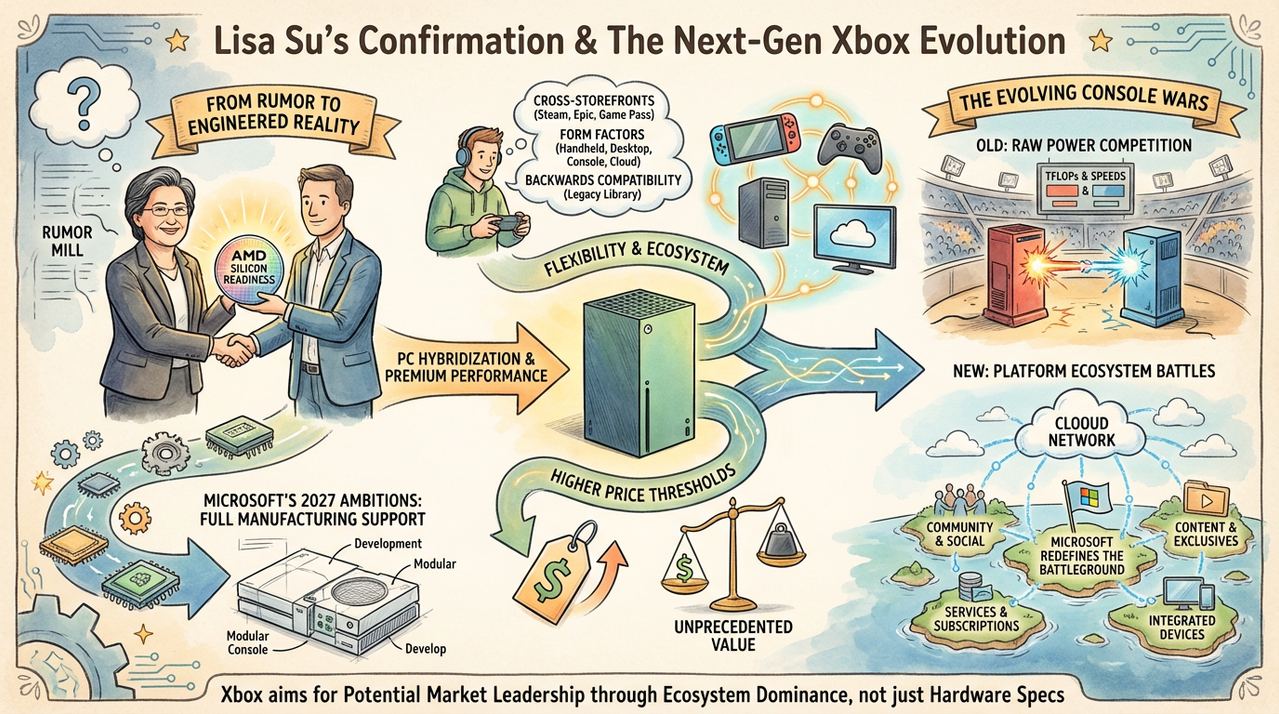
The timing makes strategic sense. By 2027, Xbox Series X and Series S will enter their eighth year on the market, following the industry-standard seven-to-eight year console generation cycle. This positions Microsoft to refresh hardware while current-gen consoles remain relevant through strong backwards compatibility and Game Pass ecosystem integration. Su also mentioned Valve’s AMD-powered Steam Machine shipping early 2026, suggesting AMD’s console-grade silicon roadmap is firing on all cylinders.
Importantly, Su’s comments specifically reference the ‘next-gen Xbox’ rather than handheld devices or mid-generation refreshes. This confirms focus remains on Microsoft’s flagship home console successor, internally codenamed AMD Magnus according to hardware leakers. The semi-custom SoC designation mirrors AMD’s work on PS5, PS5 Pro, and Xbox Series X/S – custom silicon optimized for gaming workloads with console-specific features like hardware ray tracing and machine learning acceleration.
Technical Details Emerging About AMD Magnus
While Su avoided technical specifics, the ‘semi-custom SoC’ description aligns with extensive leaks about the next Xbox’s architecture. Industry insiders claim Magnus will feature Zen 6 CPU cores paired with an RDNA 5 GPU – representing multiple generations of advancement over current Xbox Series silicon. Rumors suggest a dramatically larger die size (46% bigger than PS6’s chip) enabling unprecedented compute power, potentially positioning Xbox as the most powerful console ever built.
| Console | CPU Architecture | GPU Architecture | Reported Launch |
|---|---|---|---|
| Xbox Series X | Zen 2 (8 cores) | RDNA 2 | 2020 |
| PS5 | Zen 2 (8 cores) | RDNA 2 | 2020 |
| Next Xbox (Magnus) | Zen 6 (+Zen 6c) | RDNA 5 | 2027 |
| PS6 (Rumored) | Zen 5/6 hybrid | RDNA 5 | 2027 |
The table above compares current and next-gen architectures based on leaks and Su’s confirmation. Magnus reportedly targets early 2026 silicon tapeout with dev kits shipping late 2026/early 2027 – standard lead times for retail launch. This aggressive roadmap suggests Microsoft isn’t waiting for Zen 7 or RDNA 6, prioritizing market timing over bleeding-edge silicon.
Premium Pricing and Hybrid Console Strategy
Su’s confirmation arrives amid rumors that next-gen Xbox will command premium pricing of $800-$1200, positioning it as a high-end gaming PC rather than traditional console. Xbox leadership including Phil Spencer and Sarah Bond have described the platform as delivering ‘the largest technical leap you will have ever seen’ and a ‘very premium, very high-end curated experience.’ This suggests a fundamental shift from mass-market hardware toward enthusiast-grade performance.

Multiple reports indicate the console will support Steam, Epic Games Store, and GOG alongside Xbox Store – effectively functioning as a Windows gaming PC with deep Xbox integration. Hardware-level backwards compatibility ensures Series X/S libraries remain playable, while Game Pass Ultimate provides day-one access to first-party titles across PC, cloud, and console. This hybrid approach aims to capture gamers frustrated by PC complexity while retaining console exclusivity benefits.
Microsoft appears to be abandoning the dual-SKU strategy of Series X/S. No direct Series S successor appears in leak roadmaps, suggesting the cheaper handheld Xbox (codename Project Keenan) will fill that market role. This consolidation focuses resources on premium hardware while portable gaming captures budget-conscious players through Game Pass subscriptions.
Industry Context and Competitive Landscape
Su’s 2027 timeline suspiciously aligns with PlayStation 6 rumors targeting the same window. Both AMD-powered consoles entering their seventh market year simultaneously sets up potential head-to-head launches reminiscent of PS5/Xbox Series X in 2020. However, strategic divergence appears likely – Sony maintaining traditional console architecture while Microsoft pursues PC hybridization.
Component pricing pressures support premium positioning. Su’s comments coincide with skyrocketing RAM/SSD costs driven by AI data center demand, plus President Trump’s tariffs increasing imported electronics prices. Recent $1000+ Xbox-branded handhelds (ROG Ally X, Xbox Ally) demonstrate market willingness to pay for premium gaming devices. Next-gen consoles risk $1000+ price tags unless Microsoft absorbs massive losses.
What This Means for Gamers and Developers
For gamers, 2027 offers clarity on upgrade timing. Current-gen Xbox remains supported through at least 2028 with backwards compatibility ensuring library longevity. Game Pass provides value across generations while premium hardware targets enthusiasts willing to pay for maximum fidelity. Budget players benefit from handheld Xbox and cloud streaming options.
Developers gain 18-24 months planning window for Magnus-specific features. Zen 6+RDNA 5 enable advanced machine learning upscaling, enhanced ray tracing, and mesh shaders – positioning Xbox as AI gaming leader. Microsoft’s open storefront strategy attracts PC developers while console optimization tools maintain exclusivity benefits.
Frequently Asked Questions
Does Lisa Su’s statement confirm a 2027 Xbox launch?
Close but not definitive. Su confirmed AMD’s silicon will be ready to ‘support a launch in 2027,’ indicating engineering milestones achieved. Microsoft’s final decision remains pending, though all signs point to this timeline based on consistent leaks and standard dev cycles.
What chip will power next-gen Xbox?
AMD Magnus – custom semi-custom SoC with Zen 6 CPU cores and RDNA 5 GPU. Leaks suggest significantly larger die than PS6 chip, targeting unprecedented console compute power with hardware ray tracing and AI acceleration.
How much will next-gen Xbox cost?
Expect $800-$1200 pricing based on component costs and Xbox leadership statements about ‘premium’ positioning. No traditional budget SKU appears likely; handheld Xbox fills that role while flagship targets enthusiasts.
Will current Xbox games work on next-gen?
Yes – hardware-level backwards compatibility confirmed across Microsoft platforms. Series X/S libraries remain fully playable with potential enhancements via FSR 4 upscaling and Auto HDR.
Can next-gen Xbox play Steam games?
Reports indicate Steam, Epic Games Store, and GOG support alongside Xbox Store. Hybrid PC-console architecture provides storefront flexibility while maintaining Game Pass integration and console optimization.
Is there a next-gen Series S?
No direct successor planned. Microsoft consolidates around premium console + handheld strategy. Project Keenan handheld targets budget market while flagship delivers maximum performance.
When will we see the next Xbox revealed?
Summer 2026 dev kit shipments suggest 2026 holiday reveal typical for 2027 launches. Microsoft may stagger announcements – handheld first, followed by flagship console details.
Setting the Stage for Console Revolution
Lisa Su’s confirmation transforms next-gen Xbox from rumor to engineered reality. AMD’s silicon readiness signals Microsoft’s 2027 ambitions enjoy full manufacturing support, positioning Xbox for potential market leadership through PC hybridization and premium performance. Gamers face higher price thresholds but gain unprecedented flexibility across storefronts, form factors, and backwards compatibility. The console wars evolve from raw power competition toward platform ecosystem battles – and Microsoft appears ready to redefine the battleground entirely.