The gaming community is buzzing after a job listing surfaced revealing that Bandai Namco’s GYAAR Studio is working on a project with Sony. Given that Bandai Namco played a significant role in reviving multiple Japan Studio franchises recently, speculation is running wild about which dormant PlayStation IP could be next in line for a comeback. With franchises like LocoRoco, Gravity Rush, Tokyo Jungle, and Puppeteer all sitting idle, the possibilities are tantalizing.
- Who Is GYAAR Studio and Why Does This Matter
- The Japan Studio Legacy and Its Uncertain Future
- Which Franchises Could Get the Revival Treatment
- The Strategic Partnership Between Sony and Bandai Namco
- What This Could Mean for PlayStation’s Future
- Frequently Asked Questions
- Tempering Expectations While Staying Hopeful
Who Is GYAAR Studio and Why Does This Matter
GYAAR Studio is Bandai Namco’s internal indie game brand, established specifically to foster new creators and develop experimental titles outside the publisher’s massive franchises. The studio has previously worked on quirky projects like Doronko Wanko, a lighthearted action game that launched on PC in March 2024 and hit Nintendo Switch in July 2025. While GYAAR focuses on smaller-scale productions, their involvement with a Sony project suggests something more significant than their typical indie fare.
What makes this collaboration particularly interesting is Bandai Namco’s proven track record with Sony properties. The publisher has already helped bring back several beloved Japan Studio franchises in recent years, working on revivals that delighted longtime PlayStation fans. This established relationship between the two companies, combined with Sony’s strategic 2.5% stake in Bandai Namco acquired in July 2025, creates a foundation for deeper collaboration on gaming projects beyond just anime and manga adaptations.
The Japan Studio Legacy and Its Uncertain Future
Japan Studio was Sony’s oldest and most experimental first-party developer, responsible for creative cult classics that defined PlayStation’s quirky side. The Tokyo-based studio created iconic franchises including Ape Escape, LocoRoco, Patapon, Gravity Rush, Tokyo Jungle, and Puppeteer. However, in 2021, Sony restructured the studio into Team ASOBI, the team behind Astro’s Playroom, effectively ending Japan Studio’s role as a multi-project developer. Most of the studio’s legendary creators departed, including Gravity Rush director Keiichiro Toyama and Bloodborne producer Masaaki Yamagiwa.
The restructuring left dozens of beloved franchises in limbo. While Team ASOBI continues to thrive with the Astro Bot series, the fate of Japan Studio’s other IPs remained uncertain for years. Sony’s focus shifted toward global blockbusters rather than the Japan-centric experimental titles that made the studio special. This created a void in PlayStation’s lineup for the colorful, creative experiences that once defined the platform’s identity alongside its AAA heavyweights.
Which Franchises Could Get the Revival Treatment
Several Japan Studio properties stand out as prime candidates for revival. LocoRoco, the charming musical platformer about blob-like creatures rolling through vibrant worlds, earned critical acclaim on PSP with an 83 Metacritic score. The franchise saw PS4 remasters in 2017 but hasn’t received a proper new entry since 2008. Its simple yet addictive gameplay and distinctive art style would translate beautifully to modern hardware, making it an ideal candidate for GYAAR Studio’s indie-focused approach.
Gravity Rush presents another compelling option, especially given that a live-action movie adaptation is currently in development at PlayStation Productions. First released on PS Vita in 2012, Gravity Rush follows Kat, a girl with gravity-manipulating powers who protects the floating city of Hekseville. A film adaptation would create perfect synergy for a game revival, much like how successful adaptations have breathed new life into other gaming franchises. With VGC reporting that PlayStation is actively working to bring back “deep-cut old IP,” Gravity Rush fits that description perfectly.
Other possibilities include Patapon, the rhythm-based strategy game series, and Tokyo Jungle, the post-apocalyptic animal survival game that became a cult hit despite mixed reviews. Even more obscure titles like Puppeteer, the theatrical platformer, or Ape Escape could potentially return. The key factor is finding franchises that match GYAAR Studio’s creative sensibilities while appealing to both nostalgic fans and new audiences hungry for unique gaming experiences.
The Strategic Partnership Between Sony and Bandai Namco
Sony’s relationship with Bandai Namco extends far beyond this single collaboration. In July 2025, Sony acquired a 2.5% stake in Bandai Namco for approximately 68 billion yen, solidifying a strategic partnership focused on expanding IP across multiple entertainment mediums. While the official announcement emphasized anime and manga content, gaming formed a substantial unspoken component given both companies’ massive presence in the industry. Sony is also the largest shareholder in Kadokawa, which owns FromSoftware, Bandai Namco’s development partner on the Souls series and Elden Ring.
The partnership agreement mentions joint development and promotion of IP, technical collaboration on experiential entertainment, and support for creators through jointly developed technologies and services. This framework provides the perfect structure for reviving dormant gaming franchises. Bandai Namco brings development expertise and a willingness to experiment with smaller-scale projects through GYAAR Studio, while Sony provides beloved IP with built-in fanbases and strong brand recognition. It’s a win-win arrangement that could finally give Japan Studio’s legacy the attention it deserves.
What This Could Mean for PlayStation’s Future
If this collaboration results in successful revivals of Japan Studio franchises, it could signal a philosophical shift at PlayStation. After years of prioritizing massive AAA blockbusters aimed at global audiences, Sony might finally be recognizing the value of diverse, mid-tier experiences. These games won’t sell tens of millions of copies like God of War or The Last of Us, but they serve crucial roles in maintaining platform identity and appealing to different player demographics. Nintendo has mastered this balance, supporting experimental titles alongside their tentpole releases.
The timing also aligns with broader industry trends. With AAA development costs skyrocketing and timelines stretching to five-plus years, publishers are rediscovering the value of smaller projects that can be developed more quickly and affordably. Games like Hi-Fi Rush and Sea of Stars proved that mid-budget titles with strong creative visions can achieve critical and commercial success. Reviving beloved franchises with proven concepts reduces some financial risk while satisfying fan demand for variety in PlayStation’s lineup.
Frequently Asked Questions
What is GYAAR Studio?
GYAAR Studio is Bandai Namco’s internal indie game brand created to foster new creators and develop smaller-scale experimental games. The studio has previously worked on titles like Doronko Wanko and focuses on creative projects outside Bandai Namco’s major franchises.
What happened to Sony Japan Studio?
Sony Japan Studio was restructured in April 2021 and reorganized into Team ASOBI, the developers behind Astro’s Playroom. Most of the original studio’s staff departed, leaving many of their beloved franchises dormant without a clear development home.
Which Japan Studio franchises could come back?
Prime candidates include LocoRoco, Gravity Rush, Patapon, Tokyo Jungle, Puppeteer, and potentially Ape Escape. Any of these dormant IPs could benefit from revival, especially given PlayStation’s reported interest in bringing back deep-cut old franchises.
When did Sony invest in Bandai Namco?
Sony acquired a 2.5% stake in Bandai Namco in July 2025 for approximately 68 billion yen as part of a strategic partnership. While the official focus was on anime and manga, the agreement includes joint development initiatives that could extend to gaming.
Is Gravity Rush getting a new game?
Nothing is officially confirmed, but a Gravity Rush live-action movie is in development at PlayStation Productions. If the film succeeds, it could create momentum for a game revival, similar to how successful adaptations have revitalized other gaming franchises.
Has Bandai Namco worked on PlayStation exclusives before?
Yes, Bandai Namco has a long history with PlayStation, dating back to being one of Sony’s biggest allies during the original PlayStation launch. The company has helped revive multiple Japan Studio franchises in recent years and frequently collaborates with Sony on various projects.
When will we learn more about this project?
The job listing provides no timeline for announcement or release. Given that the position appears to be for early development stages, any official reveal is likely months or potentially years away depending on the project’s scope.
Tempering Expectations While Staying Hopeful
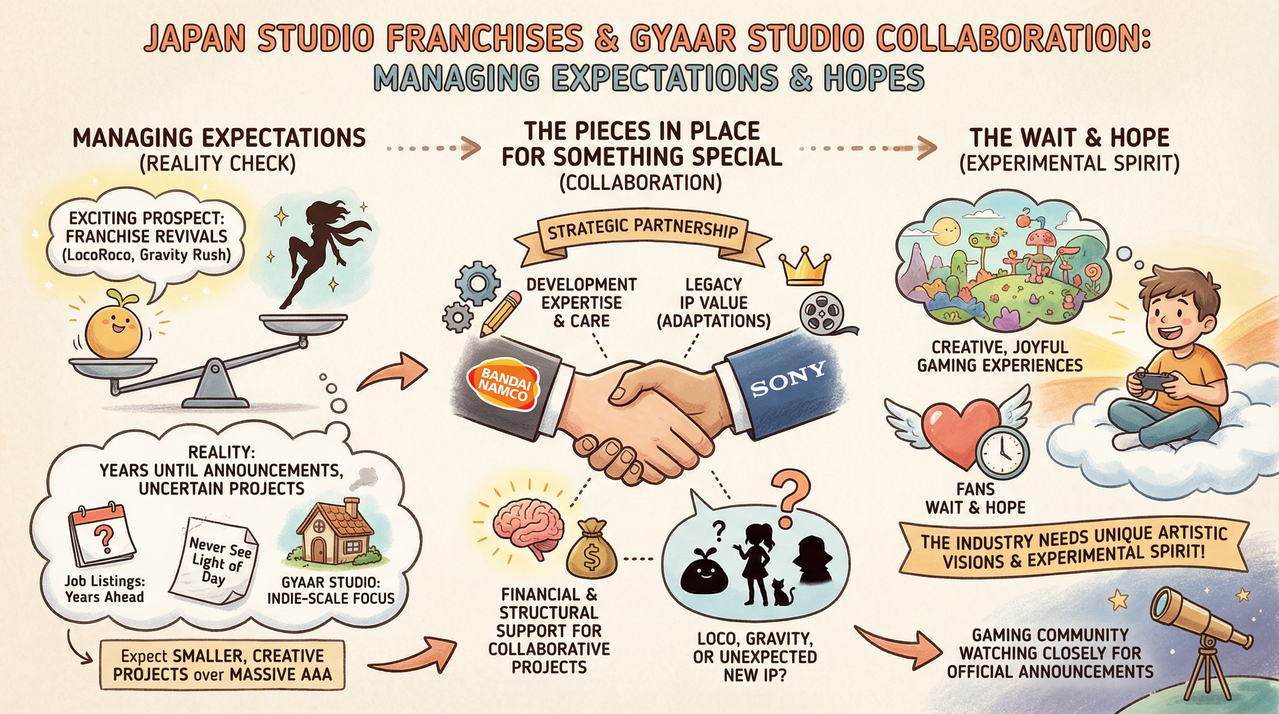
While the prospect of Japan Studio franchises returning is exciting, it’s important to manage expectations. Job listings often appear years before official announcements, and many projects never see the light of day. The collaboration could result in something entirely new rather than a franchise revival, or it might be a smaller project than fans are imagining. GYAAR Studio specializes in indie-scale games, so expectations should align with that reality rather than hoping for massive AAA productions.
That said, the pieces are certainly in place for something special. Bandai Namco has the development expertise and Sony relationship necessary to handle these beloved franchises with care. Sony clearly recognizes the value of its legacy IP portfolio, as evidenced by pursuing film and television adaptations. The strategic partnership creates financial and structural support for collaborative projects. Whether it’s LocoRoco, Gravity Rush, or something completely unexpected, the gaming community will be watching closely for any official announcements about what GYAAR Studio and Sony are cooking up together.
For now, all fans can do is wait and hope that this collaboration results in the kind of creative, joyful gaming experiences that made Japan Studio special. The industry needs more games willing to take risks and embrace unique artistic visions, and reviving these dormant franchises could be exactly what PlayStation’s lineup needs to recapture some of that experimental spirit.