Code Vein II launches on January 30, 2026, with an unusual localization twist that flips typical censorship patterns. Director Yoshimura revealed in a joint media interview that the Japanese version will replace the term “Revenants” with “Kyuuketsuki,” the standard Japanese word for vampires. Meanwhile, international versions releasing simultaneously on PlayStation 5, Xbox Series X|S, and PC will keep calling these undead creatures Revenants. This reverse localization approach stems from lore changes between the two games, creating a rare situation where the domestic Japanese release gets altered while overseas versions preserve the original terminology.
The decision highlights how different cultural contexts shape gaming terminology and localization choices. Whereas the first Code Vein featured bio-engineered immortals artificially created through scientific experimentation, Code Vein II establishes these beings as naturally existing creatures within the world’s mythology. In Japanese culture, calling naturally occurring undead creatures by their proper name makes more sense than using the English loan word “Revenant,” which carries connotations of resurrection or return from death that don’t perfectly fit the revised lore.
Why the Name Change Matters
According to director Yoshimura’s explanation to Famitsu, the terminology shift reflects fundamental worldbuilding differences between Code Vein and its sequel. The 2019 original positioned Revenants as humans transformed through bioengineering experiments following an apocalyptic event called the Great Collapse. These artificially created undead retained some humanity but required consuming blood to avoid becoming mindless Lost. The term “Revenant” worked perfectly for describing resurrected or returned beings given unnatural immortality.
Code Vein II completely refreshes this backstory. The sequel establishes Revenants as creatures that naturally exist within the world rather than manufactured abominations. This fundamental lore change created linguistic problems for the Japanese version. Using “Revenant” as a loan word made sense when describing artificially created beings, but calling naturally occurring vampiric creatures by an English term felt disconnected from the new mythology. Switching to “Kyuuketsuki” grounds these beings in Japanese cultural understanding of vampires as natural supernatural entities.
For Western releases, Bandai Namco decided maintaining “Revenants” creates better brand consistency with the first game while also avoiding confusion. English-speaking audiences already associate the Code Vein franchise with Revenants specifically, and the term carries enough ambiguity that it works for both artificial and natural origins. Additionally, “vampire” in English comes loaded with very specific Dracula-influenced expectations about weaknesses, behavior, and appearance that might not match Code Vein II’s portrayal.
How It Affects Gameplay Experience
The terminology change only impacts dialogue and text. While there’s no official confirmation about subtitle options when playing with Japanese audio, players can expect spoken Japanese dialogue to use “Kyuuketsuki” while English subtitles translate it back to “Revenants.” This creates potential dissonance for bilingual players or those familiar with Japanese who notice characters saying one word while reading another on screen.
Beyond terminology, Code Vein II maintains the core gameplay loop that made the original successful. Players create custom protagonists who team up with a time-bending companion named Lou to investigate the Luna Rapacis, a mysterious force transforming Revenants into rampaging monsters called Horrors. The blood action combat system returns, letting players drain enemies to unlock powerful skills and abilities. New weapons including Rune Blades and Dual Swords expand combat options, while Forma skills like the Motorcycle Forma and Absolute Execution Sword add flashy special moves.

The Reverse Censorship Pattern
What makes this situation fascinating is how it inverts typical localization patterns. Usually, Japanese games get altered when brought to Western markets due to content concerns, cultural differences, or marketing decisions. Famous examples include removing religious imagery, toning down violence, or redesigning characters to be less sexualized. Code Vein II flips this dynamic by changing the Japanese domestic version while leaving international releases untouched.
This isn’t unprecedented but remains relatively rare. Recent examples include Tales of Berseria Remastered, which used the international “censored” version for its Japanese rerelease, and Onimusha: Way of The Sword, whose director stated “we want everyone to have the same experience” when discussing unified content across regions. These cases represent growing awareness among Japanese developers that global audiences deserve parity, though Code Vein II’s approach differs by specifically altering Japanese content for lore consistency rather than censorship concerns.
Reddit discussions about the change reveal Western players find it amusing rather than controversial. One user noted that switching to the Japanese word for vampire makes the game “more Japanese” for domestic audiences while maintaining brand recognition internationally. Another pointed out that “revenant” is distinctive and somewhat ambiguous in English, making it easier for Western players to accept compared to the generic associations that “vampire” carries.
What Players Can Expect at Launch
Code Vein II launches January 30, 2026, with early access beginning January 27 for Deluxe, Ultimate, and Collector’s Edition purchasers. The standard edition costs $69.99 across PlayStation 5, Xbox Series X|S, and PC via Steam. Bandai Namco positioned the sequel as a fresh starting point that doesn’t require playing the 2019 original, though returning fans will appreciate narrative connections and mechanical refinements.
The game features a customizable protagonist with extensive creation options covering body type, hairstyle, facial features, accessories, and makeup. Players explore past and present versions of environments using time manipulation mechanics, uncovering how the Luna Rapacis threat emerged and escalated. Partner characters provide combat assistance and deep narrative connections, each bringing unique abilities that complement different playstyles.

Reception and Expectations
Code Vein launched in 2019 to mixed-positive reviews, praised for its anime aesthetic and satisfying combat but criticized for repetitive environments and confusing story presentation. The game found a dedicated audience despite never reaching Dark Souls or Bloodborne levels of mainstream success. PC Gamer’s coverage of Code Vein II suggests the aesthetic feels like “a step back from the original,” though gameplay improvements and the time-travel premise could address criticisms about variety.
GameSpot and Game Informer covered the initial announcement at Summer Game Fest 2025 and subsequent State of Play release date reveal in September 2025. Trailers showcase improved visuals leveraging current-generation hardware, more dynamic boss fights, and expanded weapon variety. The photo mode returns with enhancements, catering to the community that enjoyed creating dramatic character screenshots in the original.
Pre-order numbers haven’t been publicly disclosed, but Code Vein II faces tough competition in late January 2026. The game launches just weeks after major holiday releases and must compete for attention in a crowded action RPG market. However, the distinctive anime aesthetic and soulslike combat create a niche that few games fill, potentially ensuring strong sales from the established fanbase regardless of mainstream breakthrough status.
The Broader Localization Conversation
Code Vein II’s terminology change reignites ongoing debates about localization philosophy. Some argue translations should preserve exact meanings even when cultural context gets lost, maintaining authenticity at the cost of clarity. Others believe good localization adapts content to feel natural in the target language and culture, prioritizing player experience over literal accuracy. Code Vein II’s approach splits the difference by making different choices for different audiences based on cultural familiarity and brand expectations.
The decision to keep “Revenants” for Western releases while switching to “Kyuuketsuki” domestically suggests Bandai Namco recognizes no single approach works universally. Japanese players benefit from terminology that aligns with revised lore and cultural understanding of vampires. Western players benefit from consistency with the established franchise branding. Neither version is more “correct” than the other, they’re simply optimized for different audiences with different expectations and reference points.
This pragmatic approach to localization acknowledges that games exist in specific cultural contexts that shape how players interpret and engage with content. Rather than forcing one version to work everywhere or creating controversy by censoring content, Bandai Namco made thoughtful decisions about what terminology serves each audience best. Whether this becomes a template for future releases or remains a unique case study depends on how the community responds and whether the approach successfully balances authenticity with accessibility.
FAQs About Code Vein 2 Terminology Change
When does Code Vein 2 release?
Code Vein II launches on January 30, 2026, for PlayStation 5, Xbox Series X|S, and PC via Steam. Players who purchase Deluxe, Ultimate, or Collector’s Editions get early access starting January 27, three days before the standard release.
Why did Bandai Namco change Revenants to vampires in Japan?
Director Yoshimura explained that Code Vein II’s lore establishes these creatures as naturally existing within the world rather than bio-engineered beings like in the first game. Using “Kyuuketsuki” (the Japanese word for vampire) makes more cultural sense for naturally occurring undead creatures in the domestic market.
Will international versions of Code Vein 2 keep using Revenants?
Yes, all international versions including English, European languages, and other non-Japanese releases will continue using the term “Revenants” for brand consistency with the 2019 original and to avoid confusion with Western vampire expectations.
Is this censorship or localization?
This is localization rather than censorship. The change stems from worldbuilding decisions that made the original English term less appropriate for Japanese audiences given revised lore, not from content restrictions or moral concerns. It’s actually reverse localization since the Japanese version gets changed while international versions stay unchanged.
Do I need to play Code Vein 1 before playing Code Vein 2?
No, Bandai Namco positioned Code Vein II as a fresh starting point with a brand-new story, different setting, and refreshed lore. While returning fans may appreciate connections and references, the sequel is designed to be accessible to newcomers without prior knowledge.
What platforms is Code Vein 2 coming to?
Code Vein II is coming to PlayStation 5, Xbox Series X|S, and PC via Steam. The game is not releasing on PlayStation 4, Xbox One, or Nintendo Switch, making it a current-generation exclusive. The standard edition costs $69.99 across all platforms.
What gameplay changes are in Code Vein 2?
Code Vein II adds time-travel mechanics letting players explore past and present versions of environments, new weapons including Rune Blades and Dual Swords, Forma skills like the Motorcycle Forma, improved partner AI, and expanded customization options. The blood action combat system returns with refinements.
Will subtitles change when playing with Japanese audio?
While there’s no official confirmation, players can expect spoken Japanese dialogue to use “Kyuuketsuki” while English subtitles translate it as “Revenants.” This may create dissonance for bilingual players who notice the terminology mismatch between audio and text.
Conclusion
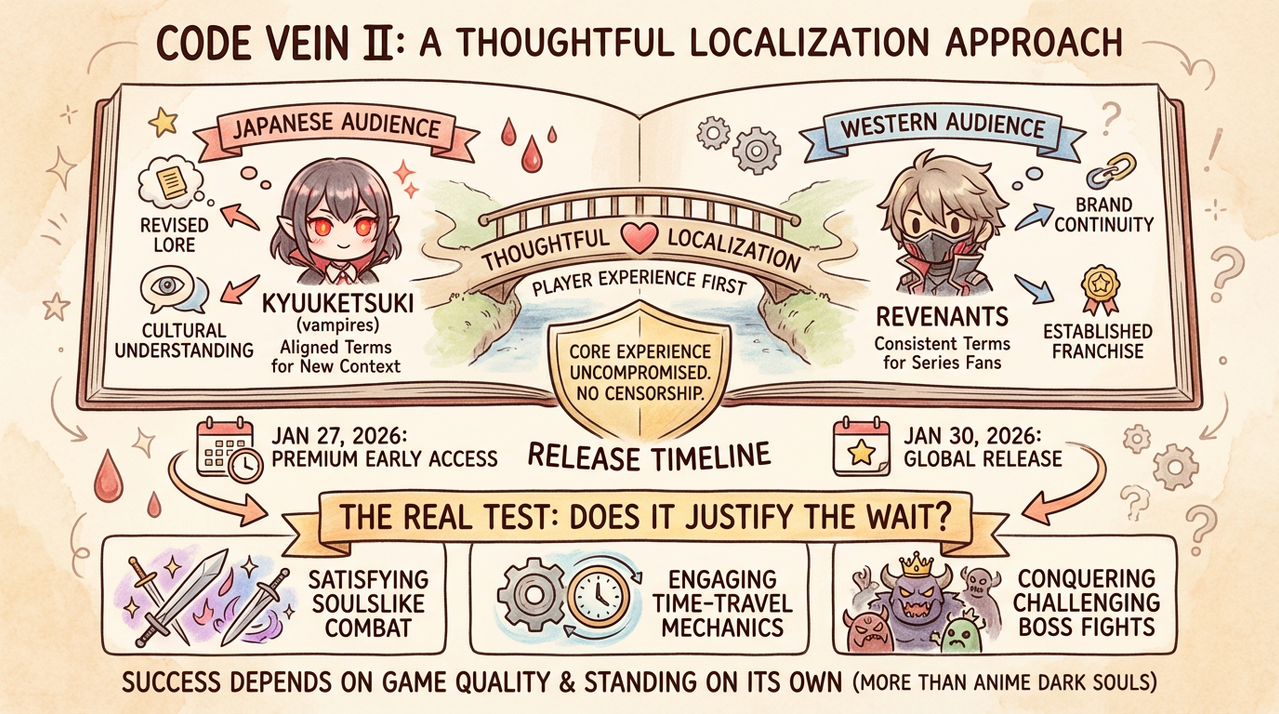
Code Vein II’s decision to change terminology for Japanese audiences while preserving it internationally represents an unusual but thoughtful approach to localization. By recognizing that different cultural contexts require different terminology choices, Bandai Namco prioritizes player experience over rigid consistency. Japanese players get terms that align with revised lore and cultural understanding of vampires. Western players get brand continuity with the established franchise. Neither version compromises the core experience or censors content, they’re simply optimized for different audiences. The January 30, 2026 release approaches quickly, with early access beginning January 27 for premium edition buyers. Whether the terminology change becomes a talking point or gets quickly forgotten depends on how well the game itself performs. If Code Vein II delivers satisfying soulslike combat, engaging time-travel mechanics, and improved variety compared to the 2019 original, most players won’t care whether characters are called Revenants or Kyuuketsuki. They’ll just care about draining blood, building powerful skill combinations, and conquering challenging boss fights in a stylish anime-inspired dark fantasy world. The real test isn’t whether Bandai Namco made the right localization decision, but whether Code Vein II justifies the six-year wait between games and establishes itself as more than just anime Dark Souls.