The cozy gaming genre keeps growing, but most titles focus on fantasy villages or magical farms. Dream Village from solo developer VIVA takes a refreshingly grounded approach. You’re not saving the world or uncovering ancient mysteries. You’re just living a peaceful countryside life, decorating your home exactly how you want it, growing vegetables in your garden, and yes, driving your pickup truck to the store because buying in bulk saves money. Sometimes that’s exactly the escapism we need.
Build Your Idyllic Countryside Retreat
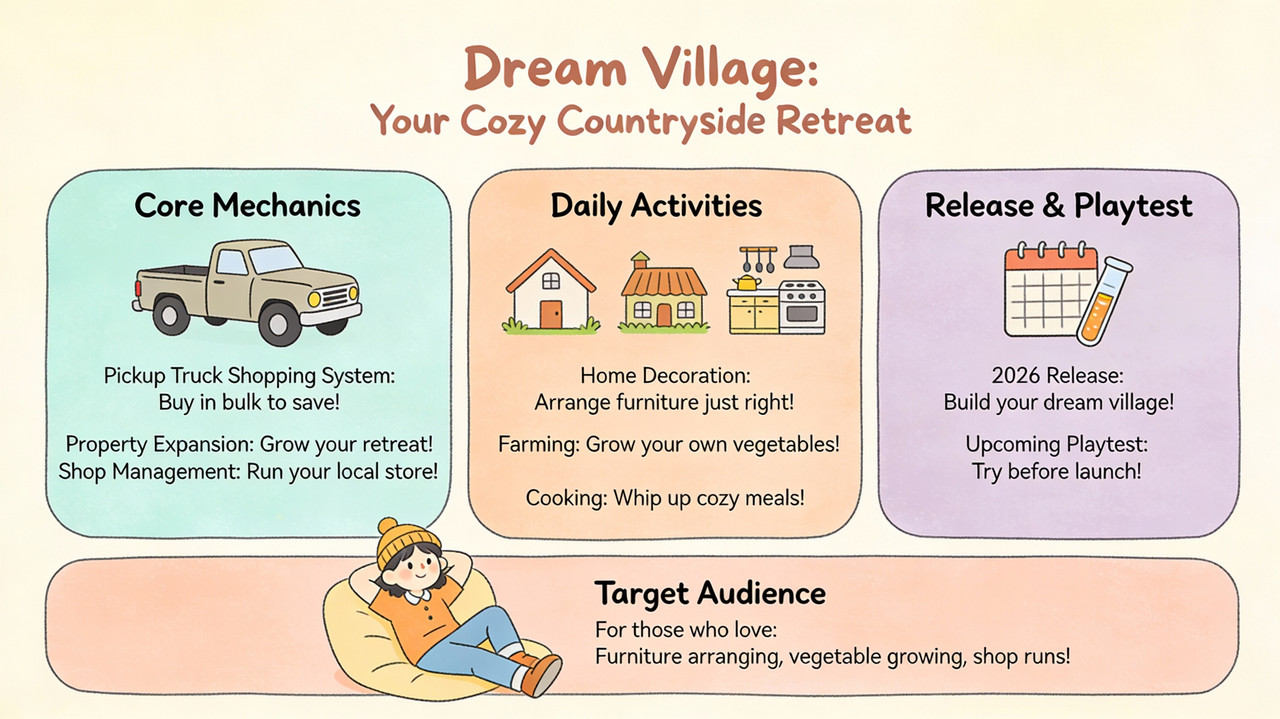
Dream Village starts you off with a modest home and the freedom to transform it into whatever you envision. The decoration system lets you arrange furniture, lighting, and decorative items precisely how you want them. This isn’t preset room templates where everything snaps to predetermined spots. You have genuine creative control over your living space, making it feel like your personal sanctuary rather than just another cookie-cutter game house.
The dynamic day-night cycle and varying weather conditions add life to your environment. Watching the sun set over your carefully tended garden hits differently when you’ve spent the afternoon arranging flower pots and choosing curtains. The game emphasizes tranquility over challenge, creating a stress-free space where perfectionism is optional and experimentation is encouraged.
As you settle into village life, you can expand beyond your starter home. Renovate additional properties and rent them out, creating passive income that funds further improvements. Or open your own shop in the village mall, shifting from resident to entrepreneur while maintaining that cozy small-town atmosphere. The progression feels organic rather than grindy, letting you grow your presence in the village at your own comfortable pace.

The Pickup Truck Economy
Here’s where Dream Village gets clever. You can shop locally, walking to nearby stores and buying what you need for the day. It’s convenient, it’s pleasant, and it supports the village economy. But VIVA understands that real countryside living involves practical considerations. Sometimes you need to stock up, and that’s where your pickup truck comes in.
Drive to larger stores outside the village to buy in bulk and save money. This simple mechanic adds a layer of decision-making without creating stress. Do you make frequent small trips and enjoy the social aspect of local shopping? Or do you plan ahead, load up the truck bed, and maximize efficiency? Both approaches work, and you can switch between them based on your mood and needs.
The truck isn’t just a shopping tool. It represents freedom and practicality in ways that cozy games often overlook. Real rural living involves vehicles, errands, and the satisfaction of bringing home a truck full of supplies. Dream Village captures that feeling without turning it into tedious resource management. It’s transportation as lifestyle choice rather than mandatory chore.
Garden to Table Living
Cultivation forms the heart of Dream Village’s gameplay loop. Your garden provides fresh ingredients that you transform into delicious meals through the cooking system. This isn’t abstract crafting where you click buttons and food appears. The game emphasizes the process of growing, harvesting, and preparing meals, creating a connection between your gardening efforts and the results on your plate.

Soup features prominently in the cooking mechanics, which feels appropriately cozy and practical. There’s something inherently comforting about soup, and using your homegrown vegetables to prepare hearty bowls for yourself creates satisfaction that more complex cooking systems sometimes miss. It’s the simple pleasures that make cozy games work, and Dream Village seems to understand that.
The farm management stays accessible rather than overwhelming. You’re not juggling complicated crop rotation schedules or worrying about optimal planting patterns. You’re gardening because it’s relaxing and provides ingredients for cooking. The game removes the anxiety that sometimes creeps into farming sims when they prioritize efficiency over enjoyment.
The Solo Developer Journey
VIVA is developing Dream Village entirely solo, handling every aspect from programming to art to design. This one-person approach shows in the game’s focused vision. There’s no committee diluting the concept or publishers demanding feature bloat. Dream Village knows exactly what it wants to be: a soothing countryside life simulator for people who want to decorate homes and grow vegetables without combat, quests, or artificial urgency.
The developer actively engages with the community through Reddit, sharing updates and gathering feedback. VIVA announced that a playtest version will be coming to Steam, giving curious players a chance to experience the mechanics before the full 2026 release. This transparency and willingness to iterate based on player input suggests a developer who genuinely cares about creating something people will love rather than just shipping a product.
For solo developers, scope management is crucial. Dream Village’s feature set feels deliberate and achievable rather than overly ambitious. Home decoration, farming, cooking, shopping mechanics with the truck element, and property expansion create a complete loop without requiring years of additional development. It’s the kind of smart planning that separates finished games from abandoned Early Access titles.
Finding Its Audience
The cozy gaming space has exploded in recent years, with titles like Stardew Valley, Animal Crossing, and Disney Dreamlight Valley proving massive audiences exist for low-stress simulation experiences. Dream Village targets this same demographic but with its own distinct identity through the countryside setting and practical mechanics like truck shopping.
The game’s emphasis on stress-free gameplay positions it perfectly for players seeking digital comfort zones. No timers pressure you. No enemies threaten you. No complex systems demand mastery. You simply exist in this pleasant village, making it more beautiful through your efforts while enjoying the rhythms of rural life. For players suffering from open-world fatigue or competitive multiplayer burnout, this represents exactly the antidote they’re craving.
The wishlist campaign on Steam will be crucial for Dream Village’s success. Solo developers depend on algorithm visibility and community word-of-mouth since they lack marketing budgets. Players who enjoy cozy simulators and want to support indie development should consider wishlisting, as Steam uses those numbers to determine what games to surface to potential customers.
What Sets It Apart
Dream Village faces competition from established cozy games and countless indie simulators. What gives it differentiation is the grounded approach. You’re not befriending magical creatures or uncovering fantasy storylines. You’re living a realistic countryside life with practical considerations like bulk shopping and property investment.
The pickup truck economy particularly stands out as a unique hook. Most cozy games either ignore shopping entirely or make it a simple menu transaction. Dream Village turns it into a meaningful choice that affects how you interact with the village. Supporting local shops versus saving money at distant stores creates gentle role-playing opportunities where you define your character through economic decisions.
The rental property and shop management also add depth without complexity. These aren’t demanding business simulation mechanics. They’re gentle progression systems that let you expand your influence in the village while maintaining the cozy atmosphere. You’re not exploiting tenants or ruthlessly maximizing profits. You’re becoming a more integrated part of the community through property ownership and entrepreneurship.
Frequently Asked Questions
When does Dream Village release?
Dream Village is scheduled for release in 2026 on PC via Steam. A specific date hasn’t been announced yet, but a playtest version is planned.
What platforms will Dream Village be available on?
Currently, Dream Village is confirmed only for PC through Steam. There’s no information about console versions at this time.
Is Dream Village single-player or multiplayer?
Based on available information, Dream Village appears to be a single-player experience focused on creating your personal countryside retreat.
Who is developing Dream Village?
VIVA is the solo developer behind Dream Village, handling all aspects of development independently.
What makes Dream Village different from other cozy games?
Dream Village emphasizes grounded rural living with practical mechanics like using your pickup truck for bulk grocery shopping, property rental, and shop management alongside traditional farming and home decoration.
Will there be a demo or playtest?
Yes, the developer has announced plans for a playtest version on Steam. Check the Steam page and wishlist the game to receive notifications when it becomes available.
Is there combat or stressful elements?
No. Dream Village is explicitly designed as a tranquil, stress-free experience without combat, timers, or challenging systems. It’s purely about enjoying peaceful countryside living.
Can you customize your home?
Yes, the game features detailed home customization where you arrange furniture, lighting, and decorative items to create your ideal living space.
What cooking mechanics does the game have?
You can grow vegetables in your garden and use them to cook meals, with soup specifically mentioned as a featured dish. The cooking emphasizes the satisfaction of preparing food from your own ingredients.
Can you expand beyond your starter home?
Yes, you can renovate and rent out additional properties or open your own shop in the village mall, creating multiple income streams and expanding your presence in the community.
Final Thoughts
Dream Village arrives at a perfect moment for cozy gaming. Players have proven they want digital spaces where they can relax, create, and simply exist without constant demands on their attention. VIVA’s solo-developed simulator understands this desire and builds around it with thoughtful mechanics that enhance rather than complicate the experience. The pickup truck shopping system shows creative thinking about how real rural life works. Buying in bulk to save money might seem like a mundane detail, but it’s exactly these authentic touches that make simulation games feel genuine. Combined with property expansion and shop management, Dream Village offers progression paths that maintain the cozy atmosphere while giving players goals to pursue at their own pace. For solo developers, creating something focused and achievable beats chasing feature bloat every time. Dream Village’s scope feels right-sized for what VIVA can deliver while still offering enough variety to keep players engaged. Home decoration, farming, cooking, shopping, and property management create a complete loop without requiring massive teams or budgets. As we wait for the 2026 release and the upcoming playtest, Dream Village represents the kind of cozy experience that could quietly become a comfort game for thousands of players. It won’t have the marketing budget of Disney Dreamlight Valley or the cultural impact of Animal Crossing, but it doesn’t need to. Sometimes the best games are the ones that know exactly what they want to be and execute that vision with care and authenticity. If you’re the type of person who finds satisfaction in arranging furniture just right, growing your own vegetables, and debating whether to walk to the local shop or load up the truck for a bulk run, Dream Village might be exactly what you’re looking for. Add it to your wishlist, keep an eye out for that playtest, and get ready to build your idyllic countryside retreat when 2026 rolls around. Your pickup truck is waiting.