Kobanchink Studios enters the tactical RPG arena with Hired Blade, a mercenary management sim that strips away fantasy heroism for brutal economic reality. Players inherit a failing blade-for-hire company and must navigate morally gray contracts, fragile alliances, and cutthroat competition through indirect battlefield control and ruthless personnel management. Early Steam Next Fest demo already generates buzz for its mature writing and sophisticated systems design.
From Noble Heir to Ruthless Operator
The protagonist begins as disgraced nobility stripped of inheritance, forced to resurrect family mercenary guild through any means necessary. No shining armor or noble quests – survival demands extortion, church bribes, and selective arson when clients renege payments. Over 150 unique contracts span diplomacy failures, noble feuds, and peasant uprisings, each presenting branching consequences that reshape regional power dynamics.
Indirect combat control represents gameplay innovation. Mercenaries fight autonomously based on pre-set tactics while players adjust positioning, equipment loadouts, and engagement rules mid-battle. Success hinges on matching fighter personalities to mission types – idealistic knights refuse dirty work while psychopathic killers excel at intimidation contracts but risk war crimes charges.
Mercenary Management Hell
Personnel represents greatest asset and liability. Each fighter brings unique skills, personality traits, and loyalty thresholds that shift based on mission assignments and payment timeliness. Assign principled paladin to bandit extortion? Expect desertion. Overpay unreliable rogue for dangerous siege work? Watch profits evaporate. Death carries permanent consequences – fallen veterans cannot return, forcing constant recruitment and training investment.
- 15+ fighter archetypes from knight captains to alchemist saboteurs
- Personality-driven loyalty system with morale decay
- Per-mausoleum skill progression with equipment synergies
- Social dynamics creating internal factions and betrayals

Economy That Punishes Mistakes
Running guild demands MBA-level financial management. Weekly salaries, equipment depreciation, church tithes, and bribe escalations create constant cash flow pressure. Late payments trigger loyalty cascades where one deserter convinces three others to follow. Smart operators invest in training facilities and noble patronage for contract multipliers, while poor decisions spiral into bankruptcy.
| Expense Category | Weekly Cost | Risk Factor |
|---|---|---|
| Salaries (20 fighters) | 800 gold | Desertion cascade |
| Equipment maintenance | 300 gold | Battlefield failures |
| Church donations | 200 gold | Reputation penalties |
| Bribes/Nobles | Variable | Contract access |
Tactical Combat Innovation
Battlefield control blends Fire Emblem grid tactics with real-time adjustments. Fighters execute individual turns within global round structure, allowing players to interrupt with positioning changes, ability retargeting, or emergency retreats. Terrain modifiers, weather effects, and night combat create dynamic engagement zones where knights dominate open fields while rogues excel in forested ambushes.
Personality clash system adds chaos layer – incompatible fighters suffer accuracy penalties and may refuse orders entirely. Victory conditions span total annihilation, tactical withdrawals, and objective completion, rewarding diverse approaches beyond simple unit grinding.

Kobanchink’s Tactical Pedigree
Studio behind Tactical Breach Wizards delivers again with Hired Blade’s sophisticated systems design. Demo showcases polish exceeding typical Steam early access titles, with Steam Next Fest wishlists already surpassing 50K. Community feedback shapes post-launch roadmap including multiplayer guild wars, expanded faction systems, and romance subplots affecting company cohesion.
2026 release targets mature strategy audience hungry for Banner Saga-level writing depth without survival genre fatigue. Console ports confirmed for Switch 2, PS5, Xbox alongside PC launch. Kobanchink positions Hired Blade as spiritual successor to Japanese mercenary sims like Konami’s Mercenary Force.
Frequently Asked Questions
What makes Hired Blade different from Fire Emblem?
Realistic economy punishes grinding, permanent death carries lasting consequences, indirect control emphasizes preparation over micro-management. Moral choices reshape campaign rather than simple alignment shifts.
Is permadeath too punishing?
Balanced approach – elite veterans carry massive value but recruitment system ensures steady replacements. Insurance contracts and noble patronage mitigate veteran losses while maintaining stakes.
Multiplayer or co-op planned?
Post-launch guild vs guild PvP confirmed alongside contract co-op. Single-player campaign represents core experience with 60+ hour main path.
Console versions confirmed?
Full multiplatform support – PC, PS5, Xbox Series X/S, Switch 2. Touch controls optimized for portable play during commutes.
Demo available now?
Steam Next Fest demo showcases first campaign act with 10+ hours content. Save data carries forward to full release.
Mod support planned?
Comprehensive Steam Workshop integration from day one. Custom campaigns, fighter archetypes, economy balancing all supported.
Romance or social systems?
Deep relationship web affects combat cohesion and story branches. Rivalries create battlefield friction while romances unlock unique paired abilities.
The Future of Tactical RPGs
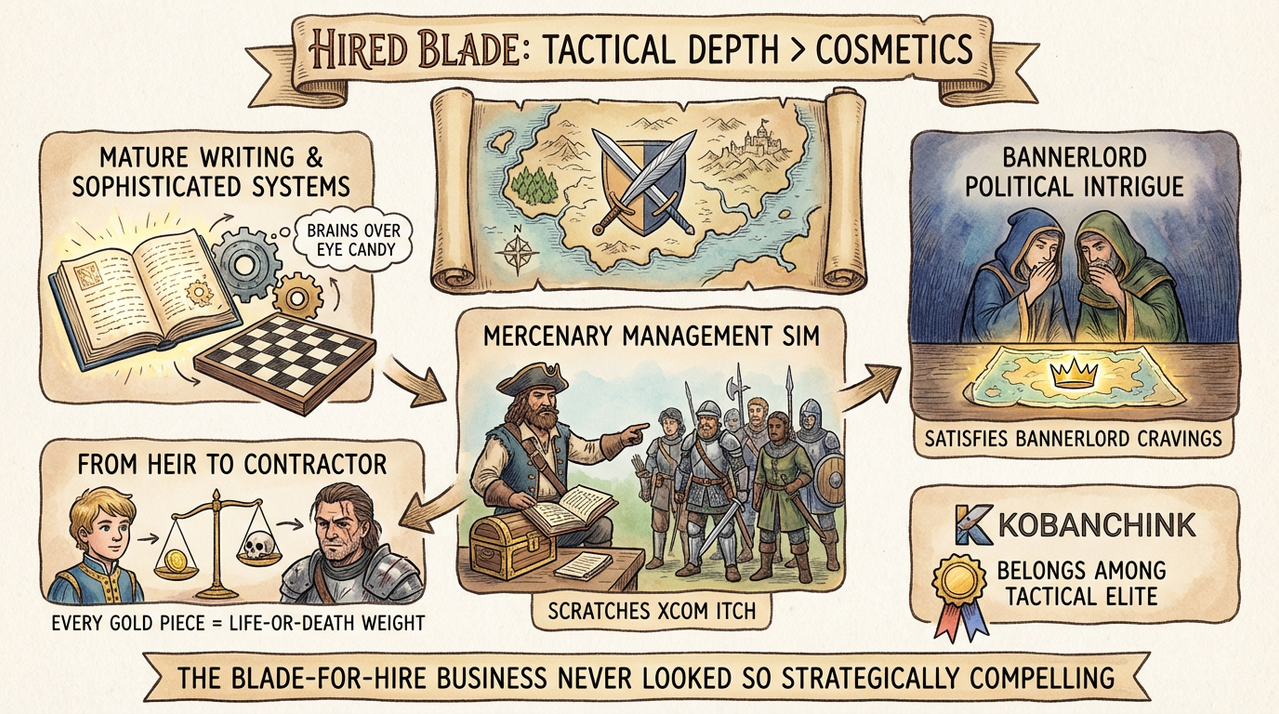
Hired Blade proves turn-based tactics thrive through mature writing and sophisticated systems rather than cosmetic graphical upgrades. Kobanchink delivers mercenary management sim that scratches XCOM itch while satisfying Bannerlord political intrigue cravings.
When noble heir becomes ruthless contractor, every gold piece carries life-or-death weight. Demo proves Kobanchink belongs among tactical elite. The blade-for-hire business never looked so strategically compelling.