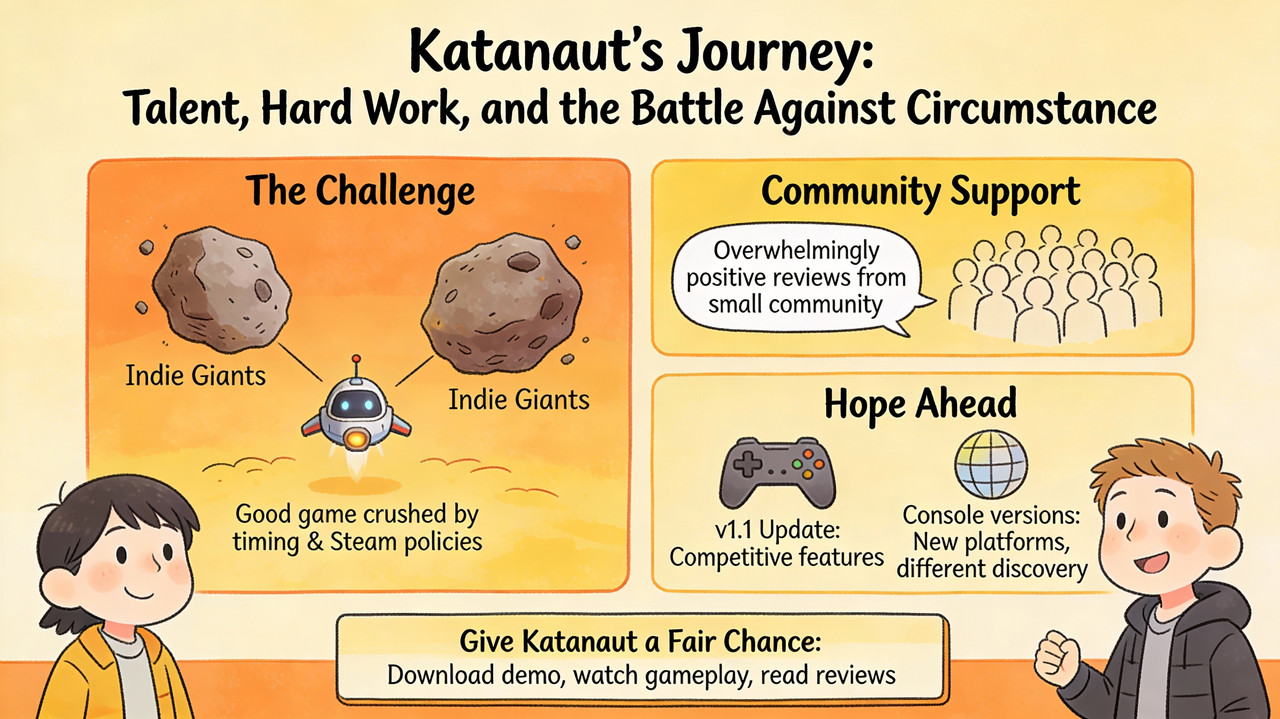
Imagine spending three years of your life building a game, securing a spot at Gamescom to announce your release date, lining up press coverage with embargos, and committing to a Steam launch window. Then the very next day, Hollow Knight: Silksong announces it’s dropping on the same date. Oh, and Hades 2 is hitting 1.0 just days later. Welcome to the indie game development nightmare that befell Eugene, the solo developer behind Katanaut, whose cosmic horror action-roguelite launched September 10, 2025, to critical acclaim and almost zero visibility.
Wrong Place, Wrong Time, Great Game
Katanaut is fast-paced action-roguelite that blends fluid combat with cosmic horror on a collapsing space station. Eugene describes it as Dead Cells style runs, Katana Zero pace, and Dead Space atmosphere. That pitch alone should have generated buzz. The game earned a 91% positive rating on Steam from players who found it. But with 52,000 wishlists, Katanaut peaked at just 11 players at launch.
The timing was catastrophic. Eugene announced his release date at Gamescom after investing significant time and funding. Press embargos were set. Everything was locked in. Then Silksong shadow dropped its release announcement for the same window. Steam’s policy prevents developers from changing release dates within a couple weeks of launch, meaning Eugene was stuck watching his game get buried by one of the most anticipated indies of all time.
But here’s the thing: Katanaut is genuinely good. Reviews consistently praise its fluid combat, challenging roguelite structure, and atmospheric pixel art that sells the cosmic horror vibe. The mechanics work, the difficulty curve rewards skill, and the metroidvania-inspired level design creates satisfying exploration loops. This isn’t some half-baked project that deserved to fail. It’s a polished action game that got unlucky with forces beyond the developer’s control.

What Makes Katanaut Worth Playing
You play as a katana-wielding astronaut fighting through a space station where humans have transformed into twisted horrors. The core loop involves slashing through enemies with melee combat, dodging attacks with precise timing, and wielding abilities unlocked through the roguelite progression system. Each run generates procedural rooms mixed with handcrafted sections, creating fresh challenges while maintaining quality level design.
Combat emphasizes fluidity and rhythm. Your katana swings chain together satisfyingly, with upgrades allowing you to swing your blade over 25 times within five seconds if you spec correctly. Ranged weapons provide tactical options for distant threats. Off-hand items, skills, implants, and perks create deep build variety where no two runs feel identical. The game rewards aggressive play that maintains momentum rather than defensive camping.
The cosmic horror atmosphere sets Katanaut apart from typical roguelites. The station’s descent into chaos feels tangible through environmental storytelling and enemy design. What were once normal humans have been corrupted into abominations, creating unsettling encounters that blend body horror with sci-fi dread. The pixel art style manages to be both gorgeous and disturbing, proving you don’t need photorealistic graphics to create effective horror.
Boss fights provide skill checks that demand mastery of combat systems. These aren’t just damage sponges. Each boss has distinct patterns requiring you to understand tells, time dodges perfectly, and exploit openings. Defeating them feels earned rather than grinding them down through attrition. The soulslike combat influences show clearly in these encounters where precision matters more than raw stats.
The Version 1.1 Update Changes Everything
On January 5, 2026, Katanaut receives its v1.1 update, and it’s substantial. The headlining feature is global leaderboards across six different categories. Eugene is excited about players competing not just for fastest completion times but also most enemies defeated, currency gathered, and other metrics. If you top any leaderboard, everyone sees your achievement, creating competitive incentives beyond just finishing runs.
The update adds new biomes that expand the station’s twisted geography, introducing fresh environments with unique hazards and aesthetics. New enemies provide tactical variety, forcing players to adapt strategies and experiment with different builds. Additional weapons and unlockable content give veterans reasons to return while providing newcomers more tools to overcome challenges.
Most importantly for Katanaut’s future, this update shows continued development commitment. Eugene isn’t abandoning the game after its rough launch. He’s actively improving it, adding requested features, and building community through competitive elements. For a solo developer managing every aspect of development, this level of post-launch support demonstrates genuine passion for the project beyond just recouping investment.
The Solo Developer Journey
Eugene’s experience creating Katanaut over three years highlights both the creative freedom and intense challenges of solo development. Working under the studio name Voidmaw, he handled every aspect: programming, art, design, audio, marketing, and business. His biggest lesson? Done is better than perfect. It’s easy chasing perfection indefinitely, but games are meant to be played, not endlessly tweaked.
That philosophy manifests in Katanaut’s polished but not bloated design. The game focuses on core mechanics that work rather than cramming in every possible feature. The pixel art style allows for expressive visuals without requiring photorealistic asset creation. The roguelite structure provides content through procedural variation rather than hand-crafting hundreds of hours of unique levels. These are smart decisions that let solo developers compete with larger teams.
The painful launch taught brutal lessons about timing and industry realities. Shadow drops create chaos for scheduled releases, especially for unknown developers who can’t pivot quickly. Wishlist conversions rarely match expectations even under ideal conditions. Visibility on Steam requires either algorithmic luck, influencer coverage, or releasing when major competition isn’t drowning out smaller titles. Eugene experienced all three challenges simultaneously.
Despite the difficulties, Eugene has taken the situation with remarkable grace. His viral Twitter post about the launch struggles brought attention to the game while highlighting systemic issues facing indie developers. Some players discovered Katanaut through the post itself, turning bad timing into accidental marketing. A 25% Steam discount during the post’s virality gave curious players incentive to try it, potentially converting sympathy into genuine fans.
Fighting for Recognition
Katanaut’s story represents thousands of quality indie games released each year that simply get buried. Not because they’re bad, but because visibility on digital storefronts depends on algorithms, timing, and luck as much as quality. Eugene did everything right: attending conventions, securing press coverage, building wishlists, polishing the game, and launching with fanfare. Sometimes that’s not enough when you’re competing against Hollow Knight: Silksong.
The positive reviews from players who found Katanaut suggest it has staying power. Word of mouth can overcome rough launches, though it takes longer than developers can often afford. Games like Vampire Survivors, Stardew Valley, and even Terraria grew through community recommendations rather than explosive debuts. Katanaut’s solid foundations and ongoing updates give it that potential, assuming Eugene can sustain development without immediate financial returns.
Console versions are already in the works now that PC development is complete, expanding Katanaut’s potential audience. Action roguelites perform well on Switch, PlayStation, and Xbox, with players who prefer controllers often discovering games they missed on Steam. The timing might work better on consoles where the Silksong and Hades 2 hype cycles have passed and players actively seek new content.
Why You Should Check It Out
If you enjoy action roguelites with tight combat, challenging progression, and atmospheric settings, Katanaut delivers all three. The cosmic horror angle differentiates it from fantasy and sci-fi shooters flooding the genre. The metroidvania-inspired level design creates satisfying exploration beyond just surviving waves. The skill ceiling rewards mastery without making early runs feel hopeless.
The January 5, 2026 v1.1 update provides the perfect entry point for new players. Global leaderboards add competitive hooks for skilled players to show off. New content gives veterans reasons to return. The post-launch support demonstrates this isn’t abandoned abandonware but an actively developed project improving based on community feedback.
Most importantly, supporting Katanaut means supporting a passionate solo developer who created something polished and complete after three years of dedicated work. Eugene isn’t asking for sympathy purchases. He’s asking you to judge Katanaut on its own merits. The 91% positive Steam rating suggests those who try it overwhelmingly enjoy what they find. That should count for something.
Frequently Asked Questions
When did Katanaut release?
Katanaut launched on September 10, 2025, for PC via Steam. Version 1.1 releases on January 5, 2026, adding global leaderboards and new content.
What platforms is Katanaut available on?
Currently, Katanaut is available only on PC through Steam. Console versions are in development now that the PC version is complete.
Who developed Katanaut?
Eugene, working solo under the studio name Voidmaw, developed Katanaut over three years, handling all programming, art, design, and production aspects.
What games inspired Katanaut?
Eugene describes Katanaut as combining Dead Cells style runs, Katana Zero’s pacing, and Dead Space’s atmospheric horror. It’s an action-roguelite with metroidvania elements and soulslike combat.
How long does each run take?
Reviews describe Katanaut as refreshingly short compared to other roguelites, though exact run times vary based on player skill and how deep you progress into the station.
Is there a demo available?
Yes, a demo is available on Steam. Many players recommend trying it to see if the fast-paced combat and cosmic horror atmosphere appeal to you.
What’s new in version 1.1?
Version 1.1 adds six global leaderboards tracking different metrics, new biomes, new enemies, additional weapons, and more unlockable content. It launches January 5, 2026.
Why did Katanaut have such a rough launch?
Katanaut released the same day as Hollow Knight: Silksong and just before Hades 2’s 1.0 release. The developer couldn’t change the release date due to Steam’s policies, resulting in the game getting buried by two genre titans.
Is Katanaut worth playing now?
With a 91% positive rating on Steam and strong reviews praising its combat and atmosphere, yes. The v1.1 update makes now an excellent time to try it, especially with the game often on sale.
Does Katanaut have multiplayer?
No, Katanaut is strictly single-player, focusing on solo runs through the procedurally generated space station.
Final Thoughts
Katanaut’s story frustrates because it represents talent and hard work crushed by circumstances beyond anyone’s control. Eugene didn’t make bad decisions. He didn’t release a broken game. He didn’t overpromise and underdeliver. He made a good action-roguelite with distinctive aesthetics and satisfying mechanics, then watched helplessly as two of the biggest indie releases in years landed on top of him like asteroids hitting a space station. The fact that Katanaut received overwhelmingly positive reviews from the small community that found it makes the situation more painful. This isn’t a case where low sales reflect quality issues. It’s pure bad luck compounded by Steam’s inflexible release policies and the chaotic nature of shadow drop announcements that give smaller developers no time to react. But here’s the hopeful part: good games eventually find their audiences if they survive long enough. The v1.1 update shows Eugene isn’t giving up. He’s doubling down, adding competitive features that could attract speedrunners and challenge seekers. Console versions will introduce Katanaut to new platforms where discovery algorithms work differently. Word of mouth from the existing community continues spreading. If you enjoy action roguelites and want to support a talented solo developer who got dealt a terrible hand, give Katanaut a shot. Download the demo, watch gameplay videos, read the positive reviews, and judge for yourself whether it deserves your time and money. Don’t buy it out of pity. Buy it because it’s actually good. That’s all Eugene wants. Just a fair chance to show what three years of solo development created. After everything that happened, Katanaut deserves at least that much.