Microsoft’s next-generation Xbox console won’t arrive until 2027 at the earliest, according to AMD CEO Lisa Su who mentioned the timeline during a company earnings call on February 3, 2026. This marks the first time a major hardware partner has publicly acknowledged the release window, lending credibility to months of insider reports claiming the next Xbox, codenamed AMD Magnus, is targeting a 2027 launch rather than the previously rumored 2028 timeframe.
AMD CEO Confirms 2027 Timeline
During AMD’s earnings call, Lisa Su provided an update on several upcoming hardware projects, including Microsoft’s next Xbox console. According to PC Mag’s reporting, Su stated: “From a product standpoint, Valve is on-track to begin shipping its AMD-powered Steam Machine early this year, and development of Microsoft’s next-gen Xbox featuring an AMD semi-custom SoC is progressing well to support a launch in 2027.”
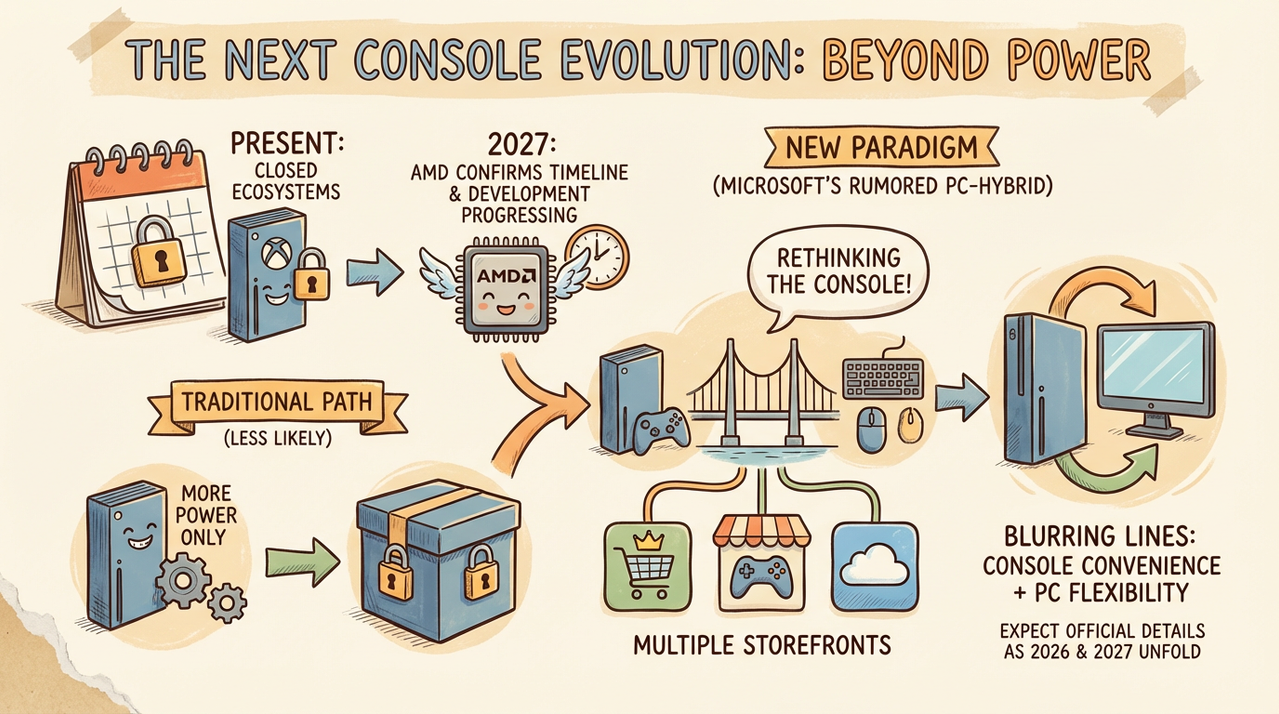
This statement is significant because it comes directly from AMD, the chip manufacturer responsible for powering not just the current Xbox Series X and Series S, but also the PlayStation 5 and the upcoming PS6. AMD’s custom system-on-chip (SoC) designs have been the foundation of console gaming for the past decade, making the company’s timeline projections particularly reliable. The fact that Su mentioned development is “progressing well” suggests Microsoft is on track to meet the 2027 target without major delays.
The 2027 timeline represents a seven-year generation for the Xbox Series X and Series S, which launched in November 2020. This would be slightly shorter than the Xbox One generation, which lasted eight years from 2013 to 2020. However, it aligns with recent industry trends toward shorter console cycles and increasing pressure from PC gaming platforms that receive hardware upgrades more frequently.
What Insiders Have Been Saying About AMD Magnus
AMD’s confirmation validates what multiple credible gaming insiders have reported over the past year. In March 2025, Windows Central’s Jez Corden reported that Microsoft’s next-gen hardware was targeting 2027, not 2026 as some had speculated based on Call of Duty development kit rumors. Corden clarified that development kit specifications were about performance targets for developers rather than an indication of imminent hardware release.
Hardware leaker KeplerL2, who has accurately reported AMD specifications in the past, claimed in October 2025 that 2027 was “not just on the table, it’s the plan unless any unexpected delays happen.” Meanwhile, YouTuber Moore’s Law Is Dead has repeatedly stated that Microsoft is “openly telling” development partners to expect the next Xbox in 2027, claiming to have seen documents confirming manufacturing timelines.
The next Xbox, internally codenamed AMD Magnus, is rumored to feature a significantly more powerful AMD processor than the current generation. According to Moore’s Law Is Dead, the Magnus chip will have a 46-percent larger die than the monolithic processor used in PlayStation 6, potentially giving it substantially more raw computing power. This larger, more complex chip design could contribute to a higher price point, with speculation suggesting the console could cost between $800 to $1,200, essentially positioning it as a premium gaming PC rather than a traditional console.
A Different Kind of Xbox Console
Beyond the release timeline, AMD’s mention of a “semi-custom SoC” reinforces expectations that the next Xbox will blur the lines between console and PC gaming more than any Microsoft hardware before it. Multiple reports suggest the console will support third-party storefronts including Steam, Epic Games Store, and GOG, essentially functioning as both a traditional Xbox and a Windows gaming PC in a single device.
This PC-console hybrid approach aligns with statements from Xbox leadership over the past year. Phil Spencer, CEO of Microsoft Gaming, has repeatedly stated that the next Xbox needs to be “the largest technical leap you will have ever seen in a hardware generation,” while Xbox president Sarah Bond emphasized Microsoft is “moving full speed ahead on our next generation hardware.” The suggestion is that Microsoft plans to differentiate itself from PlayStation by offering a more open, flexible platform rather than competing directly on the traditional closed-console model.
Windows Central reported in March 2025 that Microsoft’s next-gen plans include a premium successor to the Xbox Series X alongside an Xbox gaming handheld, with both devices tentatively slated for 2027. Notably absent from these plans is a direct successor to the cheaper Xbox Series S, suggesting Microsoft may be abandoning the two-console strategy it employed this generation. The company appears to be betting that a handheld device (potentially matching Series S performance in portable form) could fill the budget-conscious market segment.
PlayStation 6 Also Targeting 2027
Interestingly, Sony’s PlayStation 6 is also reportedly targeting a 2027 release window, setting up a potential head-to-head launch similar to the Xbox Series X and PS5 in 2020. According to Moore’s Law Is Dead, who claims to have seen manufacturing documents, Sony plans to begin production in “middle or even early 2027,” with the console potentially hitting store shelves by late 2027 or early 2028.
However, the PS6 and next Xbox may represent a more divergent generation than we’ve seen in the past. While current-gen consoles like the PS5 and Xbox Series X offer largely similar performance and capabilities, the next generation could see Microsoft pursuing a premium, PC-hybrid approach at a higher price point while Sony maintains a more traditional console model at a lower cost. This would fundamentally change the competitive dynamics between the two platforms, appealing to different market segments rather than competing directly for the same customers.
The 2027 timeline for both consoles might seem surprisingly soon considering the current generation still feels relatively young. The Xbox Series X and PlayStation 5 faced years of supply shortages during the COVID-19 pandemic, and many gamers only acquired current-gen hardware in 2022 or 2023. However, both Microsoft and Sony appear to be responding to rapid advances in PC gaming hardware and the growing popularity of PC gaming platforms like Steam, which have been eating into the console market share.
What About Xbox Handheld Plans?
While AMD’s confirmation focused on the flagship next-gen Xbox console, Microsoft’s hardware roadmap reportedly includes multiple devices. According to Windows Central’s March 2025 report, Microsoft planned to launch an Xbox-branded PC gaming handheld in late 2025 through a partnership with an existing OEM manufacturer (such as ASUS, Lenovo, MSI, or Razer). This device, codenamed Project Keenan, would run Windows with Xbox Game Pass integration as a central feature.
The partner handheld appears to be separate from Microsoft’s first-party Xbox handheld, which Phil Spencer has indicated is still “years away” from release. The 2025 partner device would essentially be a rebranded existing PC handheld with custom Xbox software integration, while the 2027 lineup would include Microsoft’s own internally developed handheld alongside the flagship console. This two-pronged approach would give Microsoft presence in both the home console and portable gaming markets simultaneously.
Frequently Asked Questions
When will the next Xbox console be released?
According to AMD CEO Lisa Su, Microsoft’s next-generation Xbox console is targeting a 2027 launch. Su confirmed during a February 2026 earnings call that development of the console featuring an AMD semi-custom chip is “progressing well to support a launch in 2027,” though she did not provide a specific month or quarter.
How much will the next Xbox cost?
While no official pricing has been announced, industry insiders speculate the next Xbox could cost between $800 to $1,200, significantly more than current-gen consoles. This higher price reflects the console’s rumored premium positioning as a PC-console hybrid with substantially more powerful hardware than PlayStation 6.
Will the next Xbox be backwards compatible?
Yes, all reports indicate that backwards compatibility will continue with the next Xbox generation. Microsoft has made backwards compatibility a cornerstone of its platform strategy, allowing players to access their existing Xbox libraries across multiple console generations without repurchasing games.
Will the next Xbox support Steam and other PC storefronts?
Multiple reports suggest the next Xbox will support third-party PC storefronts including Steam, Epic Games Store, and GOG. This would represent a major shift toward a more open platform, positioning the console as a hybrid between traditional Xbox and a Windows gaming PC.
Is Microsoft making an Xbox Series S successor?
Current reports suggest Microsoft will not release a direct successor to the Xbox Series S. Instead, the company appears to be planning a premium flagship console alongside a portable Xbox handheld that could fill the role of a more affordable, less powerful gaming device.
What is the AMD Magnus processor?
AMD Magnus is the rumored codename for the custom processor that will power the next Xbox console. According to hardware leakers, it will feature a significantly larger die (46 percent bigger than PS6’s chip) and more RAM capacity, potentially delivering substantially more performance than Sony’s next-generation console.
When is the PS6 coming out?
Sony’s PlayStation 6 is also reportedly targeting a 2027 release window, potentially setting up a simultaneous launch with Microsoft’s next Xbox similar to how the PS5 and Xbox Series X released within days of each other in November 2020.
The Console Generation That Changes Everything
AMD’s confirmation of a 2027 timeline for the next Xbox marks a pivotal moment in console gaming history. Rather than simply delivering more powerful versions of existing platforms, both Microsoft and Sony appear to be rethinking what a console can be. Microsoft’s rumored PC-hybrid approach with support for multiple storefronts represents a fundamental departure from the closed-ecosystem model that has defined consoles for decades. If successful, it could blur the distinction between console and PC gaming entirely, offering the convenience and optimization of consoles with the flexibility and choice of PC platforms. With development progressing well according to AMD, gamers can expect more official details about Microsoft’s next-generation plans as 2026 and 2027 unfold.