The PC gaming industry is bracing for a turbulent 2026 as a severe memory shortage threatens to derail growth and push hardware prices to unprecedented levels. Industry analysts predict the PC market could contract by as much as 8.9% this year, marking a dramatic shift from the healthy 9.2% growth seen in 2025.
The Memory Crisis Explained
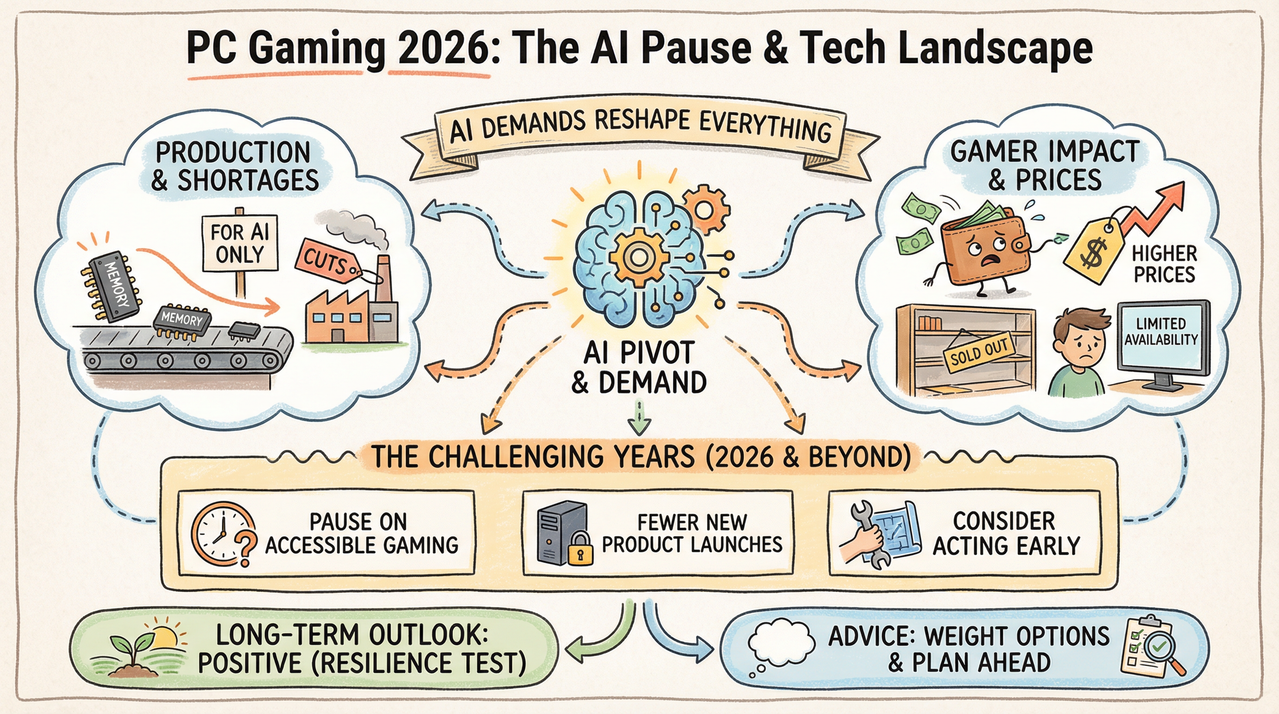
The root cause of this downturn is a global DRAM shortage driven by insatiable demand from AI data centers. Memory manufacturers like Samsung, SK Hynix, and Micron are prioritizing high-margin AI server memory over consumer products, leaving PC gamers fighting for scraps. DRAM prices surged by approximately 40% in the final quarter of 2025, with projections suggesting increases of over 50% in early 2026 compared to late 2025.
This isn’t just affecting RAM modules. The shortage extends to GDDR7 memory used in graphics cards, SSDs, and even hard drives. Industry observers are calling it an unprecedented situation where “HDD, DRAM, HBM, NAND all in severe shortage” simultaneously, something that has never happened before in the tech industry.
Nvidia Slashes GPU Production
Graphics card giant Nvidia is reportedly planning to cut GeForce RTX 50 series GPU production by 30-40% in the first half of 2026 compared to the same period in 2025. The move comes as the company struggles to secure enough GDDR7 memory for its gaming products while prioritizing AI accelerator production.
According to reports from Chinese outlet BoBantang, the RTX 5070 Ti and RTX 5060 Ti 16GB models will be the first to see supply adjustments. While Nvidia hasn’t officially announced price increases to its partners yet, industry insiders suggest it’s “essentially on the verge of doing so.”
Motherboard Sales Plummet
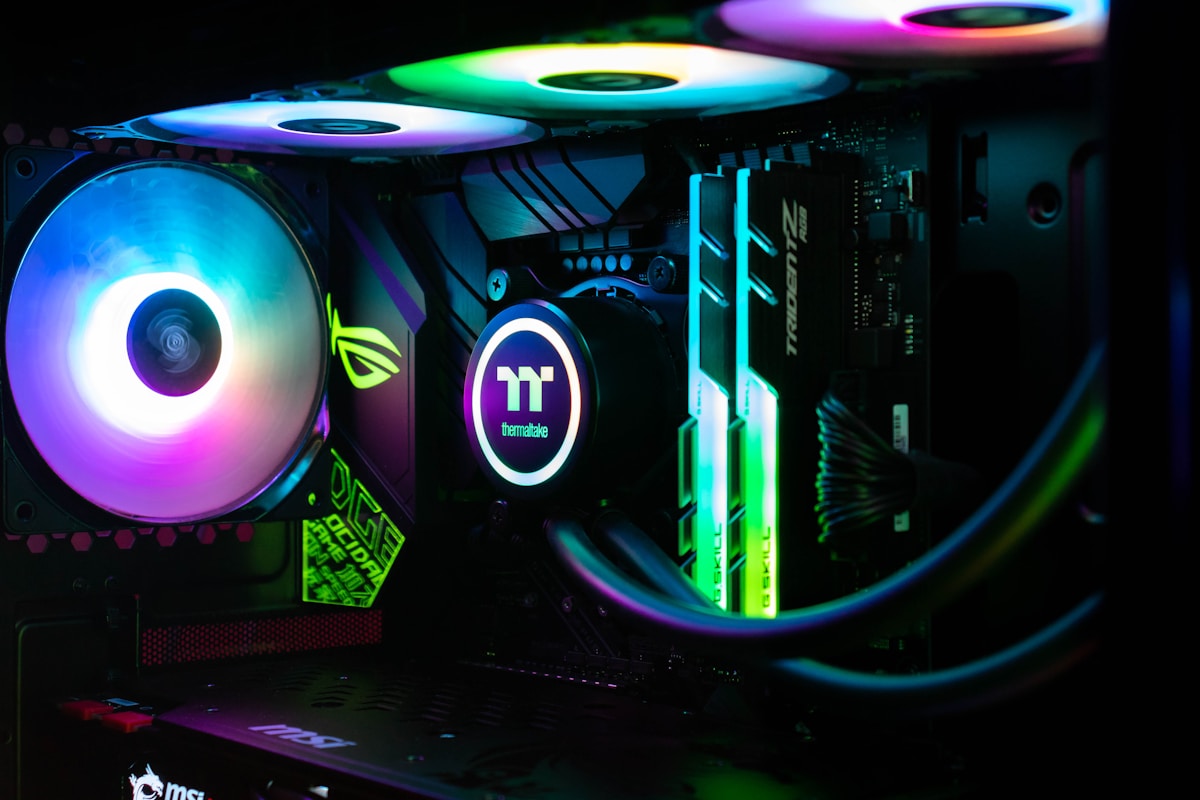
The domino effect is already visible in other PC components. Major motherboard manufacturers including MSI, Gigabyte, and Asus have reportedly seen sales drop up to 50% compared to late 2024 figures. PC enthusiasts are postponing or downsizing their upgrade plans as memory prices continue to climb, with many redirecting their spending toward gaming peripherals and monitors instead.
Price Increases Across the Board
The memory crisis is forcing manufacturers to implement significant price increases. IDC expects average PC prices to jump by 4-8% in 2026, with budget devices potentially seeing even steeper hikes. Framework, known for its modular laptops, recently announced price increases for its Desktop and Mainboard offerings after holding out as long as possible, with 128GB configurations hit hardest.
Dell’s internal memos have predicted price increases of up to 30% for some configurations, while Asus has already announced adjustments to existing product lines. The strategy shift is clear – OEMs are pivoting toward high-end SKUs and leaner mid-to-low-tier configurations with reduced RAM or storage to protect their profit margins.
Gaming vs AI Priority Shift
Perhaps most concerning for gamers is the industry-wide pivot toward AI products. Companies like Asus are reportedly shifting their focus entirely toward AI initiatives, viewing the gaming market’s downward trend as a reason to become increasingly hesitant about introducing new PC gaming products.
A recent analysis noted that the PC market is on the brink of a downturn, making it unlikely that manufacturers will unveil products featuring robust gaming-focused integrated graphics. Instead, they’re pursuing AI partnerships for greater profits, as evidenced by recent collaborations between Nvidia and Intel that focus on server AI rather than gaming applications.
When Will It End?
Unfortunately, there’s no relief in sight. Memory manufacturers like Samsung and SK Hynix are opting to minimize the risk of oversupply, suggesting the crisis could extend past 2028. Micron’s CEO has warned that RAM shortages will last well beyond 2026, as more memory is essential for AI experiences that continue to dominate production priorities.
The only potential escape route would be if the AI bubble bursts, pausing the massive data center expansion that’s consuming memory supplies. Alternatively, if future AI models achieve drastically reduced RAM requirements, it could give the consumer electronics industry some breathing room. However, neither scenario appears likely in the immediate future.
Market Projections and Long-Term Outlook
Despite the immediate crisis, long-term forecasts for the gaming PC market remain optimistic. The market is still projected to grow from $47.9 billion in 2026 to $89.6 billion by 2036, reflecting a CAGR of 6.5%. However, this growth will be heavily weighted toward the latter part of the decade, driven by AI-integrated systems, cloud-gaming hybrids, and expanding virtual reality ecosystems.
Analysts suggest that notebook shipments could decrease by 5.4% year-over-year in 2026, with pessimistic scenarios showing drops as high as 10.1%. Omdia researchers warn that the convergence of memory constraints, rising prices, and potential specification downgrades presents significant planning challenges for the entire industry.
FAQs
Why is there a memory shortage affecting PC gaming in 2026?
The shortage is caused by AI data centers purchasing massive quantities of DRAM for their servers. Memory manufacturers are prioritizing these high-margin AI customers over consumer products, creating a supply crunch for PC gaming components.
How much will PC prices increase in 2026?
IDC expects average PC prices to rise by 4-8% in 2026, though some configurations could see increases of up to 30% according to internal manufacturer estimates. Budget and mid-range systems will likely be hit hardest.
Is Nvidia really cutting GPU production by 40%?
According to reports from industry sources and Chinese outlets, Nvidia is planning to reduce GeForce RTX 50 series production by 30-40% in the first half of 2026 compared to the same period in 2025 due to GDDR7 memory shortages.
When will the memory crisis end?
Industry experts predict the crisis could extend past 2028. Memory manufacturers are intentionally limiting production to avoid oversupply, and Micron’s CEO has stated that shortages will continue well beyond 2026 as AI demand remains strong.
Should I buy PC components now or wait?
If you need to upgrade now, it may be wise to purchase sooner rather than later, as prices are expected to continue rising throughout 2026. However, if you can delay, waiting until the memory market stabilizes (potentially 2027-2028) could save money.
Will this affect gaming consoles too?
While consoles may have some protection through existing production contracts, they will eventually face similar pressures. The memory shortage affects all devices using DRAM, including smartphones, tablets, and gaming handhelds, making it an industry-wide crisis.
Are manufacturers focusing more on AI than gaming?
Yes, major manufacturers like Asus are reportedly shifting focus entirely toward AI initiatives due to higher profit margins and the declining PC gaming market outlook. The Nvidia-Intel partnership also prioritizes server AI over gaming applications.
Conclusion
2026 is shaping up to be a challenging year for PC gaming enthusiasts. The combination of severe memory shortages, production cuts, and industry-wide pivots toward AI means gamers will face higher prices, limited availability, and fewer new product launches. While the long-term outlook for gaming PCs remains positive, the next few years will test the resilience of the PC gaming community. Those looking to build or upgrade systems should carefully weigh their options and consider acting before prices climb even higher. The golden age of accessible PC gaming may be on pause as AI demands reshape the entire technology landscape.