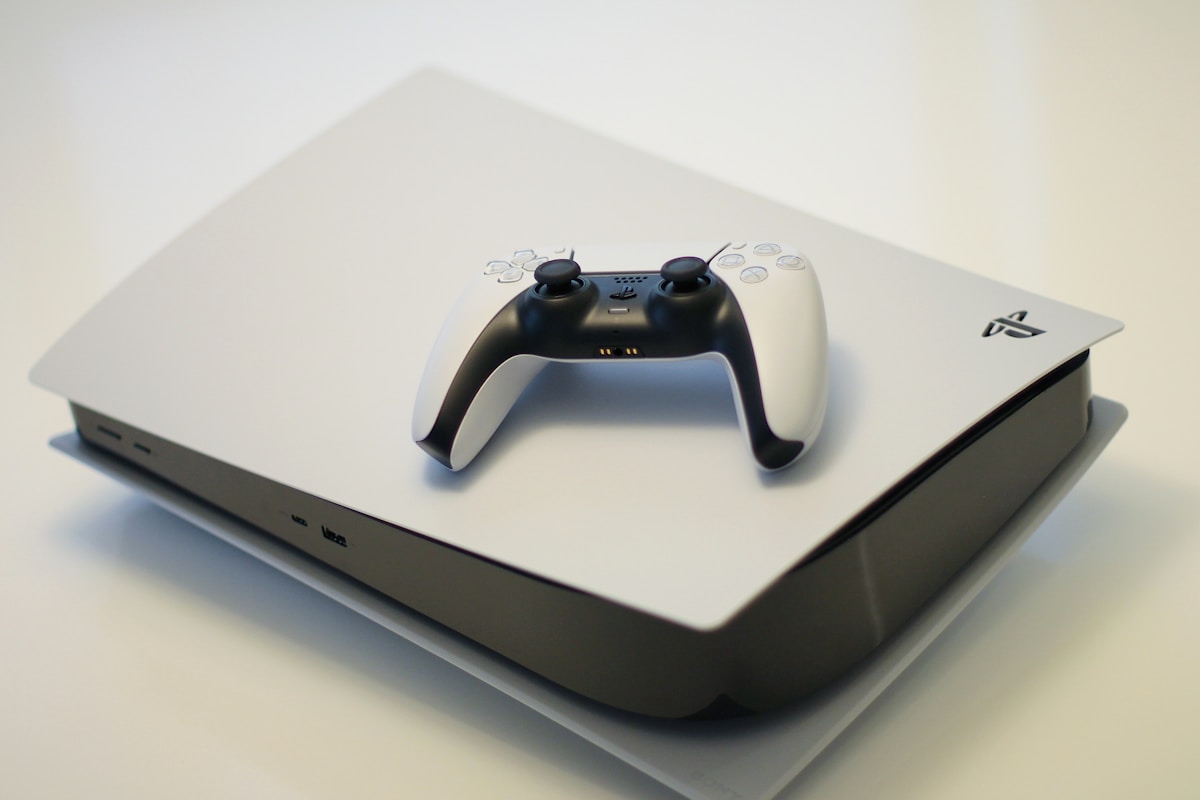
The PlayStation 5 turned five years old this November, and developers from Sony’s biggest studios sat down with Variety to reflect on what actually matters about this console generation. Forget the GPU specs and SSD speeds for a minute. According to creators behind Astro Bot, Ghost of Yōtei, and Gran Turismo 7, the one feature that fundamentally changed how they make games is the DualSense controller. That thing everyone dismissed as a gimmick when it launched? Turns out haptic feedback and adaptive triggers aren’t just marketing fluff. They’re legitimately transforming game design in ways nobody predicted.
- The Pandemic Launch That Defined a Generation
- Why Sucker Punch Can’t Stop Talking About DualSense
- Team Asobi Literally Helped Design the Controller
- Gran Turismo and Polyphony’s 30-Year Journey
- The SSD Everyone Actually Agrees About
- No Rush For Next Generation
- The Best Is Yet To Come
- Frequently Asked Questions
- Five Years In, Finally Hitting Stride
The Pandemic Launch That Defined a Generation
PS5 launched in November 2020 during the absolute peak of COVID-19 chaos. Supply chains were destroyed, manufacturing was nightmare territory, and actually getting a console required either exceptional luck or willingness to pay scalpers absurd prices. Sony sold over 84 million units despite those obstacles, with more than 7,500 games published by over 4,000 developers. That’s legitimately impressive when you remember most people couldn’t find one in stores for the first two years.
The pandemic launch meant PS5 felt less like a revolutionary leap and more like a refined evolution of PS4. Developers weren’t pushing boundaries because they were dealing with remote work, supply shortages, and uncertainty about whether anyone could even buy the hardware. Five years later, we’re finally seeing what PS5 can actually do now that studios have adapted and production normalized.
Why Sucker Punch Can’t Stop Talking About DualSense
Adrian Bentley, programming director at Sucker Punch Productions, called the DualSense “an exceptional controller” and emphasized how much collaborative effort goes into utilizing its capabilities properly. It’s not just the programming team implementing features. It’s combat designers, audio engineers, and programmers working together to create moments where players feel genuinely connected to the action through tactile feedback.
Ghost of Yōtei was built specifically for PS5, unlike Ghost of Tsushima which targeted PS4. That meant Sucker Punch could design around DualSense from the beginning rather than retrofitting features. Bentley mentioned they use the controller’s capabilities to enhance crucial gameplay moments, particularly in combat and emotionally charged scenes. When you’re painting kanji characters or engaging in precise sword combat, that haptic feedback creates atmosphere that standard rumble could never achieve.
The Painting Kanji Example
One specific detail Bentley shared involved interactions like painting kanji requiring considerable development time, but being worthwhile for the unique atmosphere they create. This is exactly the kind of design that wouldn’t exist without DualSense. You’re not just pressing buttons to paint symbols. You’re feeling the brush resistance, the texture changes, the weight of each stroke through haptic feedback. It transforms a simple input into something tactile and memorable.
These detailed interactions take time to implement properly, which is why many third-party developers skip DualSense features entirely. It’s easier to design for the lowest common denominator controller that works on all platforms. But Sony’s first-party studios have the resources and mandate to showcase what the hardware can do, creating experiences that justify the PS5 as more than just a more powerful PS4.
Team Asobi Literally Helped Design the Controller
Nicolas Doucet and Team Asobi have a unique relationship with DualSense because they created Astro’s Playroom, the pack-in game that came pre-installed on every PS5 to demonstrate the controller’s capabilities. Their work on that game significantly influenced the final design of the DualSense itself. It was a cyclical development process where hardware informed software which informed hardware revisions in real-time.
Doucet explained that many concepts explored during Astro’s Playroom didn’t make it into that initial game because they prioritized immediate, accessible experiences. They had this “intriguing chainsaw demo” showcasing real-world interactions by cutting wood with adaptive triggers, but decided it felt too aggressive for the friendly tone they wanted. Later, when developing the full Astro Bot game, they revisited those unused concepts with fresh perspectives and found ways to implement them with sci-fi twists that fit the game’s aesthetic.
The Research and Development Loop
What makes Team Asobi’s approach fascinating is their cyclical research and development process. Doucet mentioned they often revisit past concepts that didn’t fit previously for various reasons, applying new knowledge and perspectives to create something innovative. This means ideas generated during Astro’s Playroom development in 2020 directly influenced Astro Bot in 2024, which won Game of the Year at The Game Awards.
That four-year gap between projects gave them time to understand what worked, what didn’t, and how to push DualSense capabilities further. Astro Bot isn’t just a good platformer. It’s a technical showcase for why haptic feedback matters, with different surfaces creating distinct tactile sensations and adaptive triggers providing varied resistance based on in-game actions. Every mechanic is designed around making you feel something through the controller.
Gran Turismo and Polyphony’s 30-Year Journey
While Variety’s article mentions Gran Turismo 7 and Polyphony Digital being part of PlayStation’s journey since the beginning 30 years ago, specific quotes from that team weren’t included in the excerpts. However, the racing sim genre benefits enormously from DualSense adaptive triggers, which can simulate different brake pressure, accelerator resistance, and surface feedback in ways that dramatically improve immersion for players without expensive racing wheel setups.
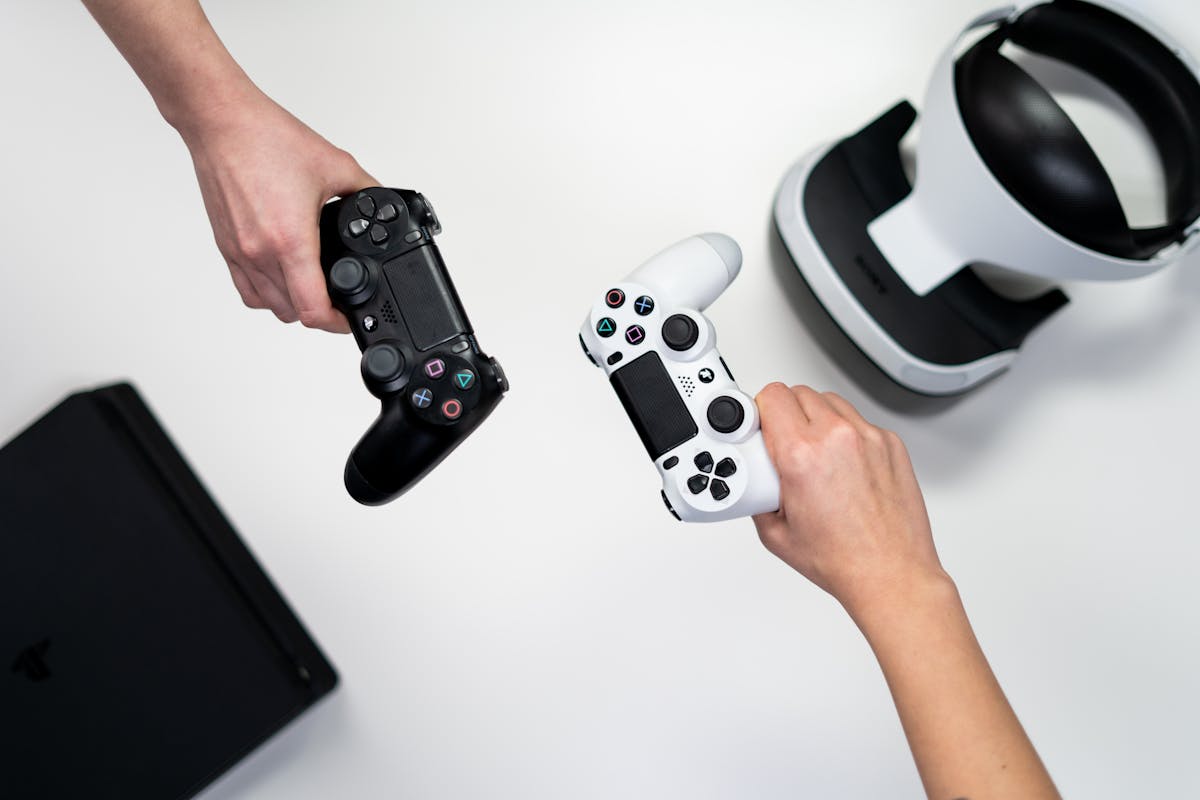
Gran Turismo 7 was one of the early games demonstrating how adaptive triggers could transform racing. The trigger resistance changes based on which car you’re driving, what surface you’re on, and how much grip your tires have. Braking on gravel feels different than braking on asphalt, and the controller communicates that information instantly. It’s not just visual or audio feedback anymore. Your fingers are getting real-time data about the car’s behavior.
The SSD Everyone Actually Agrees About
Besides DualSense, the other universally praised PS5 feature is the blazing-fast SSD. Doucet specifically mentioned loving it not because it helped his team at Team Asobi, though it did, but because it improved his personal experience playing FromSoftware games. No more staring at loading screens after dying to bosses repeatedly. That quality-of-life improvement matters enormously for games that require trial and error.
Adrian Bentley from Sucker Punch emphasized that PS5’s focus was “to evolve the platform to keep players focused on the games.” The SSD, platform-integrated hint system, and Activities paradigm all serve that goal. When used correctly, these features reduce friction between player and game. You spend more time playing and less time waiting, navigating menus, or figuring out where you were supposed to go after taking a break.
Changed Horror Game Design Forever
Back in 2021, Resident Evil Village game director Morimasa Sato told media that PS5’s loading speed surprised him most. Until then, developers always worked on ways to make loading not feel too long for players through tricks like elevator rides, narrow corridors, or disguised loading screens. The SSD made that era obsolete. Sato specifically noted that “everything from the pacing of tension in a game to the music design is going to have to be rethought in terms of a completely seamless experience.”
This affected horror games particularly because suspense requires careful pacing. When you can’t use loading screens as natural breaks in tension, you have to design encounters differently. The result is more intense, sustained horror that doesn’t give players artificial breathing room. Every FromSoftware fan who died to a boss and immediately tried again without waiting 30 seconds for a loading screen understands why this matters.

No Rush For Next Generation
When asked about the future beyond PS5 and PS5 Pro, developers expressed no urgency to move to next-generation hardware. Bentley stated bluntly: “Honestly, I think the PS5 is fantastic!” His wishlist for future projects focused on evolutionary improvements like more advanced ray tracing and graphics technologies, but emphasized that progress lies more in software development tools than raw hardware power.
This sentiment reflects a broader industry reality. Development costs have ballooned, production timelines stretch for years, and studios are still learning to fully utilize PS5’s capabilities five years in. Jumping to PS6 right now would reset that learning curve and force studios to invest in new pipelines and tools while abandoning expertise they’ve spent half a decade building. The longer PS5 remains the standard platform, the better games will get as developers master its architecture.
Ray Tracing Still Evolving
Bentley mentioned ray tracing as “an exciting technology that’s still evolving” with various graphics technologies left to explore. This is key because ray tracing on PS5 exists but isn’t revolutionary. It’s computationally expensive and often gets disabled by players who prefer higher framerates. The next generation will presumably make ray tracing standard without performance compromises, but we’re not there yet. Current hardware is in an awkward middle ground where the technology exists but isn’t mature enough to be universally adopted.
Five years into PS5, many games still offer performance versus quality modes where players choose between higher resolution with ray tracing or higher framerates without it. That choice shouldn’t exist if the hardware could handle both simultaneously. The fact that developers are fine waiting for better ray tracing implementation rather than demanding new consoles suggests PS5 has headroom left to explore.
The Best Is Yet To Come
PlayStation exec statements during the anniversary acknowledged that five years in, they’re “really hitting our stride now” and the console’s best-selling game isn’t even out yet. This tracks with typical console lifecycles where the best games arrive in years five through eight as developers fully understand the hardware and production pipelines mature. PS4’s best games came late in its lifecycle. Same with PS3, PS2, and PS1. PS5 is following that pattern.
Games like Astro Bot winning Game of the Year in 2024 demonstrate that first-party studios are finally delivering on PS5’s promise. Ghost of Yōtei launching in 2026 as a true next-gen exclusive designed specifically for PS5 should showcase what five years of development experience looks like. Whatever Sony has planned for 2026 and beyond will presumably blow away the cross-gen titles that dominated PS5’s first three years.
Frequently Asked Questions
When did PS5 launch?
November 2020, during the peak of the COVID-19 pandemic. Supply shortages made it difficult to find for the first two years.
How many PS5 consoles have sold?
Over 84 million units globally as of the 5th anniversary in November 2025, with more than 7,500 games published by over 4,000 developers.
What do developers say is PS5’s best feature?
The DualSense controller with haptic feedback and adaptive triggers. Developers from Astro Bot, Ghost of Yōtei, and Gran Turismo 7 all emphasized how it transformed game design.
Did Team Asobi help design the DualSense?
Yes. Their work on Astro’s Playroom, the pack-in game showcasing DualSense features, significantly influenced the controller’s final design through a cyclical development process.
What about the SSD?
Universally praised for eliminating loading screens and changing game design, particularly for horror games that relied on loading as tension breaks. Team Asobi’s Nicolas Doucet loves it for making FromSoftware deaths less painful.
Are developers ready for PS6?
No. Studios expressed no urgency for next-generation hardware, saying PS5 still has plenty of untapped potential and they’re finally hitting their stride after five years.
What’s Ghost of Yōtei’s connection to PS5?
Unlike Ghost of Tsushima which was PS4, Yōtei was built specifically for PS5 from the ground up, designed around DualSense and other console-specific features.
Did Astro Bot really win Game of the Year?
Yes, at The Game Awards 2025. Team Asobi’s platformer that showcases PS5 features beat out major competition to take the top prize.
Five Years In, Finally Hitting Stride
PS5’s fifth anniversary marks a turning point where the console is finally delivering on its promise. The first few years were hampered by pandemic development challenges, supply shortages, and cross-gen games that couldn’t fully utilize the hardware. Now, with studios fully adapted to PS5 architecture and games designed specifically for the platform launching regularly, we’re seeing what this generation can actually do.
The DualSense controller went from dismissed gimmick to genuinely transformative feature that changes how games are designed. The SSD eliminated loading screens and forced developers to rethink pacing and game flow. These aren’t incremental improvements. They’re fundamental shifts in how games feel to play. And according to the developers making Sony’s biggest games, they’re still discovering new ways to utilize these features five years later.
If history is any guide, years six through eight of PS5’s lifecycle should produce its defining masterpieces. Developers know the hardware intimately now. Production pipelines are mature. And most importantly, they can design games specifically for PS5 without worrying about PS4 compatibility holding them back. The best is yet to come, and that’s exciting five years into a console generation when past platforms were already showing their age. PS5 feels like it’s just getting started.