A new indie RPG just dropped its reveal trailer and immediately grabbed attention for doing something almost no one else touches – setting a deep narrative RPG in modern India with Hindu mythology as its backbone. Rakshasa from Odd Compass Studio blends first-person exploration, turn-based combat, and choice-driven storytelling in a world where ancient Tantrik magic operates in the shadows of chaotic cityscapes.
Modern India Meets Ancient Mythology
Rakshasa drops players into contemporary India where normal urban life masks a hidden supernatural war. Rogue sadhus, scheming asuras, flesh-eating monsters from Hindu mythology, and Tantrik spellcasters all operate on society’s margins. The story kicks off with an illegal excavation that awakens the protagonist’s dormant magical powers, pulling them into faction conflicts and cosmic conspiracies.
What makes this setting genuinely fresh is how it weaves real Indian urban culture with mythological horror. Think cramped city alleys lit by flickering streetlights, street food vendors operating next to occult rituals, smartphone notifications interrupting spellcasting. The trailer shows dense environments that feel authentically chaotic – exactly how modern Indian cities pulse with life and danger.
The developers specifically call out influences from classic RPGs like Vampire: The Masquerade – Bloodlines, which immediately raises expectations. That means deep conversation systems, faction reputation, meaningful dialogue choices that genuinely alter the story, and a world that reacts to player decisions over dozens of hours.
Turn-Based Combat with a Twist
Combat uses a unique Wheel of Dharma system where timing inputs during attacks determine critical hits. A moving marker needs to land in specific zones on a circular gauge – miss the timing and your attack weakens, nail it perfectly and you trigger devastating effects. This adds skill expression to turn-based battles, preventing them from feeling like pure dice rolls.
The magic system revolves around Tantrik spells drawn from actual Hindu mysticism – mantras, yantras, and tantras weaponized against mythological creatures. Talismans provide build customization, with examples shown that expand critical hit windows, restore health on perfect timing, or boost non-combat skills like lockpicking and occult knowledge checks.

Enemies range from street-level ghouls to massive rakshasas straight from the Ramayana, each requiring different tactical approaches. The combat footage suggests positioning matters even in turn-based fights – cover usage, flanking angles, and environmental interactions all appear relevant.
Visual Style That Stands Out
Rakshasa adopts a deliberately rough aesthetic inspired by early 2000s digital photography and classic isometric RPGs. Think grainy textures, harsh lighting contrasts, and that slightly off-kilter feel of low-budget horror films. This stylistic choice perfectly matches the underground occult theme – nothing polished or corporate about practitioners hiding from both police and demons.
The art direction screams authenticity. Markets bustle with recognizable Indian details – chai stalls, autorickshaws weaving through traffic, women in sarees next to men in kurtas. Supernatural elements blend seamlessly – a rakshasa’s claw might brush past a shopkeeper who never notices, or a sadhu chants mantras while texting on a smartphone.
Fans immediately noticed the atmosphere despite combat animations feeling rough. That early-2000s jank actually works in the game’s favor, evoking nostalgia for cult classics while signaling this team prioritizes vision over polish-from-day-one expectations.
Why Indian Mythology in Games Matters
Gaming regularly taps Greek, Norse, and Japanese mythology but largely ignores India’s vast pantheon. Rakshasa confronts this head-on, promising rakshasas, asuras, vetalas, and pisachas as active enemies with deep lore connections. The tantrik magic system draws from actual esoteric traditions, giving players power over mythological forces that feel genuinely alien to Western audiences.
- Rakshasas – shape-shifting cannibal demons from epic poetry
- Asuras – rival deities constantly warring with the gods
- Sadhus – holy men who might be enlightened or completely insane
- Pisachas – flesh-eating ghouls haunting cremation grounds

This mythology carries weight because it’s living tradition, not dusty museum pieces. Players familiar with the Ramayana or Mahabharata immediately recognize these creatures and their weaknesses, while newcomers discover an entirely new bestiary. The developers walk a careful line between reverence and the horror gaming demands.
Indie Ambition That Could Deliver
Odd Compass positions Rakshasa as their debut title, which carries both risk and promise. First-time studios sometimes overpromise, but the specific vision here suggests focus rather than feature creep. Steam page already live with detailed system descriptions indicates serious development progress.
| Feature | Details |
|---|---|
| Perspective | First-person RPG |
| Combat | Turn-based with timing mechanics |
| Setting | Modern India + mythology |
| Systems | Talisman builds, faction reputation |
| Choices | Bloodlines-style reactivity |
| Platform | PC (Steam) |
FAQs
What makes Rakshasa different from other RPGs?
First-person perspective in modern India with Hindu mythology as core setting. Turn-based combat with timing mechanics and deep Vampire: The Masquerade-style roleplaying in authentically chaotic urban environments.
Is the combat really turn-based?
Yes, but with active timing inputs via the Wheel of Dharma system. Perfect timing triggers critical hits and combos, adding skill to traditional turn structure.
Does it respect Indian culture?
Early reactions suggest yes. The trailer balances horror with reverence, using living mythology thoughtfully rather than as generic fantasy monsters.
When does it release?
“Coming soon” on Steam. Given reveal trailer quality and detailed systems, expect 2027 launch assuming steady development.
Will it come to consoles?
Currently PC only. First-person turn-based RPGs often stay PC-exclusive due to controller considerations.
What’s the main story about?
Illegal excavation awakens protagonist’s Tantrik powers during faction war between sadhus, asuras, and ancient monsters. Uncover conspiracy threatening existence itself.
Is it single player only?
Yes. Narrative focus and deep roleplaying suggest single-player experience throughout.
Why the early 2000s visual style?
Deliberate choice matching underground occult theme. Grainy textures and harsh lighting evoke gritty authenticity over polished AAA visuals.
A Setting Gaming Desperately Needs
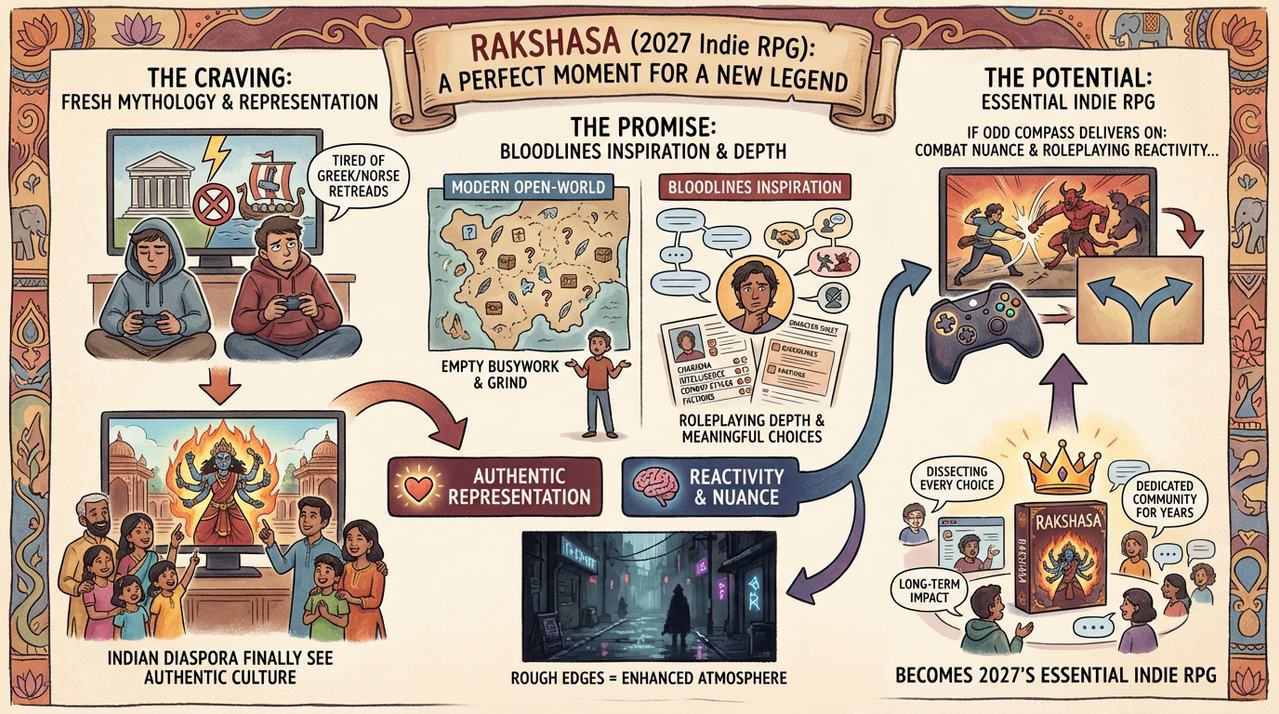
Rakshasa arrives at perfect moment. Gamers crave fresh mythology after endless Greek/Norse retreads, while Indian diaspora audiences finally see their culture represented authentically. The Bloodlines inspiration promises roleplaying depth that modern open-world games often sacrifice for empty busywork. Rough edges actually enhance atmosphere rather than detract. If Odd Compass delivers on roleplaying reactivity and combat nuance shown in the trailer, Rakshasa could become 2027’s essential indie RPG – the kind of game that spawns dedicated communities dissecting every choice consequence for years.