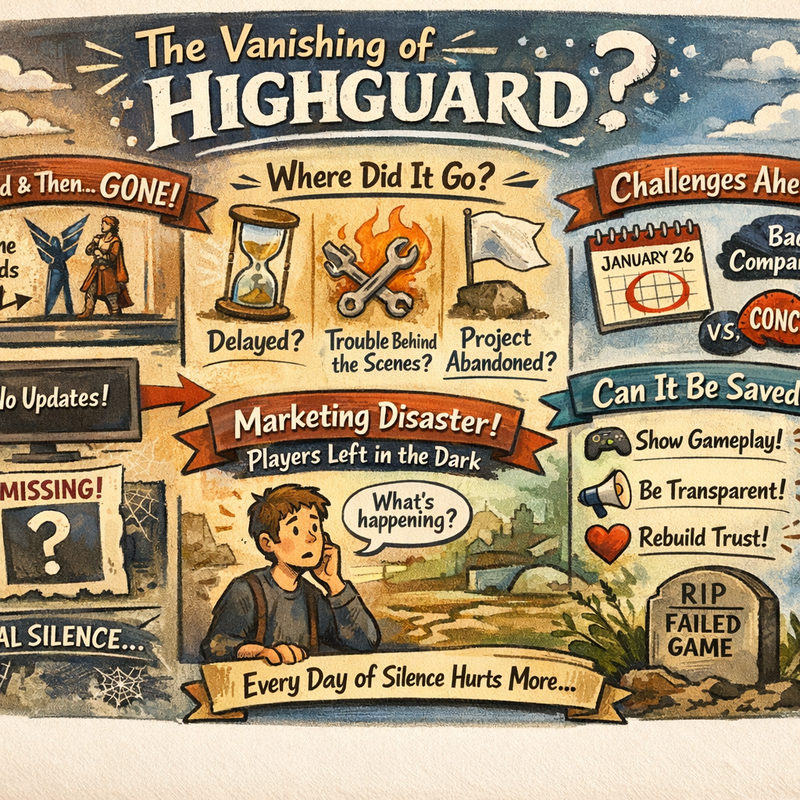
Highguard, the fantasy hero shooter from former Apex Legends and Titanfall developers at Wildlight Entertainment, has gone completely silent since its disastrous reveal as The Game Awards 2025’s final announcement on December 11. With less than three weeks until its scheduled January 26, 2026 launch, the game has posted nothing across any platform. No tweets from the official account with 5,800 followers, no YouTube videos on the channel with 1,300 subscribers, no LinkedIn updates from the studio’s 103 employees, and no promotional materials on the website. The only post Wildlight made since December 11 was a tribute to late industry veteran Vince Zampella, leaving observers wondering if Highguard is being delayed, canceled, or simply facing the worst pre-launch marketing disaster in recent memory.
Forbes contributor Paul Tassi broke the story on January 6, noting the suspicious absence of any online presence for a game supposedly launching in 20 days. 80 Level called the situation bizarre, pointing out that typically games three weeks from release enter full marketing blitz mode with developer interviews, gameplay breakdowns, promotional art, cinematics, and social media countdowns. Instead, Highguard exists in a state of complete radio silence as if the entire team received orders to stop promoting the project. Reddit user Searotic speculated the studio originally planned to shadow drop Highguard during The Game Awards similar to Apex Legends’ surprise 2019 launch, but delays between finalizing contracts and the event forced the awkward mid-January release window with chaotic marketing nobody knows how to execute.
The Game Awards Disaster
Highguard’s reveal occupied The Game Awards 2025’s most prestigious slot: the final announcement before Game of the Year, traditionally reserved for the show’s biggest surprise. Past years featured massive reveals like Elden Ring, Sonic Frontiers, and Death Stranding in this coveted position. This year, Geoff Keighley hyped the finale by emphasizing that Highguard “comes from 61 members of the team that built Apex Legends and Titanfall,” setting expectations for something special from proven developers.
What followed disappointed nearly everyone watching. The trailer showcased generic fantasy hero shooter gameplay with characters riding horses and casting spells in what looked like a medieval battlefield. Kotaku described the internet as “up in arms” after the reveal, with viewers immediately dubbing Highguard “Concord 2” in reference to Sony’s failed hero shooter that shut down after just two weeks. PC Gamer reported “collective eye roll plunges hero shooter reveal into the abyss,” capturing the audience’s exhaustion with yet another live-service PvP game after Concord’s spectacular failure months earlier.
The YouTube trailer currently sits with overwhelmingly negative reception. Comments criticize Highguard as an “epigonic, soulless mashup of ideas designed to generate cash first, provide genuine entertainment at best second,” according to 80 Level’s summary of viewer sentiment. The dislike ratio and comment section reflect deep skepticism about whether the industry needs another free-to-play hero shooter, especially one that failed to differentiate itself meaningfully during its debut trailer. GamesRadar noted Titanfall 3 hopefuls spiraled after the announcement, disappointed that former Respawn developers focused on hero shooters rather than reviving the beloved franchise fans actually want.
Why The Reveal Felt Wrong
Several factors contributed to Highguard’s poor reception beyond just trailer quality. First, the timing couldn’t be worse. Concord’s failure was still fresh in everyone’s minds, Marvel Rivals had just launched successfully by offering genuinely unique ideas, and the market felt saturated with live-service shooters competing for limited player attention. Pure Xbox wrote that “a free-to-play shooter was just never going to go over that well with The Game Awards crowd,” acknowledging the reveal’s inherent challenge regardless of execution.
Second, Keighley’s hype created expectations the trailer couldn’t meet. Introducing Highguard by name-dropping Titanfall and Apex Legends positioned it as a spiritual successor from proven talent, but the generic medieval fantasy aesthetic and uninspired gameplay footage looked nothing like those franchises’ innovative movement mechanics and tight gunplay. The reveal needed to showcase what made Highguard special, yet the trailer communicated nothing beyond “hero shooter but with horses,” a selling point nobody asked for.
Third, announcing a free-to-play game for the finale slot felt tone-deaf after a night celebrating premium single-player experiences. The Game Awards audience skews toward enthusiasts who value artistic vision and creative risk-taking over monetization models designed to extract maximum spending from whales. Closing the show with a product clearly engineered for profit first left viewers feeling like Keighley sold out the finale to the highest bidder rather than saving it for a genuinely exciting reveal.
The Shadow Drop Theory
Reddit user Searotic’s theory about Highguard originally planning a surprise launch during The Game Awards makes perfect sense given the circumstances. Apex Legends pioneered this strategy in February 2019, announcing and immediately releasing with zero advance marketing. The approach worked brilliantly because it let gameplay speak for itself rather than allowing negativity to build during months-long hype cycles. Players could try Apex immediately, fall in love with the movement mechanics, and spread organic word-of-mouth before skeptics poisoned the well.
If Wildlight intended similar tactics but faced last-minute delays between contract finalization and December 11, the result is exactly the mess we’re witnessing. The Game Awards reveal became mandatory because contracts were signed, but without ability to launch immediately, Wildlight faces an awkward six-week gap where traditional marketing would build hype but currently appears paralyzed by negative reception. Reddit user TheHB36 agreed, noting “the free-to-play surprise releases have been remarkably steady over time. Apex Legends followed a similar approach when it launched. I believe this outcome is quite feasible.”
This theory explains the complete marketing silence. If Wildlight planned to rely on influencer campaigns starting at launch rather than traditional pre-release marketing, they might lack prepared materials for a six-week hype cycle. Reddit user MinusBear suggested they might be “implementing a modified version of the Apex strategy,” remaining silent until launch when “they could have 50 prominent streamers compensated to showcase the game for a two-week period.” This paid influencer blitz approach worked for Apex but feels riskier post-Concord when audiences scrutinize hero shooters more carefully.
What The Silence Means
Three possibilities explain Highguard’s radio silence, none particularly encouraging. First, the game could be delayed beyond January 26 while Wildlight reassesses strategy after catastrophic reception. Delaying would explain the marketing silence since promoting a moved launch date requires new materials and messaging that takes time to prepare. However, no official delay announcement exists, leaving players and press in limbo about whether January 26 remains real.
Second, Wildlight might be scrambling to address criticism by implementing last-minute changes based on negative feedback. If the trailer showcased an older build and the team believes final content addresses concerns, they might delay marketing until they can present improved footage. This seems optimistic given the short timeline; meaningful changes to core gameplay require months not weeks. More likely, they’re polishing cosmetic elements or preparing day-one patches hoping to smooth launch issues.
Third, and most cynical, Wildlight might already know Highguard is doomed and simply plans to launch quietly, take whatever sales come from the Titanfall/Apex developer pedigree, then shut down servers within months like Concord. The marketing silence could reflect accepting defeat rather than throwing good money after bad with expensive promotional campaigns destined to generate more negativity than sales. Facebook user EveryTh1ngXBOX asked “shutdown within 2 months?” echoing widespread skepticism about Highguard’s viability.
Industry Context Matters
Highguard launches into the most hostile live-service market in gaming history. Concord shut down after two weeks and $200 million losses. Suicide Squad: Kill the Justice League failed despite the Batman Arkham pedigree. The Finals struggled to maintain player counts despite strong mechanics. XDefiant couldn’t compete with Call of Duty and Apex despite being free-to-play. The list of failed live-service shooters grows monthly, creating an environment where new entries face immediate skepticism regardless of developer talent.
The Game Awards 2025 highlighted this shift. Most major reveals focused on premium single-player experiences: Clair Obscur: Expedition 33, Phantom Blade Zero, Ghost of Yotei, Exodus, and others emphasized narrative-driven adventures without live-service hooks. The few multiplayer reveals like Marathon and Arc Raiders generated excitement because they showcased genuinely innovative concepts rather than iterating on tired formulas. Highguard offering “hero shooter but medieval” failed to clear that bar.
YouTube channel covering Top 15 Indie Games of January 2026 mentioned Highguard but noted “an almost suspicious lack of information online,” admitting uncertainty about what to expect. The video positioned Highguard between Arc Raiders’ phenomenon and Marathon’s mystery, acknowledging both competitors offer more compelling hooks than Wildlight’s fantasy shooter. This context makes Highguard’s silence even more damaging; in a market demanding differentiation, hiding only reinforces perceptions of generic product with nothing special to showcase.
Can Highguard Recover
Theoretically yes, if the final product dramatically exceeds trailer impressions and Wildlight executes perfect launch day influencer campaigns. Apex Legends launched with minimal hype and became a phenomenon because the movement mechanics, ping system, and character abilities felt revolutionary in 2019’s battle royale landscape. If Highguard’s gameplay loop hooks players immediately and word-of-mouth spreads organically, negative pre-launch sentiment becomes irrelevant.
However, precedent suggests recovery is unlikely. Games rarely overcome disastrous reveals unless they delay significantly to implement fundamental changes. No Man’s Sky needed years of free updates to rebuild reputation. Final Fantasy XIV required complete relaunches. Cyberpunk 2077 spent two years patching before achieving redemption. Highguard has three weeks, insufficient time for meaningful transformation even if Wildlight wanted to pivot direction based on criticism.
The silence itself becomes self-fulfilling prophecy. Every day without marketing reinforces perceptions that Wildlight knows Highguard is doomed and can’t generate positive buzz no matter how much they spend. Potential players write it off, streamers ignore it for safer content, and media coverage focuses on the marketing disaster rather than gameplay potential. By the time January 26 arrives, Highguard launches into an audience that’s already decided it’s Concord 2.0 without giving it fair chance.
What Should Wildlight Do
Assuming Highguard still launches January 26, Wildlight needs transparent communication immediately. Issue a statement acknowledging the rocky reveal, explaining the marketing silence, and showcasing what makes Highguard worth playing. Address criticism directly rather than pretending negative reception didn’t happen. Players respect honesty more than corporate PR spin that ignores obvious problems.
Release extended gameplay footage showing what the reveal trailer failed to communicate. If Highguard has innovative mechanics, show them. If character abilities create unique strategic depth, demonstrate it. If the fantasy setting enables gameplay impossible in modern military shooters, prove it. Gamers will forgive generic aesthetics if core gameplay delivers satisfaction that competitors can’t match.
Consider delaying if the game isn’t ready. Launching broken or underwhelming because contracts mandate January 26 guarantees failure. Concord proved that shipping before you’re ready kills games permanently. A three-month delay allowing proper marketing rebuild and final polish provides better odds than stubbornly hitting arbitrary deadlines. Players would rather wait for good games than play bad ones immediately.
FAQs About Highguard’s Disappearance
When does Highguard release?
Highguard is scheduled to launch January 26, 2026, on PC, PlayStation 5, and Xbox Series X|S as a free-to-play hero shooter. However, Wildlight Entertainment hasn’t confirmed this date since The Game Awards reveal on December 11, 2025, leading to speculation about potential delays.
Why has Highguard been silent since The Game Awards?
Nobody knows for certain. Wildlight Entertainment has posted nothing about Highguard across any platform since the disastrous December 11 reveal. Theories include planned shadow drop that got delayed, scrambling to address negative feedback, or accepting the game is doomed and avoiding expensive marketing for inevitable failure.
Who is developing Highguard?
Wildlight Entertainment, a new studio comprising 61 former developers who worked on Apex Legends and Titanfall at Respawn Entertainment. The studio has 103 employees according to LinkedIn but none have posted about Highguard since The Game Awards announcement.
Why did The Game Awards audience hate Highguard?
Multiple factors: generic hero shooter gameplay in oversaturated market, poor timing after Concord’s failure, uninspiring medieval fantasy aesthetic that looked derivative, occupying the prestigious final announcement slot usually reserved for major reveals, and being free-to-play after a night celebrating premium single-player games.
Is Highguard going to be the next Concord?
Possibly. Viewers immediately dubbed it “Concord 2” after the reveal, and the complete marketing silence three weeks before launch suggests Wildlight knows the game faces major challenges. However, if gameplay significantly exceeds trailer impressions and influencer campaigns succeed at launch, recovery remains theoretically possible.
Can I play Highguard for free?
Yes, Highguard is free-to-play when it launches January 26, 2026 (assuming no delays). The game will presumably monetize through cosmetics, battle passes, and other live-service mechanics common to hero shooters, though Wildlight hasn’t detailed the monetization model.
What makes Highguard different from other hero shooters?
Based on the reveal trailer, the main differentiator is medieval fantasy setting with horses and magic instead of modern/sci-fi weapons. However, the trailer failed to showcase innovative mechanics or gameplay hooks that meaningfully distinguish Highguard from competitors like Overwatch 2, Paladins, or Marvel Rivals.
Will Highguard be delayed?
Unknown. No official announcement exists confirming or denying the January 26 release date. The complete marketing silence could indicate delays, or Wildlight might stubbornly launch as scheduled despite negative reception and poor pre-launch buzz.
Conclusion
Highguard’s complete disappearance three weeks before launch represents one of the strangest marketing disasters in recent gaming memory. From occupying The Game Awards’ most prestigious announcement slot to vanishing entirely across every platform, Wildlight Entertainment’s fantasy hero shooter has become a cautionary tale about live-service launches in hostile markets. Whether the silence indicates delays, last-minute fixes, or accepted defeat, the lack of communication itself damages Highguard more than negative reception ever could. Players might forgive generic gameplay if marketing convinced them to try it, but complete absence of promotional materials prevents discovery among audiences who might genuinely enjoy the final product. If Highguard launches January 26 as scheduled, it faces uphill battle against perceptions solidified by weeks of silence. The Game Awards reveal was supposed to generate hype for a surprise hit from proven Titanfall developers. Instead, it created a marketing vacuum that allowed Concord comparisons to define Highguard before anyone plays it. Wildlight still has time to salvage the situation through transparent communication, extended gameplay showcases, and honest acknowledgment of the rocky reveal. But every day of continued silence makes recovery less likely, reinforcing beliefs that Highguard has nothing worth showing and will join Concord in the graveyard of failed live-service shooters within months of launch.