Nintendo just shut down viral AI panic. Reports claimed My Mario toy campaign photos used generative AI for parents holding baby Mario figures. Suspicion started with one model’s oddly angled thumb – classic AI tell turned out to be double-jointed human anatomy. Nintendo confirms all models real, no AI involved.
Model Brittoni O’Myah Sinclair spoke to IGN: auditioned, callbacks, worked with real family. Photoshoot featured actual parents and babies interacting with toys. Viral photo’s thumb belonged to real person Sinclair saw on set. Nintendo spokesperson separately verified no generative tools used anywhere.
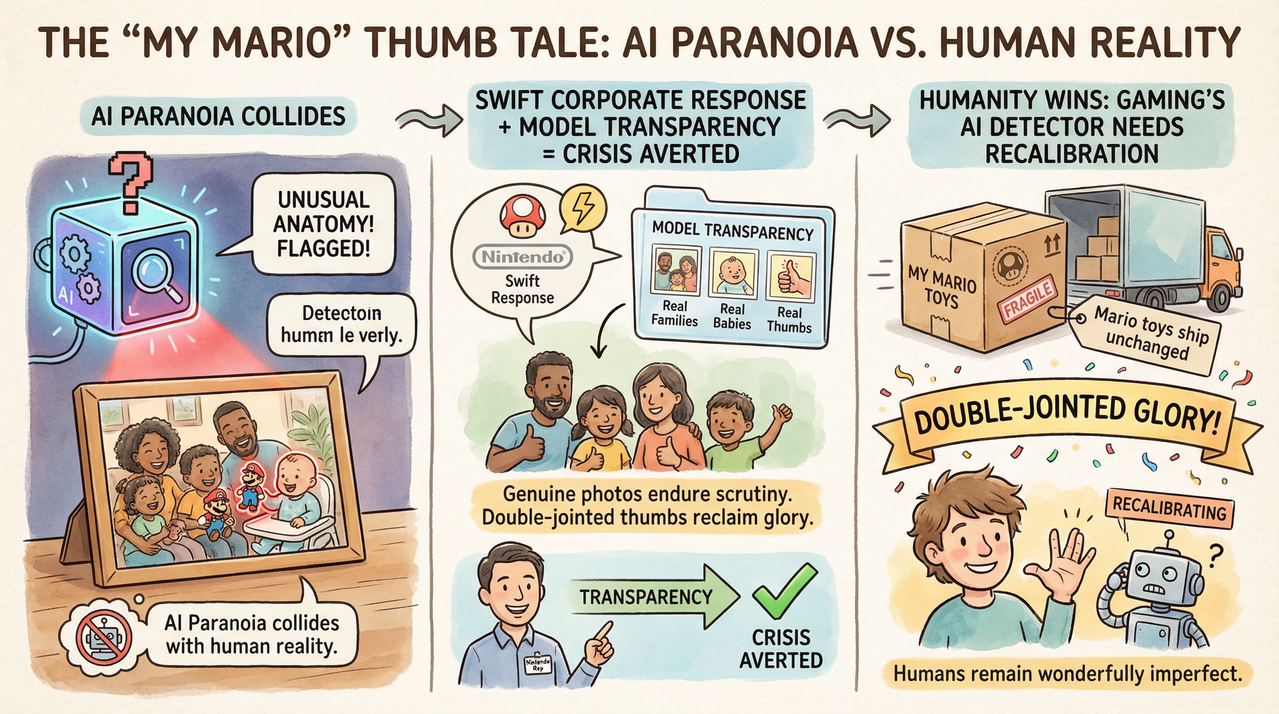
AI Paranoia Hits Mainstream
Thumb angle sparked social media firestorm. Users spotted unusual joint bend, declared obvious AI generation. Pattern mirrors recent Epic Fortnite art controversy, Clear Obscure award backlash. Reality: hyper-vigilant detection spots natural human variation as algorithm artifact.
- Double-jointed thumbs exist naturally
- Auditions/callbacks confirmed
- Real families cast together
- Professional photoshoot setup
- No generative AI detected
- Nintendo statement explicit
Industry Context Explodes
AI debate rages across gaming. Larian Studios dropped AI concept art after Baldur’s Gate 3 backlash. Epic Fortnite art questioned (later proven hand-drawn). Rockstar’s Dan Houser calls AI ‘mad cow disease.’ Genvid CEO claims Gen Z embraces ‘AI slop.’ Nintendo lands squarely anti-AI camp.
‘Everything is real. All models casted, worked with real families. Auditions, callbacks to book job.’ – Brittoni O’Myah Sinclair
My Mario toy line targets young children – authenticity crucial for trust. Accidental AI association could’ve tanked launch. Swift clarification preserves brand integrity.

Thumb That Launched Thousand Tweets
Single photo went nuclear. Model’s thumb bent unnaturally at joint – AI smoking gun to untrained eyes. Double-jointed user BrunAmitie posted comparison: ‘Baffles me how quick people assume genAI just because joints bend unusual ways.’ Human anatomy diversity confuses pattern-trained observers.
| AI Suspicion | Actual Reality |
|---|---|
| Unnatural thumb angle | Double-jointed model |
| Photorealistic babies | Real infants on set |
| Consistent lighting | Professional studio |
| Skin texture anomalies | Baby skin natural variation |
Marketing Lesson Learned
Toy campaigns rarely face AI scrutiny. Gaming world’s hyper-awareness bleeds into consumer products. Nintendo’s rapid response shows monitoring intensity. Model transparency via IGN interview adds authenticity layer skeptics demanded.
Bigger picture: AI detection fatigue sets in. Legitimate tools (Epic, Larian) face same skepticism as genuine photography. Consumer trust erodes when every anomaly triggers algorithm accusations. Nintendo incident accelerates necessary calibration.

FAQs About My Mario AI Controversy
All photos real humans?
Yes – Nintendo confirmed, model verified. Professional photoshoot with auditions/callbacks.
Thumb photo faked?
No – double-jointed model. Natural human anatomy variation.
Babies actually on set?
Confirmed by cast member. Real infants with parents during shoot.
Nintendo uses AI anywhere?
No generative AI in campaign. Consistent anti-AI stance industry-wide.
Toy line affected by rumors?
Rapid clarification prevented sales impact. Children’s products demand authenticity.
Pattern of false AI claims?
Yes – Epic Fortnite art, Larian concepts faced similar scrutiny, later disproven.
Model experience legit?
Auditions, callbacks, family casting. Professional production standards.
Humans Win
Nintendo’s My Mario toys feature real families, real babies, real thumbs. AI paranoia collides with human reality – anatomy wins. Swift corporate response + model transparency = crisis averted.
Double-jointed thumbs reclaim glory. Genuine photos endure scrutiny. Mario toys ship unchanged. Gaming’s AI detector needs recalibration – humans remain wonderfully imperfect.