The Golden Age of Access, The Dark Age of Ownership
If you were hoping 2025 would be the year retro game prices finally crashed, I have bad news. That ship hasn’t just sailed; it has capsized. The days of finding a steal at a garage sale are effectively over, replaced by a market that treats mass-produced plastic like gold bullion. But here is the twist: while collecting has never been harder, playing these games has never been better. We have entered the era of “Modern Vintage.”
This year marks a turning point. The conversation has shifted away from “look at my shelf” to “look at this screen.” The community is tired of the hustle—the bidding wars, the grading scams, and the constant fear of disc rot. Instead, we are seeing a massive pivot toward hardware that respects the original experience without demanding you take out a second mortgage to enjoy it.
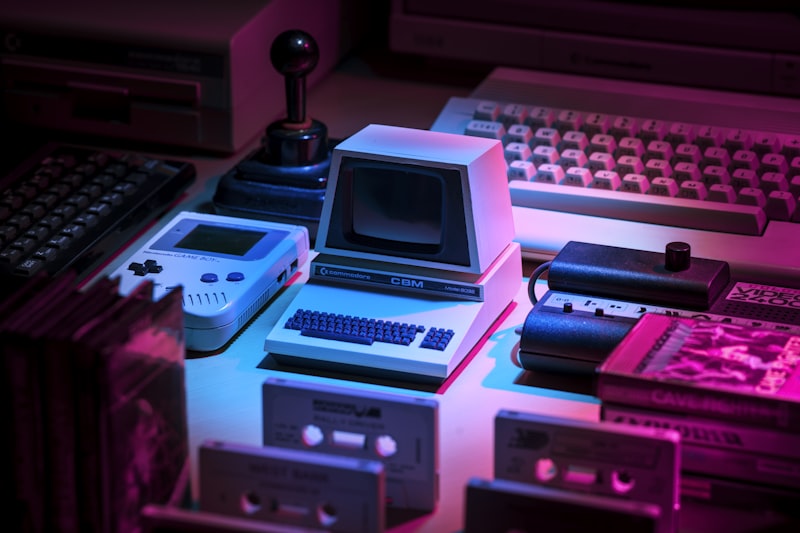
The FPGA Revolution Won
A few years ago, Field Programmable Gate Arrays (FPGA) were a niche interest for tech-savvy enthusiasts. In 2025, they are the standard. We aren’t just relying on software emulation anymore, which often comes with input lag and inaccuracies. We are simulating the original hardware at a chip level.
Devices that mimic the Super Nintendo, Genesis, and even the PlayStation 1 with zero latency are now readily available and easier to use. This technology has democratized high-fidelity gaming. You don’t need a clunky CRT television to get that perfect scanline look anymore; 4K scalers and modern OLED panels have become so good at mimicking the analog warmth of the 90s that even purists are switching over.
Why We Are Ditching Discs for Optical Drive Emulators (ODEs)
Disc rot is real, and lasers die. It is an unavoidable fact of hardware aging. In response, 2025 has seen the rise of the Optical Drive Emulator. Gamers are ripping out their old CD drives and replacing them with SD card slots. It sounds destructive, but it is actually preservation. It keeps the original console alive and usable without the mechanical failure points.
- Reliability: No more skipping FMVs or “Please Insert Disc” errors.
- Convenience: Your entire library sits on a single chip inside the console.
- Speed: Loading times are often cut in half.

The New “Retro”: The HD Era
This might make some of you feel old, but the PlayStation 3 and Xbox 360 are now firmly considered retro. The 15 to 20 year cycle has done its work. We are seeing a surge in nostalgia for the early HD era, with prices for “hidden gems” on these platforms spiking.
What is fascinating is how poorly some of these early 3D games run on original hardware compared to modern ports, yet people still want the “authentic” sub-30 FPS experience. It is a testament to how nostalgia works; we don’t just miss the games; we miss the friction and the flaws that came with them.
Comparing the Ways to Play in 2025
If you are looking to jump in, you have three main paths. Here is how they stack up right now:
| Method | Cost | Authenticity | Convenience |
|---|---|---|---|
| Original Hardware + Cartridges | Very High | 100% | Low |
| FPGA Consoles (Modern Vintage) | High | 99% | High |
| Software Emulation (PC/Handhelds) | Low | 80-90% | Very High |
Preservation is the New Collecting
Perhaps the most positive trend of 2025 is the shift toward technical preservation. The community is no longer just hoarding sealed boxes. There is a massive, vibrant scene dedicated to recapping old boards, replacing dying batteries, and backing up ROMs. “Modern Vintage” isn’t just about buying things; it is about keeping history alive.
We are seeing younger engineers reverse-engineering obscure arcade boards and releasing the schematics for free. It is a beautiful contrast to the sealed-game market. One side wants to lock games away in acrylic tombs; the other wants to ensure they are playable for the next 100 years.

Conclusion
The state of retro gaming in 2025 is a mix of heartbreak and hope. The heartbreak is that the cheap, easy collecting days are dead. You won’t find EarthBound in a thrift store bin. But the hope lies in the technology. We have better screens, better controllers, and better emulation than ever before. We have stopped trying to rebuild the past and started building a better way to remember it. And honestly? That is a trade-off I am willing to make.
FAQs
Is it still worth buying original hardware in 2025?
Yes, but be prepared for maintenance. Old consoles need capacitor replacements and new thermal paste. If you aren’t comfortable with a soldering iron, you might want to buy pre-modded or refurbished units from reputable sellers.
What is an FPGA and why does it matter?
FPGA stands for Field Programmable Gate Array. Unlike standard software emulation that runs a program pretending to be a console, an FPGA chip configures itself to physically behave like the original console’s hardware. This results in perfect timing, zero lag, and fewer glitches.
Why are PS3 games considered retro now?
Retro status usually kicks in around the 15-20 year mark. Since the PS3 launched in 2006, it is nearly 20 years old in 2025. A generation of gamers who grew up with it are now adults with disposable income, fueling the nostalgia cycle.
What is the best way to play retro games on a modern TV?
You generally have two best options: an FPGA console (like those from Analogue) which outputs native HDMI, or an upscaler (like the RetroTINK 4K) that takes your original console’s signal and cleans it up for modern 4K screens.
Are physical games going to keep getting more expensive?
Likely, yes. Supply is finite and slowly degrading (discs rotting, cartridges failing), while demand from collectors and investors remains high. However, prices for “common” games have stabilized, while rare titles continue to climb.